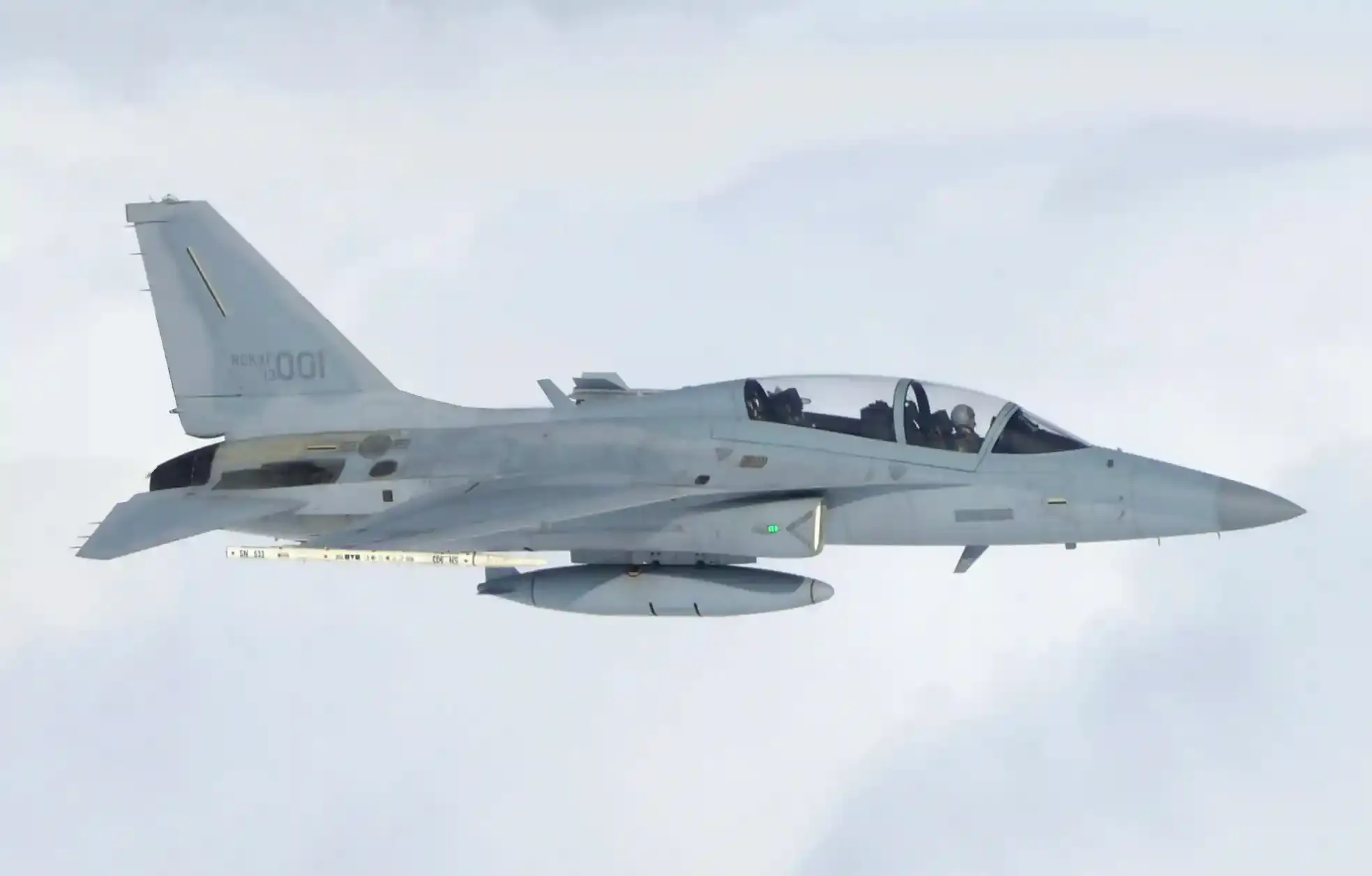

Marrakech, September 3, 2026: In a significant development concerning defense companies at the Marrakech International Airshow, South Korea's Korean Aerospace Industries (KAI) has announced its participation in the event. This marks the first time a South Korean defense company of this caliber will showcase its aircraft in Morocco.
The importance of KAI's presence is heightened by prior reports indicating Morocco's interest in acquiring the FA-50 light fighter jets produced by the South Korean company. These jets are seen as a viable option for modernizing Morocco's fleet of advanced training aircraft, with the potential for deployment in various combat roles as well.
KAI's debut at the Marrakech Airshow comes at a time when there are increasing signs of negotiations or possible collaboration between the company and Morocco. While participation in a defense exhibition does not guarantee a confirmed arms deal, the timing raises questions about the potential announcement of a new agreement during the event or shortly thereafter.
The Marrakech International Airshow is known for attracting numerous companies with industrial or defense ties to Morocco, whether through previous arms deals, new contracts, or industrial and defense cooperation projects. Consequently, KAI's inaugural participation could signify a crucial advancement in defense relations between the Korean firm and Morocco.
If Morocco moves forward with the acquisition of the FA-50, the aircraft will provide combat capabilities that extend beyond the concept of an advanced training jet. Designed to serve as a lightweight multirole platform, the FA-50 is capable of executing air combat missions, ground attacks, and maritime target strikes, in addition to advanced training.
The significance of this aircraft for Morocco lies in its potential future use in a gradual replacement process for older aircraft, including Mirage F1 and F-5 jets, while leveraging a substantial portion of the existing armament systems already present in the Moroccan Air Force's inventory.
With a maximum speed nearing 1,700 kilometers per hour and a payload capacity of approximately 5,400 kilograms, the FA-50 offers considerable capabilities for a lightweight aircraft. Depending on its configurations, the jet can utilize a wide array of armaments, including AIM-120 AMRAAM air-to-air missiles for beyond-visual-range combat, AIM-9 Sidewinder missiles, as well as various guided bombs and precision munitions for ground attack and maritime strike missions.
Among the key strengths highlighted in the latest versions of the FA-50 is its advanced radar system produced by Raytheon, which boasts superior target detection, tracking capabilities, and resilience against electronic warfare and jamming. Raytheon holds a prominent position in the fighter jet radar market, with its products linked to major U.S. fighter programs such as the F-35, F-22, F-15, and F-16, including Morocco's newly acquired F-16s.
This equips the FA-50 to operate in more complex combat environments compared to traditional training aircraft, especially when integrated with modern air-to-air missiles and precision strike systems.
Morocco's Strategic Advantage: Utilizing Existing Armament Stockpile
One of the most compelling reasons the FA-50 is an attractive option for the Moroccan Air Force is its adaptability to utilize a range of munitions already present in Morocco's arsenal, which could significantly reduce the need for a completely new and separate armament system for the new aircraft.
Depending on the adopted weapon configurations and integrations, the FA-50 can carry weapons from categories currently used with Morocco's existing fighters, including MICA missiles associated with the Mirage F1 fleet, along with Sidewinder missiles and JDAM-guided bombs among other aerial munitions.
If the acquisition of the FA-50 is confirmed, Morocco could retain some of its previous investments in munitions and logistical support rather than completely abandoning them as older aircraft are phased out of service.
When directly comparing the FA-50 with older aircraft currently in service in Morocco, it is essential to consider the significant differences in design generations and technologies utilized, as numerical comparisons alone do not fully capture the disparities in capabilities.
In terms of speed, the FA-50 is comparable to some older aircraft, boasting a maximum speed of around 1,700 kilometers per hour; however, the most notable difference appears in its payload capacity, which reaches approximately 5,400 kilograms, compared to around 3,200 kilograms for the F-5s.
Regarding the cockpit, avionics, radar, electronic warfare capabilities, situational awareness, and operational reliability, the FA-50 represents a considerable technological leap compared to older generation aircraft designs.
Thus, KAI's participation in the Marrakech International Airshow is of particular importance, not only as the company's first appearance of this nature in Morocco but also in light of previous reports regarding Rabat's interest in the FA-50 fighter jets. The pivotal question remains whether KAI's participation will be limited to showcasing its products, or if it will coincide with the unveiling of an agreement or new deal with Morocco, which could position the Marrakech Airshow as a vital platform for announcing a new phase in Moroccan-South Korean defense cooperation.
As reported by defense-arabic.com.