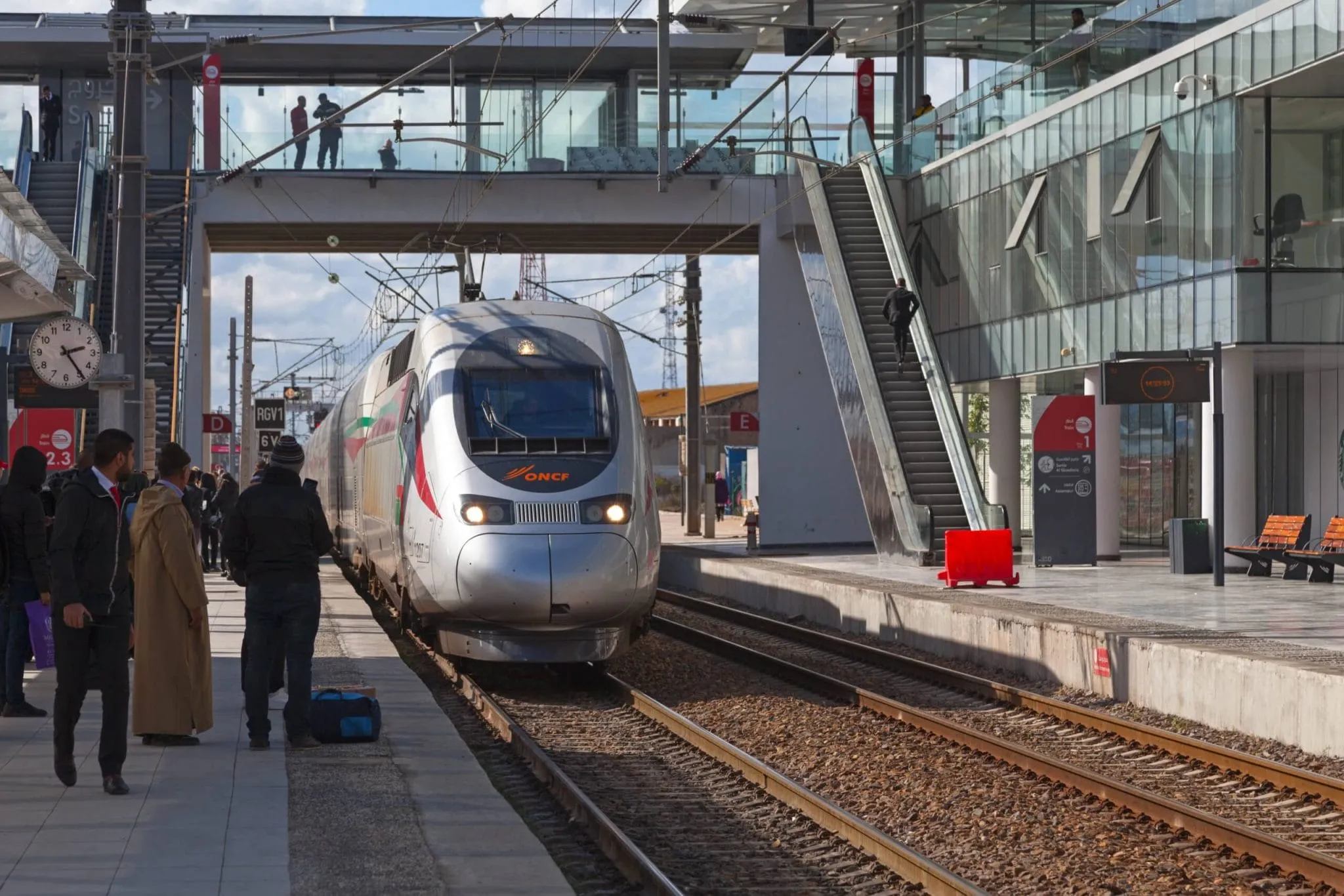

Accelerating Morocco's High-Speed Rail Network
Morocco is making significant strides in the construction of its second high-speed rail line, the Kenitra-Marrakech line, which promises to enhance connectivity across the nation. This ambitious project, which includes extensive infrastructure work, traffic reorganization, the development of new stations, and the acquisition of modern trains, is set to reach a pivotal milestone. The National Office of Railways (ONCF) aims to have the line operational by September 2029, providing ample time to prepare for the 2030 World Cup, which Morocco will co-host with Spain and Portugal.
Upon its completion, the Kenitra-Marrakech high-speed train will extend the existing Al Boraq service over more than 400 kilometers, enabling travel from Tangier to Marrakech in approximately 2 hours and 40 minutes, from Rabat to Marrakech in about 1 hour and 20 minutes, and from Casablanca to Marrakech in roughly one hour. To facilitate this construction, ONCF is temporarily adjusting its transport plan, with service suspensions on September 5 and 6, 2026, followed by revised schedules starting September 14, 2026.
Significant Travel Time Reductions and Service Changes
The anticipated infrastructure is designed to support high-speed travel of up to 320 km/h, which is expected to dramatically shorten travel times between major cities. The journey from Tangier to Marrakech is expected to take around 2 hours and 40 minutes, while travel from Rabat to Marrakech is projected to be reduced to approximately 1 hour and 20 minutes. The most significant time savings will occur on the Casablanca-Marrakech route, where travel time could be cut down to about one hour from over three hours currently.
This project is not solely focused on passenger travel; it is also set to optimize the existing rail network's usage. Conventional lines will be increasingly dedicated to freight transport and rapid shuttle trains, thereby enhancing their capacity and improving overall traffic flow.
As the Kenitra-Marrakech line moves into the construction phase, passengers will experience an intense period of adjustments. Major disruptions are scheduled for the weekend of September 5 and 6, with several services temporarily suspended to ensure safety during construction. Notably, the train service connecting Casablanca to Mohammed V Airport will be halted during this period, with replacement bus services provided. Other routes, including the train service to Settat and the direct line from Safi to Casablanca, will also see interruptions.
Starting September 14, a new transport plan will be introduced, leading to more profound changes in schedules across the national network. This transition phase poses a significant challenge for ONCF, as it aims to maintain smooth service while allowing room for construction to progress.
With various Moroccan and international companies involved in the project, including the Chinese group China Railway 20th Bureau Group and Moroccan firms like TGCC, the construction is gaining momentum. This collaboration highlights the commitment to advancing multiple sections of the line simultaneously.
Furthermore, the development of new stations is an integral part of the project, aimed at transforming them into genuine hubs that enhance the travel experience for users. The engineering group Jesa has been awarded a contract to oversee the scheduling, management, and coordination of these works, representing a significant investment in the future of Moroccan rail transport.
As reported by lebrief.ma.