
Kenya's diplomatic mission in Rabat, Morocco, is currently operating without a translator, a significant issue considering the country's primary business languages are Arabic and French. This situation persists two years after the mission's establishment, which was initially led by a Chargé d'Affaires from December 2023 until the appointment of Kenya's first resident Ambassador in July 2024. Following the ambassador's presentation of Letters of Credence on August 30, 2024, the mission was formally accredited, marking the commencement of its full operations.
According to a recent report presented in the National Assembly, the mission is currently staffed by six home-based personnel and eight locally engaged officers. However, it is facing critical staffing deficiencies, notably the absence of essential roles such as a translator, clerk, foreign relations officer, and defence attaché. This lack of personnel has resulted in an overwhelming workload for the existing staff, leading to operational strain and diminished efficiency. The report highlights that the absence of a translator is particularly detrimental, as it hampers effective communication within a predominantly French- and Arabic-speaking environment, thereby negatively impacting diplomatic engagement and service delivery.
The leader of the delegation and Kamukunji MP, Yusuf Hassan, emphasized the importance of these roles for ensuring effective diplomatic engagement and administrative efficiency. The committee, chaired by Belgut MP Nelson Koech, noted that the current staff is compelled to juggle multiple responsibilities beyond their primary duties due to the absence of core personnel. The resulting communication barriers, exacerbated by the linguistic demands of the host country, further complicate the mission's operational capacity.
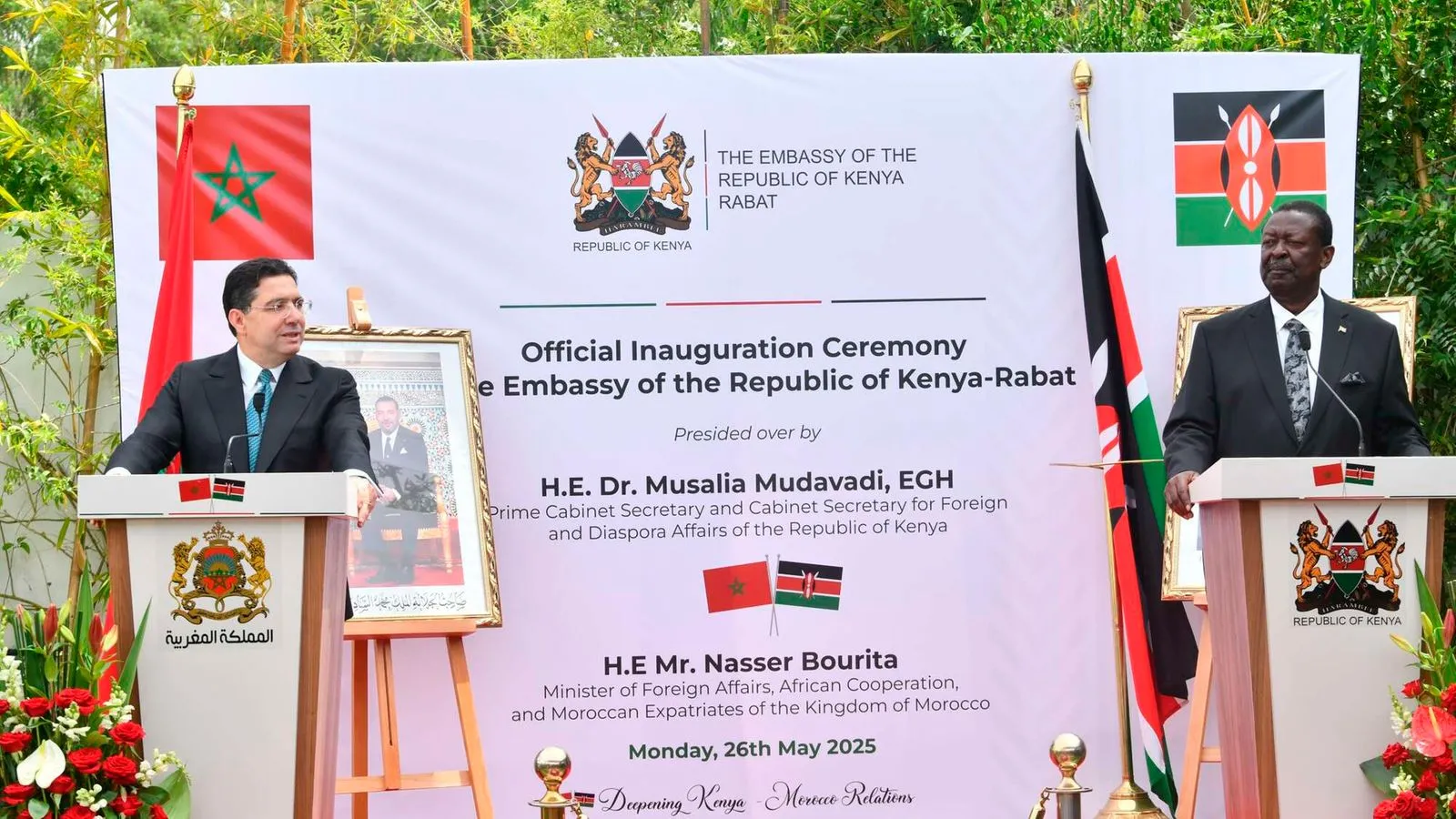
Despite these challenges, the report indicates that the Kenyan Embassy has made notable strides in enhancing bilateral relations. High-level engagements have surged, with visits from Kenya's Prime Cabinet Secretary and several Moroccan ministers, leading to the signing of multiple Memoranda of Understanding across various strategic sectors such as trade, education, housing, and tourism. The mission also successfully organized the Kenya Economic Promotion Week in November 2025, facilitating trade and investment discussions between key stakeholders from the Kenyan and Moroccan private sectors.
Furthermore, the Embassy has played a significant role in capacity-building initiatives, including specialized counter-terrorism training for Kenyan law enforcement in Morocco. Additionally, Kenya has benefited from approximately 20 scholarships annually provided by the Moroccan government in diverse fields, including medicine, engineering, and law, along with expansions in religious studies scholarships that support regional training efforts.
However, despite these achievements, the mission grapples with considerable financial constraints. While the budget allocation for the 2025/2026 financial year has increased to approximately KES 143 million, pending bills have accumulated to around KES 23 million, covering essential expenses such as rent, staff welfare, and operational costs. In some instances, officers have resorted to using personal funds to cover necessary expenses to keep operations running. The high rental costs, estimated at KES 50 million annually for both the chancery and staff residences, significantly drive the mission's expenditures. Unfortunately, budget allocations for rent have consistently fallen short of actual needs, leading to recurring deficits. Furthermore, critical allowances for staff, including foreign allowances and educational benefits for dependents, remain severely underfunded, and medical coverage has only recently been upgraded to a basic level, underscoring the precarious nature of staff welfare arrangements.
As reported by nation.africa.