
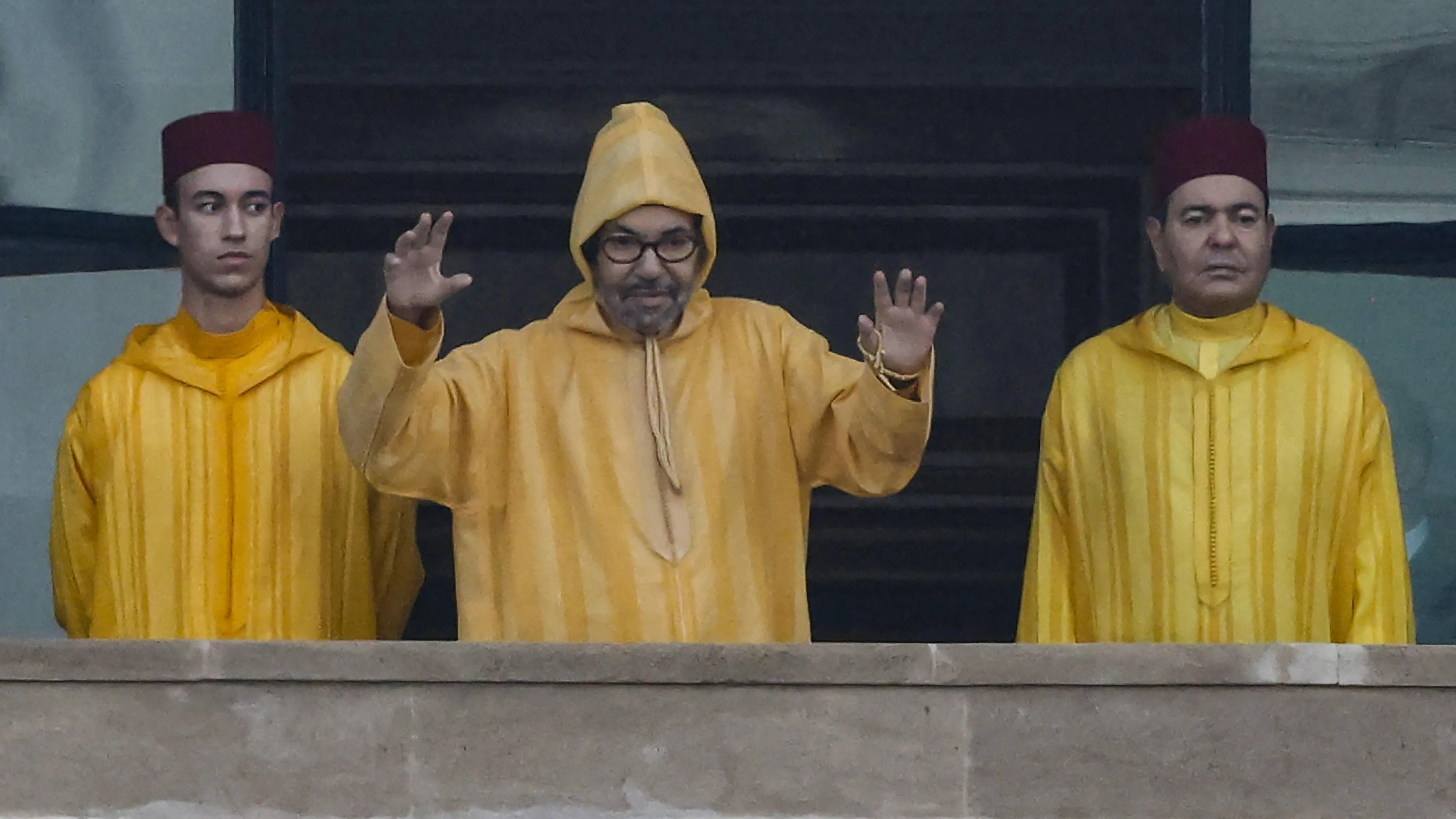

King Mohammed VI Addresses Spain's Exploitation of the Ceuta Migration Crisis
In a significant address to the nation, King Mohammed VI of Morocco has publicly commented on the ongoing migration crisis at the Ceuta border for the first time. During his speech, he condemned what he termed the **"instrumentalization"** of this crisis by certain political and media circles in Spain. The king asserted that cooperation between Morocco and Spain should not be subject to threats or coercion. His remarks came at the inauguration of a new parliamentary session, shortly before the visit of Spanish King Felipe VI and Queen Letizia to Ceuta and Melilla on October 13.
King Mohammed VI emphasized that, in light of the **"irresponsible statements"** made by various political and media entities, Morocco is committed to a sovereign and voluntary collaboration that cannot be influenced by pressure or intimidation tactics. This statement marks the first time he has addressed the crisis, which escalated in late July when approximately 80,000 migrants, predominantly from Morocco, attempted to cross the border into Ceuta.
In a bid to enhance bilateral relations, the monarch announced plans to present Spain with a document delineating a **"clear and practical strategic vision"** aimed at fostering **"joint development, economic competitiveness, and regional stability."** He described Morocco as a **"responsible and reliable partner"** deserving of equitable treatment from its allies. The king acknowledged that the current model of cooperation has reached its limits, evidenced by the recurrent crises at the border, and applied similar analysis to Spain's handling of migration issues.
Challenges Ahead in Moroccan-Spanish Cooperation
King Mohammed VI's address highlighted significant challenges facing Moroccan-Spanish cooperation, particularly concerning outdated legal frameworks and judicial decisions that are misaligned with current realities. He lamented that these obstacles complicate the repatriation of unaccompanied minors and those who falsely seek asylum, inadvertently aiding criminal networks involved in human trafficking.
The Moroccan government has attributed the events in Ceuta to mafia activities and misleading messages circulating on social media. This view was supported by the Spanish government, which suggested that a misinterpretation of a July Supreme Court ruling—prohibiting the immediate return of migrants who arrive by swimming—might have triggered the crisis.
Reflecting on past incidents, King Mohammed VI's comments echoed the events of 2021, during the so-called **"jump to the fence"**, which were linked to the hospitalization of Brahim Gali, the leader of the Polisario Front, and the resulting diplomatic crisis between Madrid and Rabat.
Prior to this address, King Mohammed VI had refrained from commenting publicly on the Ceuta crisis, with his last speech coinciding with the Throne Day, which marked his birthday and the influx of migrants into the autonomous city. The Moroccan Ministry of Foreign Affairs has previously warned against being used as a **"scapegoat"** in Spain's political disputes, asserting that there is no evidence of Morocco's involvement in the mass migration.
In line with the king's sentiments, the Ministry of Foreign Affairs criticized certain Spanish political and media circles for exploiting Morocco for internal political purposes. The ministry also expressed disappointment that established political parties have succumbed to this counterproductive narrative, which prioritizes **"irrational and populist escalation over common sense."**
On the same day the ministry released this statement, the Spanish Congress approved a proposal to grant **[Spanish nationality](https://www.rtve.es/noticias/20260910/congreso-vota-nacionalizacion-saharauis-plena-polemica-marruecos-ley-nietos/17219863.shtml)** to Sahrawis born when the territory was under Spanish administration, potentially affecting around 80,000 individuals. This backdrop of political maneuvering adds complexity to the already tense bilateral relations.
King Mohammed VI's speech also followed the historic appointment of Fatima Ezzahra El Mansouri, the first woman to head the Moroccan government, after her party, the PAM, secured victory in the latest elections held on September 23, which were marked by a high abstention rate.
As reported by rtve.es.
