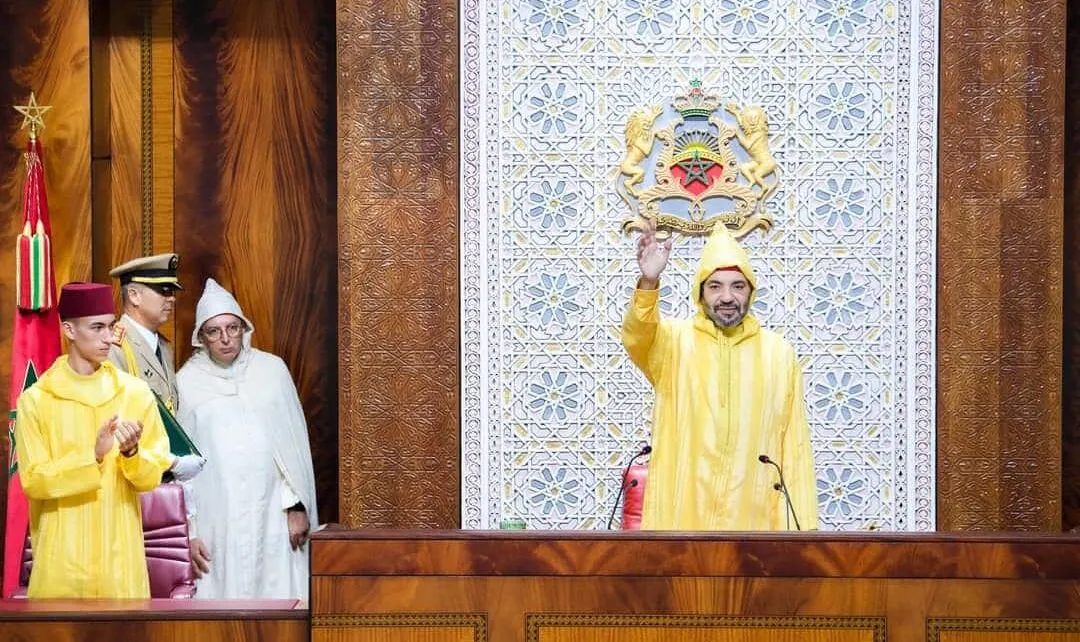

In a compelling address delivered to the Parliament during the opening of the first session of the 12th Legislature, King Mohammed VI of Morocco emphasized the Kingdom's successful efforts in establishing itself as a responsible and dependable international partner. The King articulated that Morocco not only meets its obligations but also anticipates the same level of commitment from its global partners. He highlighted the importance of mutual cooperation, particularly in the context of managing migration, which has yielded significant results due to Morocco's balanced approach.
The Monarch candidly acknowledged that the existing cooperation model regarding migration is outdated, citing the recurrent crises as evidence of its inadequacies. He pointed out that the partnership with Spain, while having achieved notable advancements in various sectors such as combating illegal migration, is currently facing substantial challenges. These challenges arise from outdated legal frameworks and unrealistic judicial decisions that hinder the repatriation of minors and fraudulent asylum seekers, simultaneously exacerbating the issues posed by criminal networks.
Addressing the exploitation of migration issues by some political and media factions, the King asserted that Morocco's partnership choices are sovereign and voluntary, unaffected by external pressures or threats. To address these challenges, Morocco plans to present a document to its partners, outlining a strategic vision aimed at fostering shared development, economic competitiveness, and regional stability.
In his speech, King Mohammed VI also discussed the necessity for a new wave of reforms and substantial projects designed to respond to the rapidly changing geo-economic landscape. He urged for the acceleration of planned infrastructure initiatives and the launch of comprehensive strategies that focus on critical areas such as water, energy, food security, industrial advancement, the digital economy, and artificial intelligence. Moreover, he stressed the importance of developing the Kingdom's strategic reserves and securing a steady supply of essential goods.
The King called upon the private sector to play an active role in Morocco's transformative development, emphasizing the need to prioritize youth issues within public policies and governance agendas. He advocated for a holistic vision that ensures equal opportunities across education, skill development, and economic integration, aiming to instill confidence in the youth regarding their social advancement and the future of their nation.
King Mohammed VI pointed out that the primary challenge ahead lies in engaging with local communities to accurately identify their problems and develop realistic solutions. He underscored the connection between advancing integrated development, enhancing public services, and fostering productive investments with the processes of regionalization and administrative decentralization. Notably, he expressed concern over the ongoing delays and obstacles that have stalled the implementation of decentralization policies, adversely affecting economic and social development initiatives and failing to address citizens' real concerns.
With a firm stance, the King declared that any further delays in implementing the de-concentration charter are unacceptable, emphasizing the necessity of transferring competencies and appropriate resources from the central government to local regions. He called for a reevaluation of the relationship between the State and its Regions to establish effective coordination mechanisms that empower regional authorities in decision-making and project execution.
As reported by northafricapost.com.