
Las Palmas' Bold Stance in the Face of Political Tensions
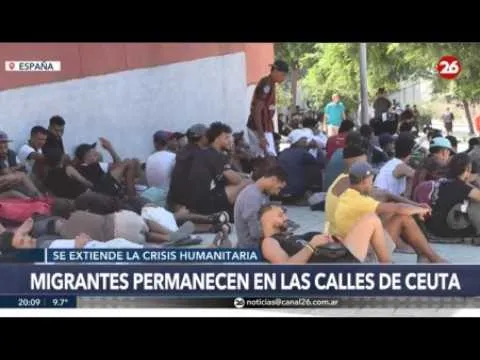
Las Palmas, the representative team from the Canary Islands in Spain's second division league, has ignited a debate that extends beyond the realm of football after making a last-minute decision to participate in a "solidarity initiative" with Ceuta during their match against the local team on Saturday. The team donned jerseys emblazoned with the slogan "Ceuta is not for sale... Ceuta is defended," despite having previously announced their withdrawal from the initiative due to concerns regarding their mission's passage through Moroccan territory. This unexpected move has drawn significant attention and raised questions about the intersection of sports and politics.
Spanish newspaper Marca characterized the move as a "masterstroke," noting that Las Palmas deliberately withheld their true intentions to avoid stirring issues during their transit through Morocco, only revealing their position after the team had safely arrived in Ceuta. Initially, the Ceuta team received approval from La Liga to showcase their players in jerseys bearing the phrase "Ceuta no se vende, Ceuta se defiende" as part of a response to the recent migration crisis affecting the city. Las Palmas had initially agreed to participate but then publicly retracted their support, suggesting a more neutral phrase, "We are all with Ceuta," to mitigate any potential repercussions during their journey through Morocco.
The Implications of a Political Gesture
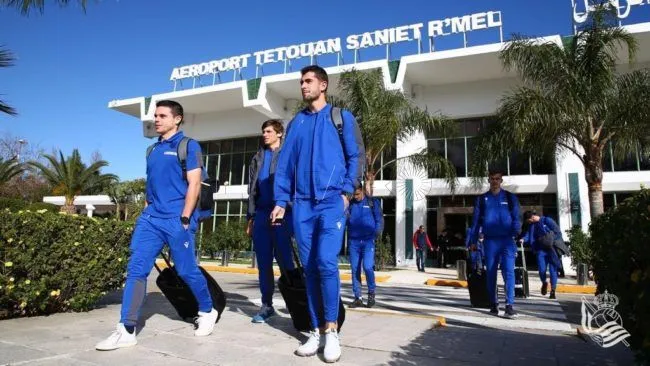
The surprise came on Saturday when Spanish media outlets, including Cadena SER, revealed that the retraction was merely a public stance to keep the true nature of their participation under wraps until they had crossed Moroccan land. Ultimately, the team decided to wear the same jersey alongside Ceuta. This decision is particularly sensitive considering the manner in which Las Palmas traveled; they arrived in Morocco on a private flight to Tetouan Airport before transferring overland to Ceuta, a route planned as the most comfortable for their mission. After the match, the team is scheduled to leave Ceuta by road to Tangier Airport, where a private flight awaits to return them to the Canary Islands, expected to land in Las Palmas in the early hours of Sunday.
This situation has escalated from a mere sporting initiative to a political and public discourse, especially as media reports suggest that the reason for keeping the club's stance secret was the fear that displaying a politically charged slogan related to Ceuta could lead to complications during their time in Morocco. Previously, there had been explicit concerns from Las Palmas management regarding a potential "reaction" or possible Moroccan actions during their transit. Following the revelation of the plan, questions arose regarding whether Moroccan authorities would perceive the action as a simple sporting initiative within Spanish-administered territory or as a political statement from a team benefiting from Moroccan airports and roads in their travels.
A hypothetical scenario has been circulated amidst the controversy: what if Moroccan authorities decided to complicate the mission's return passage to Tangier Airport? In that case, the team might have to seek an alternative route, potentially departing Ceuta by sea towards the Iberian Peninsula before continuing their flight to the Canary Islands. As of now, there has been no official Moroccan indication of such action, nor has there been any official stance regarding the sporting initiative, leaving the situation shrouded in uncertainty and speculation fueled by various comments on the news.
The way in which some Spanish media presented the event, particularly Marca's characterization of concealing the initiative until leaving Moroccan territory as a "masterstroke," has added an additional dimension to the incident. The narrative has shifted from merely depicting a team’s solidarity with a city in distress to suggesting a calculated maneuver with the foresight that it could be interpreted in Morocco as a political provocation. Thus, a match in Spain's second division has transformed into a new extension of the tensions surrounding Ceuta, with anticipation surrounding whether Las Palmas' return journey through Tangier Airport will proceed smoothly or introduce a new chapter to the controversy that preceded the match's kickoff.
As reported by assahifa.com.