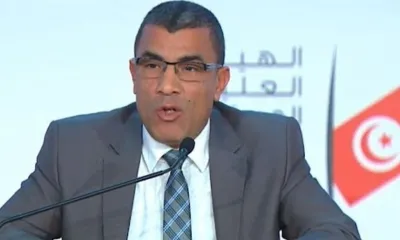

The legislative framework governing municipal elections in Tunisia has been finalized, as confirmed by the official spokesperson for the Independent High Authority for Elections, Mohamed Tleili Mansri, in a statement to "Le Maghreb." This completion awaits the issuance of the presidential decree calling voters to the polls, a crucial step that officially initiates the electoral process, enabling the authority to ratify the electoral calendar and commence the execution of various phases of the electoral obligations.
On September 30, 2026, a decree (Decree No. 4) concerning municipal councils was published in the official gazette of the Tunisian Republic. This decree establishes a new legal framework that governs the composition, tasks, operational methods, and powers of municipal councils, as well as their relationship with municipal administration. The decree consists of 140 articles organized into nine sections. The first section deals with general provisions, while the second focuses on the municipal council, consisting of eight chapters that cover the composition of the council, its responsibilities, operational procedures, and the implementation of its decisions, along with the committees of the council, its bureau, and the roles of the council president. The text also addresses cases of vacancies within the municipal council, the duties of municipal administration and its staff, as well as municipal districts. The remaining sections pertain to the financial system of the municipal council, municipal properties and facilities, collaboration, oversight, inspections, disputes, and municipal conferences, while the ninth section is dedicated to transitional provisions.
According to the spokesperson Mansri, the issuance of Decree No. 4 represents a new foundational law for municipalities, replacing and nullifying the Local Communities Code. He elaborated that the previous code was outdated and did not align with the new legal framework, as it was based on a list-based voting system, whereas the new electoral system is grounded in individual voting, as stipulated in Decree No. 8 of 2023. Mansri emphasized the significance of this new legislative text, stating that "it can be asserted that the legislative aspect of municipal elections has been completed," adding that "thanks to this decree, we now have a specific decree for municipal elections and another for municipal councils."
Regarding the readiness of the Independent High Authority for Elections, Mansri clarified that the authority is fully prepared on all levels—legislatively, logistically, and human resources-wise—to organize these elections. However, he stressed that the organization of the electoral process remains contingent upon the issuance of the presidential decree calling voters and the ratification of the electoral calendar. He remarked that "there is still time to organize municipal elections in 2027," especially after completing the legislative aspect, underscoring that the authority cannot conduct municipal elections without the presidential decree, which he described as a "formal and necessary condition for all electoral processes."
On the matter of the anticipated electoral system, Mansri indicated that the timeframes still allow for conducting municipal elections in a single round rather than two. He explained that the new system also involves the election of the council president and his deputies differently, stating that "the president and deputies are not elected by members but by the candidate who secures the majority of votes." This, according to him, aims to "avoid the tensions that existed in previous councils." Thus, the issuance of Decree No. 4 marks a critical juncture in preparing for municipal elections, as it completes the regulatory texts governing municipal councils. The awaited issuance of the presidential decree calling voters and the ratification of the electoral calendar will be the next important steps to transition from legislative preparation to the executive phase of the municipal electoral process.
As reported by ar.lemaghreb.tn.