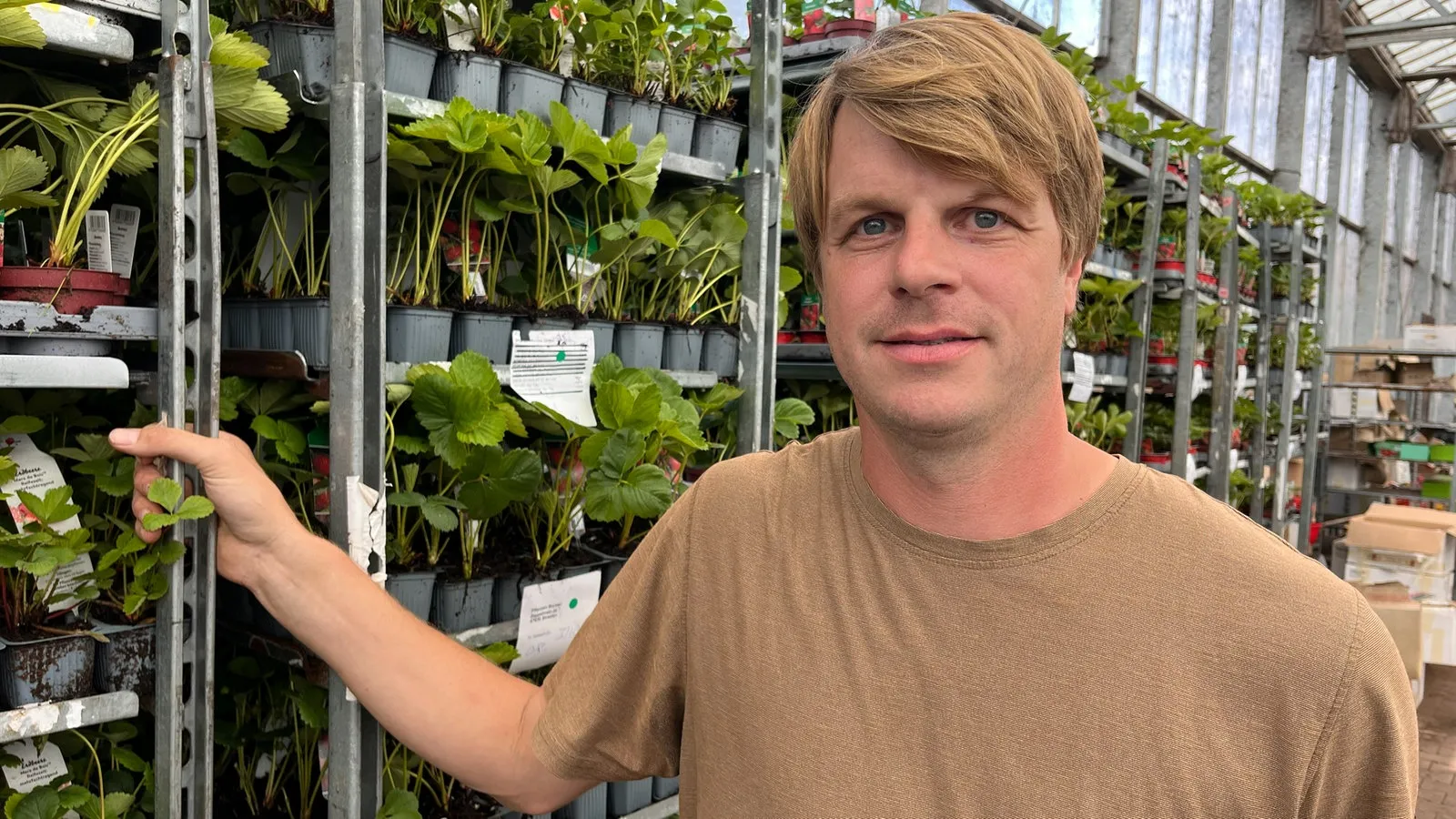

The fruit farmers in North Rhine-Westphalia (NRW) are sounding the alarm as they issue a call to action not just to policymakers but also to consumers: "Do we still want to support local fruit?" Markus Staden, a fruit grower from Telgte, typically enjoys a thriving business, cultivating and selling strawberry plants to farmers across Germany and Europe. In the coming weeks alone, his operation plans to ship out an impressive 20 million plants, contributing to an annual total of approximately 150 million. However, despite these impressive numbers, Staden finds himself increasingly concerned about the future.
The primary source of his anxiety stems from the escalating labor costs, which he and many other farmers in NRW contend are becoming unsustainable. Staden candidly admits, "The minimum wage makes it impossible for us to compete with foreign production." His farm, which employs around 80 permanent staff, also relies on an additional 600 seasonal workers each year to help with the harvest. In a bid to remain competitive, Staden has shifted a portion of his production to Morocco, where labor costs are significantly lower—approximately 20% of what he must pay under Germany's minimum wage laws.
Sarah Meyer, from the Agricultural Chamber of North Rhine-Westphalia, echoes Staden's concerns, emphasizing that fruit cultivation is exceptionally labor-intensive, which consequently drives up the costs of domestic production. A striking example is the recent scarcity of local cherries in supermarkets, illustrating the broader issue at hand. Staden is determined to continue cultivating fruit in NRW as long as it remains viable economically, expressing hope that consumers will still enjoy fruits from regions like Münsterland, the Rhineland, or Lower Rhine in the next two decades.
In a poignant letter to politicians, farmers have articulated their struggles against challenging growing conditions, cheap imports, and, notably, high labor costs. They are steadfast in their demand for an exemption from the legal minimum wage for seasonal agricultural workers. Last summer, the Federal Ministry of Agriculture examined the possibility of such an exemption, but concluded that the minimum wage is legally mandated and applies to seasonal workers in agriculture, leaving no room for exceptions.
Despite this, at a federal party convention in February 2026, the CDU voted in favor of the exemption, although many CDU politicians continue to support this cause, the SPD remains firmly opposed to such exemptions, as do the Greens and the Left Party.
As a member of the Federal Specialty Group for Fruit Farming, Markus Staden frequently engages in dialogue with fellow fruit growers. The situation is dire, with the industry association reporting a significant decline in fruit farming operations across Germany. Currently, approximately 6,500 farms exist in NRW, but nearly 150 are forced to close each year, despite the fact that these farmers maintain high standards of quality, environmental sustainability, and social responsibility. Staden emphasizes that they contribute to short transportation routes and regional value creation.
In the context of fruits like blueberries and raspberries, many consumers have become accustomed to seeing South American berries available year-round in supermarkets. Consequently, when local berries are ripe in the summer, their availability is often overlooked. Therefore, the appeal from fruit farmers is not just directed at retailers but also at consumers directly: "Do we still want to support local fruit?" They argue that regionality, sustainability, and food security should take precedence over cheaper imported fruit.
As reported by www1.wdr.de.