
The Socialist Union Party finds itself at a pivotal moment as the election campaign for the legislative elections set for September 23 commences. This phase is particularly sensitive not only due to the election stakes but also because of the outcomes resulting from the preparations leading up to these elections.
In the lead-up to this critical juncture, the party has witnessed a series of resignations and departures involving various leaders and notable figures within its ranks. Several individuals with leftist affiliations have chosen to shift their allegiance to other political parties, reflecting a significant decline in the Socialist Union's ability to maintain its leading position within the Moroccan left and attract prominent names from its political and historical milieu.
Sequential Departures from the Socialist Union
Although the party's leadership presents its list of candidates as a manifestation of renewal and openness to new competencies, a closer examination of the presented names alongside those of significant figures who have left the party or opted to participate in the upcoming elections under different banners reveals a more complex picture. The Socialist Union, which has been a major political force for decades within the Moroccan left, now appears less capable of retaining individuals who have accumulated organizational and activist experience within its framework, while a segment of leftist figures is seeking political spaces elsewhere, either within the New Left Alliance or in rival parties.
The case of Abdelhadi Khairat exemplifies this transformation, as the historic leader and one of the most recognized names associated with the party's legacy and youth wing chose to join the Progress and Socialism Party last February, following a prolonged estrangement from the Socialist Union and reaching a point of no return in his relationship with the First Secretary, Idriss Lachgar.
Khairat stated in an interview with the first channel at that time that his decision to join the “Book” party came after extensive political discussions, indicating a conviction that continued affiliation with the Socialist Union was no longer viable, underscoring the depth of the rift that had characterized his relationship with the party in recent years.
The indicators of this exodus are not limited to historic figures; in recent weeks, a series of resignations linked to varying degrees of dissatisfaction with the management of nominations and electoral lists has occurred. The Socialist Union's political bureau accepted the resignation of Rjaâa Boukhali Tahiri, while Mariam Jamal Idrissi announced her departure from the party amid the controversy surrounding the results of the regional list selection process.
While the party asserts that these procedures adhered to its internal laws and regulations and that the political bureau unanimously approved the results of the adjudication committees, the individuals involved provided differing interpretations of how these rules and criteria were applied.
The situation became even more pronounced with the resignation of Salwa Dmnati, a former member of the political bureau and current parliamentarian, who announced her departure from the party and its organizational structures on August 31. She criticized the management methodologies and organizational and political choices that the party had adopted.
In a similar vein, the departure of Ammar Hamza, the former regional secretary of the Socialist Union in Ouezzane, to the Authenticity and Modernity Party, accompanied by several officials and party members, was officially announced at the end of August. This departure is significant given Hamza's previous organizational role within the Socialist Union and its timing as parties prepare to reshape their local bases in anticipation of the elections.
Has the Moroccan Left Surpassed the Socialist Union?
The issue for the Socialist Union extends beyond merely losing certain names; it raises a deeper question about the party's position within the broader Moroccan left. The striking paradox in the 2026 elections is that part of the discourse surrounding the future of the left is no longer centered on the Socialist Union's capacity to lead this movement, but rather on the emergence of new centers of attraction that may compete with it for leftist talents and figures.
In this context, the establishment of the “Left Alliance” between the Unified Socialist Party and the Democratic Left Federation on June 3 provided a new political framework that explicitly expresses the desire to unify parts of the leftist diaspora and contest the legislative elections with a shared political project. Both parties affirmed that this was not merely a temporary electoral coordination but rather a political alliance aimed at creating a democratic and progressive alternative to overcome the fragmentation that has characterized the left in recent years.
Conversely, the Socialist Union has struggled to realize its announced “project” of alliance with the Progress and Socialism Party, declared in 2023, which quickly stalled despite the historical common ground between the two, as they were both part of the democratic “block” and together secured a total of 56 seats in the 2021 elections, with 34 for the Socialists and 22 for the allies of Nabil Benabdallah.
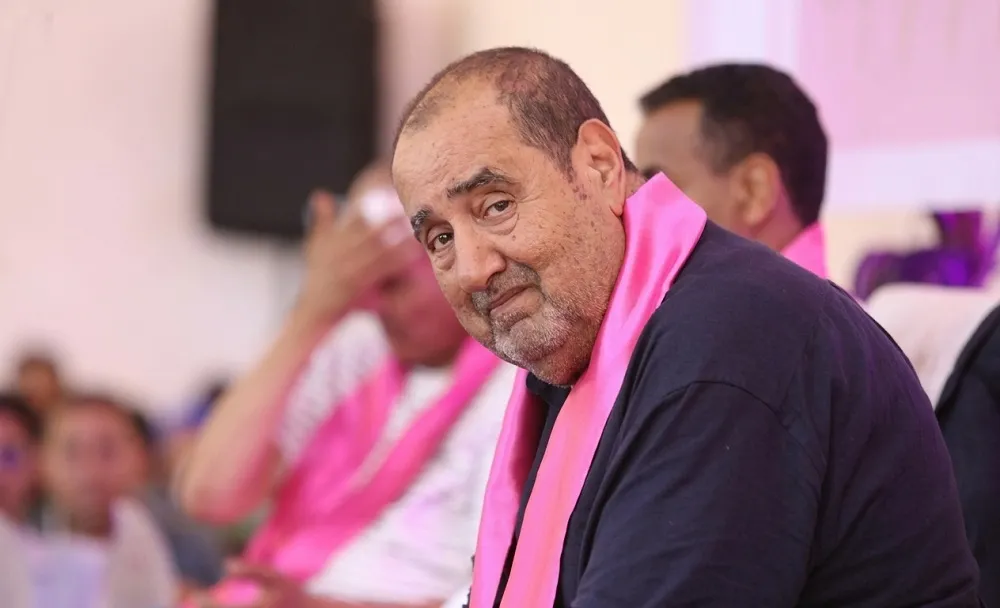
Now, the Socialist Union presents its list in a different light. Despite its geographic breadth and the inclusion of numerous constituencies, the names that hold the greatest potential to attract national attention appear relatively limited. Prominent figures include Abdel Karim Benatiq, a former minister and well-known face within the party, and Hassan Lachkar, the party's candidate in the Rabat Shalla constituency, who stands out primarily for being the son of the First Secretary.
The discourse surrounding the nature of this list intensifies, especially considering that the Socialist Union itself has relied on attracting individuals with prior political trajectories from outside the party in various regions. For instance, in the Marrakech-Safi region, several names presented previously belonged to other parties before joining the Socialist Union, in what is described as a strategy of attracting political “migrants.” Notable figures in this new landscape include Ahmed Toumi, Hamid Akroud, Abdessamad Akdash, and Abdelghani Kamel.
This paradox raises a significant political question: Has the Socialist Union, which was historically a school for training activists and leaders, increasingly relied on attracting ready-made names from outside its organizational structure while some of its own members and leaders depart for other parties?
While Idriss Lachgar asserts that 77% of local list candidates represent new faces and that the party is banking on youth, women, and competencies, this rhetoric is met with debate regarding the meaning of renewal that no longer arises from within the Socialist school but rather compensates for organizational deficiencies.
Lachgar faces sharp criticism for allegedly sidelining actual “Socialists” in favor of electoral figures in pursuit of parliamentary seats, rather than focusing on rebuilding the party, akin to what occurred in 2021 with the former regional secretary of the Socialist Union in Tangier-Asilah, Ahmed Yahya, who opposed Lachgar's bypassing of local organizations in selecting candidates, leading to a judicial conflict between the two.
This point becomes central to understanding the transformation that has occurred within the Socialist Union, which no longer possesses the same momentum it once had, that vast reservoir of leaders and activists who formed its organizational, union, and intellectual extension. Additionally, several figures historically associated with the Socialist line have either left the party or distanced themselves from decision-making centers within it, and affiliation with the Socialist Union no longer appears to be an obvious choice for many new leftist figures, as other frameworks present themselves as spaces for reconstructing the left on more unifying foundations.
As reported by assahifa.com.