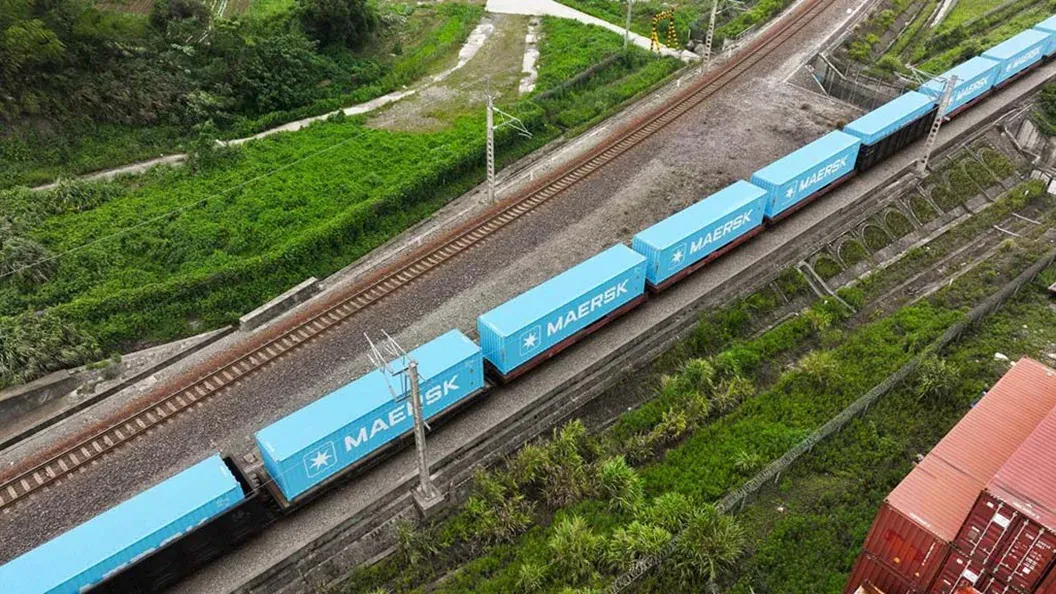

A.P. Moller-Maersk has officially designated the Tanger Med port as its principal gateway for Moroccan logistics, establishing a dedicated rail corridor to transport cargo destined for Casablanca, instead of relying on direct maritime routes. This strategic shift, fully operational since August 2026, is a direct response to the persistent congestion that has plagued the Casablanca port, which managed a staggering 17 million tons of cargo in just the first half of the year. This move also capitalizes on the rail capacity that the Moroccan national operator, ONCF, is expanding as part of an ambitious approximately $10 billion modernization initiative.
Rethinking Casablanca’s Congestion Crisis
Casablanca, which accounts for about 35 percent of Morocco's total port traffic, is currently experiencing significant strain due to escalating cargo volumes. The National Ports Agency reported an impressive 3.53 million tons traversing the port in June alone, marking a 32 percent increase from the same month in 2025, with imports constituting around three-quarters of the first half's traffic. Earlier in the year, Maersk had already introduced a Congestion Fee Destination surcharge on shipments bound for Casablanca as a direct response to this backlog. Instead of merely adjusting pricing to mitigate congestion, Maersk has opted to fundamentally restructure its routing within Morocco. Containers now dock at Tanger Med, from where they are transported via rail to Casablanca, approximately 500 kilometers away, utilizing a corridor operated by ONCF. This service not only integrates customs clearance and inland storage but also includes last-mile truck delivery, thereby streamlining the entire process. Furthermore, Maersk eliminated a peak season inland surcharge of 1,400 dirhams on this route as of June 10, 2026. Ruben Moratinos, the Head of Sales for Maersk in the Maghreb region, indicated that this innovative model aims to address recurring customer concerns regarding the movement of cargo into Morocco’s commercial hub, though specific cargo volumes expected to transition onto the corridor remain unspecified.
Exploiting Infrastructure Investments for Freight Efficiency
The decision by Maersk to adopt this new routing strategy is made possible by existing infrastructure that Morocco is developing for various purposes. The ONCF Rail 2040 initiative, valued at approximately 96 billion dirhams (nearly $10 billion), encompasses the construction of dedicated freight tracks along the Atlantic corridor, alongside notable passenger rail enhancements. A cornerstone of this initiative is the recent $445 million contract awarded to the French firm Colas, aimed at civil works and track systems for the Kenitra to Marrakech extension. Originally focused on passenger speed, this project has evolved into a $10.3 billion endeavor, recently endorsed by King Mohammed VI, which will extend Morocco’s high-speed rail line from Tangier to Kenitra by an additional 430 kilometers southward. Freight considerations are increasingly being integrated into this financing framework, with the African Development Bank approving a €205 million loan for a project known by its French acronym PADIF, which targets track components and switches specifically to accommodate the rising freight traffic alongside passenger services around the Casablanca rail hub. This financing is in addition to a €365 million package from the European Investment Bank agreed upon in late June, which includes funding for ONCF's rehabilitation efforts outside of the high-speed rail development.
As reported by constructionreviewonline.com.