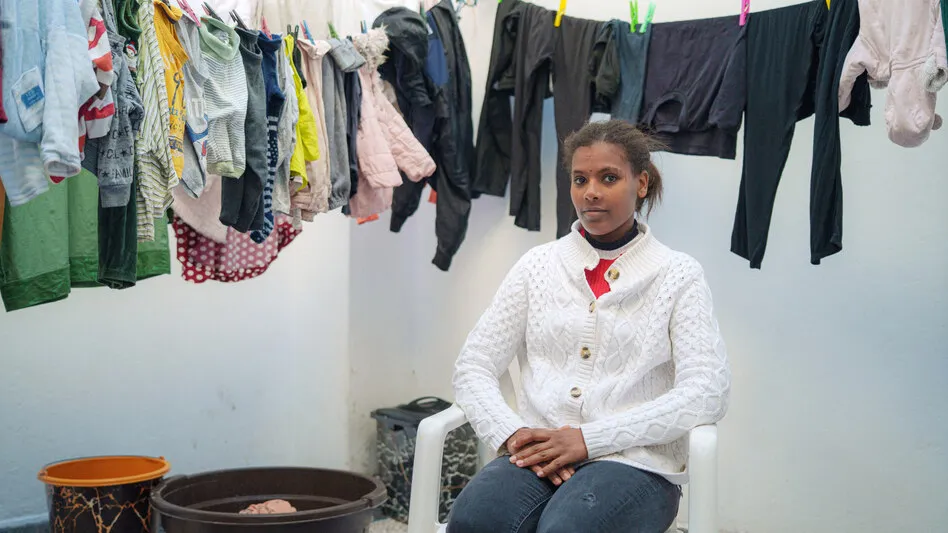

The Struggles and Resilience of Migrant Women at Maison Baobab
Maison Baobab, located in the heart of Rabat, Morocco, serves as a sanctuary for numerous migrant women who have faced the harrowing realities of violence and conflict in their homelands. For many, this refuge offers a temporary respite from their turbulent pasts, yet it remains a stopgap solution in their arduous journey toward safety and stability. One such resident, Bsrat Hndya, reflects on her painful journey, recalling how the sounds of rockets in her village in Tigray, Ethiopia, compelled her to flee in 2020. This conflict has since escalated, claiming countless lives and forcing many, like Hndya, to navigate perilous routes across Africa.
After enduring a treacherous journey through Sudan, Libya, and Algeria, Hndya found herself in Morocco, having clandestinely crossed its border on foot. "I've been stuck here for three years," she laments, sharing her story from a cramped space in Maison Baobab, where she shares a room with four other women and two children. The environment is filled with the sounds of children playing and the hustle of daily life, yet it is a stark contrast to the hardships she faced before arriving. Initially homeless, Hndya discovered the women’s shelter through a friend, and her relief upon gaining a safe place to sleep is palpable. "I am very happy to have a bed here," she says, expressing gratitude for the support she has received.
Hndya’s room is a reflection of her resilience and hope; adorned with a laminated image of Saint Michael, a symbol of strength in her Christian Orthodox faith, she finds solace in its presence. "My religion has given me the strength to endure this," she shares, her fingers gently tracing the image that reminds her of her father and her lost family. Despite her physical safety, the emotional scars of her journey linger, as she grapples with the trauma of leaving behind her home and the memories of violence she escaped.
Community Support and Challenges Faced by Migrant Women
Since its inception in 2015, Maison Baobab has provided a temporary home for approximately 50 women and their children from various African nations, including Sudan, Ivory Coast, and Ethiopia. Here, residents can stay for around three months, during which they can participate in literacy and sewing classes, seek medical assistance, and begin the healing process from their harrowing experiences. Mariama Diaby, a dedicated worker at the shelter, emphasizes the importance of offering a safe haven for women who have fled war, gender-based violence, and poverty. "We accept women of all nationalities and backgrounds," she explains, highlighting the diverse and often traumatic experiences that bring them to the shelter.
The plight of these women is exacerbated by the prevalence of gender-based violence along migration routes, especially through desert regions and border areas like Libya. Many arrive at Maison Baobab with heartbreaking stories of abandonment, sexual violence, and trauma that have left them in desperate need of support. Diaby notes that some women arrive pregnant due to assaults faced during their journey, underscoring the urgent need for compassionate care and resources.
Despite the shelter’s efforts, the challenges are immense. Many women remain undocumented, which complicates their ability to seek medical help or report abuse to authorities. The lack of psychological support services for migrants in Morocco further compounds their struggles, leaving them vulnerable and isolated. "The few social workers available are themselves in difficult situations, faced with the harrowing stories of the women they assist," says Imane Echchikhi, a migration advisor with GIZ. This reality underscores the critical role that NGOs play in providing essential services and advocacy for migrant populations.
Migrant women like Hndya have shown remarkable resilience in the face of adversity. However, their stories are often overshadowed by the broader issues surrounding migration in Morocco. While the country serves as a transit point for many, the journey is fraught with danger and uncertainty, often leading to exploitation and abuse. As these women strive for a better life, their experiences must be recognized and addressed to foster a more equitable and just society for all.
As reported by taz.de.