
The Evolution of Maritime Law and State Sovereignty
The history of maritime law is intricately linked to the gradual appropriation of the oceans by nation-states, evolving from the idea of oceans as common heritage to a landscape marked by territorial claims and economic interests. Mustapha Sehimi, a law professor and political scientist, explores this transformation and the resultant tensions between major powers, while also shedding light on the new challenges posed by seabed exploitation and climate change. For much of human history, the vast expanses of the ocean were seen as untouchable by state authority. However, with the advent of modern technologies and the rapid advancements of the 20th century, this perception began to shift. The division of humanity into nation-states has led to a geopolitical landscape where each community seeks to assert its laws over designated territories, which inherently includes aspirations for expansion, power, and wealth. Given that approximately 71% of the Earth’s surface is covered by water, a pertinent question arises: can states truly lay claim to the oceans? This inquiry not only reflects historical debates but continues to resonate in contemporary international relations.
From Territorial Waters to Exclusive Economic Zones
Historically, maritime law recognized a territorial sea extending only three nautical miles from a state's coastline, a limit that corresponded to the range of cannon fire in the 18th century. Even within this narrow boundary, foreign vessels were granted the right of innocent passage. However, the vast expanses of the high seas remained free for all. Following World War II, the United States emerged as a dominant maritime power, championing the concept of freedom of the seas. The decolonization movement fundamentally altered this landscape, leading to the establishment of international maritime law that now governs approximately 200 states, compared to just 50 post-World War II. Eager to harness maritime resources, newly independent nations sought to secure economic rights over waters adjacent to their coasts. Under the auspices of the United Nations, a series of negotiations from 1973 to 1982 culminated in the United Nations Convention on the Law of the Sea, signed in Montego Bay, Jamaica. This treaty, ratified by 171 states and the European Union, introduced significant innovations, including the Exclusive Economic Zone (EEZ), which extends 200 nautical miles from the coastline, providing coastal states exclusive rights to marine resources such as fishing and hydrocarbons. While navigation freedom in the EEZ is preserved, many coastal nations now demand oversight over foreign military activities.
Furthermore, the Convention recognized the rights of coastal states over their continental shelves, following a declaration by President Truman in 1945 asserting U.S. jurisdiction over its continental shelf. This development, which coincided with the rise of offshore oil exploitation, was solidified in the Montego Bay treaty. Within the same limits of 200 nautical miles, coastal states may exploit resources, while areas beyond this limit are designated as the common heritage of humanity. Despite its significance, the treaty has not definitively resolved the question of ocean ownership. It has merely reframed the discourse, igniting ongoing disputes, particularly regarding the demarcation of EEZs and continental shelves that often overlap in various global maritime regions. These disputes frequently escalate to international courts, highlighting the contention surrounding ocean governance.
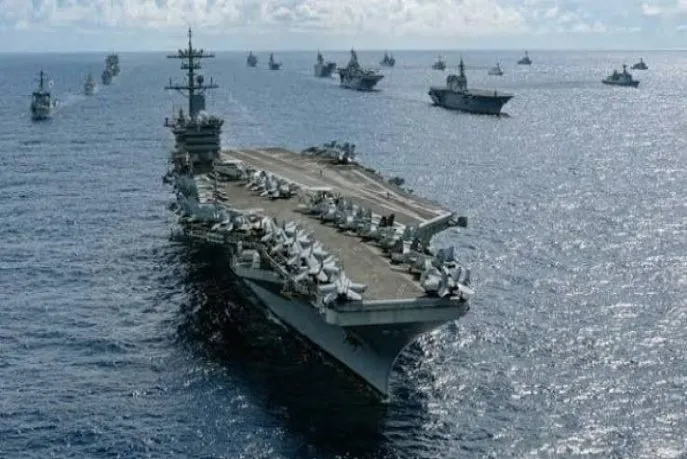
As a rival maritime power, China has emerged, challenging U.S. dominance with a unique approach. While historically presenting itself as a supporter of the developing world, China’s naval expansion and claims in the South China Sea reflect a strategic pivot. Claiming historical rights in addition to those stipulated by the Convention, China seeks to assert its influence over these waters, positioning itself against U.S. naval presence. The narrative of the South China Sea as 'mare nostrum' for China underscores a bold assertion of sovereignty that complicates existing maritime laws.
Ultimately, the Montego Bay Convention aspires to serve as a 'Constitution for the oceans,' aiming to regulate maritime disputes among states. Nevertheless, the overarching trend remains one of appropriation, intensified by a resurgence of nationalism. The technological advancements that have facilitated this appropriation have also contributed to climate change, which threatens to alter the relationship between land and sea. Rising sea levels may rekindle territorial disputes and pose existential questions for vulnerable island nations, where the pressing concern is no longer who owns the sea, but whether these nations will soon be submerged beneath it.
As reported by quid.ma.