
Severe Flooding and Its Impact on Moroccan Communities
In the wake of the devastating floods that struck northern and western Morocco between 2025 and 2026, causing extensive damage and displacing nearly 180,000 residents, the urgency for effective disaster response training became evident. The flooding, which affected over 2 million people, transformed once-dry riverbeds into torrents of muddy water, inundating cities and prompting significant humanitarian challenges. This backdrop set the stage for Maroc Mantlet 2026, a collaborative training exercise orchestrated by the Royal Moroccan Armed Forces (FAR) and the Utah National Guard's Region VIII Homeland Response Force (HRF). The lessons learned from these catastrophic floods were pivotal in shaping the objectives of the training, ensuring that both the Utah Guardsmen and their Moroccan counterparts were better equipped to handle similar emergencies in the future.
Building Stronger Response Capabilities Through Collaborative Training
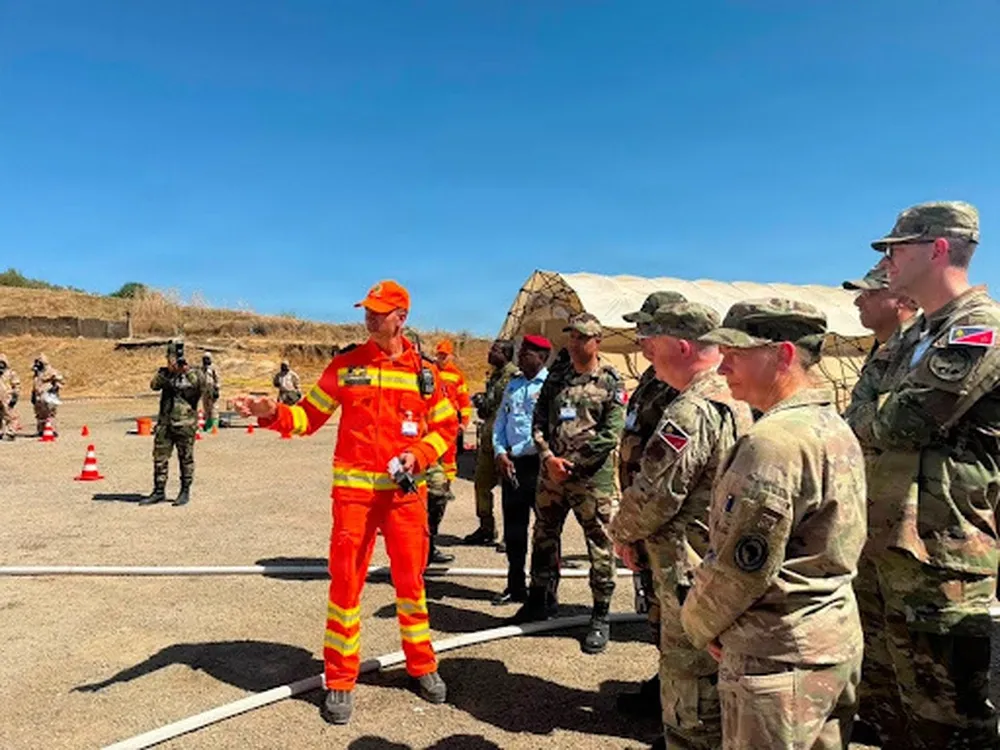
Colonel Patricia Brown, the commander of Region VIII HRF and the 97th Troop Command of the Utah Army National Guard, remarked on the significance of the ongoing partnership, stating, "This year’s event continues 13 years of cooperation between the Utah National Guard Homeland Response Force Elements and the FAR Unité de Secours et de Sauvetage (USS)." Each year, the focus has been on enhancing the operational capabilities of the USS, thereby improving their responsiveness to both natural and man-made disasters. The training scenarios are designed to introduce a variety of complications, simulating real-world emergencies that responders might encounter. Such comprehensive exercises highlight communication gaps and resource coordination challenges, which are essential for effective disaster management.
Brigadier General Gene Buckner of the Utah Air National Guard emphasized the importance of seamless coordination during emergencies, stating, "Hand-in-hand coordination in search and rescue and medical triage ensures we can respond rapidly and seamlessly to any natural or man-made crisis." The training has evolved over the years, shifting focus among various disaster response scenarios, including wildland fire management and underwater rescue operations. Each iteration enhances the shared experiences of the FAR and the Utah National Guard, fostering a culture of continuous improvement in their collaborative efforts.
Underpinning the training's mission is the humanitarian assistance project led by the Utah National Guard, which seeks to develop complex scenarios to prepare military personnel for a wide range of emergencies. This includes responses to natural disasters, as well as managing Explosive Ordnance Disposal (EOD) incidents and Chemical, Biological, Radiological, and Nuclear (CBRN) events. The insights gained and knowledge shared through these exercises underscore the enduring value of Maroc Mantlet 2026. Participants are not only honing their skills but are also learning invaluable lessons from one another, thus bridging gaps in expertise through shared experiences.
As U.S. Air Force Captain Robert Matheny articulated, the exchanges during Maroc Mantlet provide Guardsmen with authentic training experiences in diverse environments, enabling them to refine their skills while learning from the Moroccan military. The essence of Maroc Mantlet is encapsulated in its name; a mantlet symbolizes a resilient and adaptable shield. Together, Moroccan soldiers and their Utah counterparts embody this spirit, forming a powerful and agile team ready to face future challenges, whether they involve storms, flooding, or other natural disasters. Ultimately, the participants of Maroc Mantlet 2026 emerged from the training stronger and more united in their commitment to serve communities in need.
As reported by dvidshub.net.