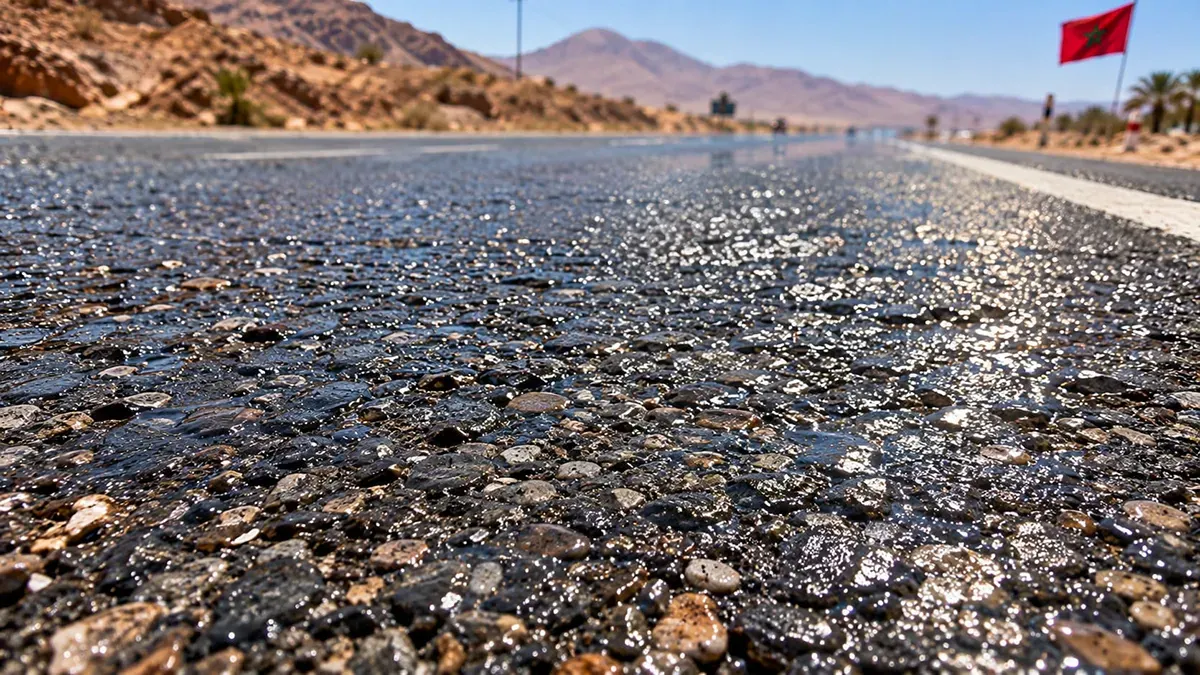
In the heart of Marrakech and Agadir, navigating the bustling streets during the sweltering midday sun has transformed into a strenuous experience for many. The oppressive heat, with temperatures often soaring beyond 40 degrees Celsius, has left residents seeking refuge indoors, relying heavily on air conditioning. This alarming trend is especially prevalent across the Mediterranean region and southern Europe, where climate anomalies have become increasingly common, as documented by the Copernicus Climate Change Service (C3S). However, instead of merely installing shade structures or misting systems, Moroccan authorities are implementing a groundbreaking infrastructure initiative aimed at tackling the root causes of urban overheating.
The recent civil engineering projects in these Moroccan cities reflect a significant shift in urban planning strategy. Historically, urban designs have prioritized road surfaces optimized for vehicular traffic, often neglecting the thermal implications of such choices. The Moroccan government is now pioneering a pilot program that replaces conventional asphalt with innovative permeable pavements designed to enhance energy efficiency and significantly reduce the urban heat island effect.
The Blind Spot of Conventional Asphalt
One of the key issues with traditional asphalt surfaces is their high thermal mass, which allows them to absorb and retain heat throughout the day. This black bituminous material traps solar radiation, releasing heat slowly during the night, thereby preventing air temperatures from cooling effectively. Moreover, conventional pavements are typically impermeable, which leads to stormwater runoff being funneled into municipal drainage systems, consequently drying out the underlying soils and exacerbating flood risks during heavy rains.
To combat these challenges, Moroccan engineers have reimagined pavement design from the ground up. The new permeable pavements boast high porosity and an open cellular structure, allowing rainwater to seep directly into the subsoil rather than pooling on the surface. This innovative approach promotes the development of shallow water retention layers beneath the roadbed, fundamentally altering how urban spaces manage rainfall and heat.
Evaporative Cooling as a Thermal Shield
The hydrological absorption capabilities of these permeable surfaces play a pivotal role in regulating ground temperatures. By retaining moisture beneath the surface, these pavements activate passive evaporative cooling during peak solar hours. When exposed to the sun, the porous materials release cool water vapor, which counteracts the heat absorbed by the pavement and diminishes the urban heat island effect. This approach aligns with standards advocated by organizations such as UN-Habitat.
However, a critical challenge arises in the arid summer months when rainfall is scarce across the Maghreb region. To maintain the effectiveness of the permeable pavements, the underlying roadbed is directly connected to the municipal reclaimed water system. This allows for the use of treated wastewater for sub-irrigation, ensuring the granular layer remains adequately moist without depleting potable water supplies, and exemplifying a shift in resource management practices.
The benefits of these newly installed breathable pavements extend beyond mere pedestrian comfort. By reducing the amount of heat radiating from the pavement and affecting nearby buildings, the thermal load on adjacent structures significantly decreases. This, in turn, lessens the reliance on air conditioning systems in both residential and commercial spaces, providing immediate relief to the electrical grid during peak demand hours and minimizing economic vulnerabilities associated with infrastructure strain.
What initially began as a retrofitting initiative in Marrakech and Agadir now stands as a pioneering model for regions grappling with recurrent heatwaves. The Moroccan government’s commitment to addressing urban overheating demonstrates that solutions lie not in increasing energy consumption but in innovating the materials used in urban infrastructure. This progressive approach may well serve as a blueprint for sustainable road design throughout the Mediterranean region.
As reported by atalayar.com.