
The bustling streets of Marrakech and Agadir during midday have become increasingly unbearable due to suffocating heat. With thermometers recording extreme temperatures across the Mediterranean basin and southern Europe frequently experiencing heatwaves exceeding 40 degrees Celsius, urban dwellers often seek refuge under air conditioning systems. However, municipal teams in Morocco are not merely installing shade cloths or misting systems; instead, they are completely stripping the pavement beneath the feet of residents, demonstrating the Kingdom of Morocco's commitment to modernizing its infrastructure.
This urban requalification across these metropolises is grounded in a structural diagnosis. For decades, the design of modern cities has favored surfaces intended for the swift movement of vehicular traffic, often without considering their thermal repercussions. In a bid to reverse this traditional model, authorities have embarked on a pilot project that moves away from conventional bituminous asphalt to address the very root of urban overheating through sustainable solutions aimed at energy efficiency.
The Weakness of Traditional Asphalt
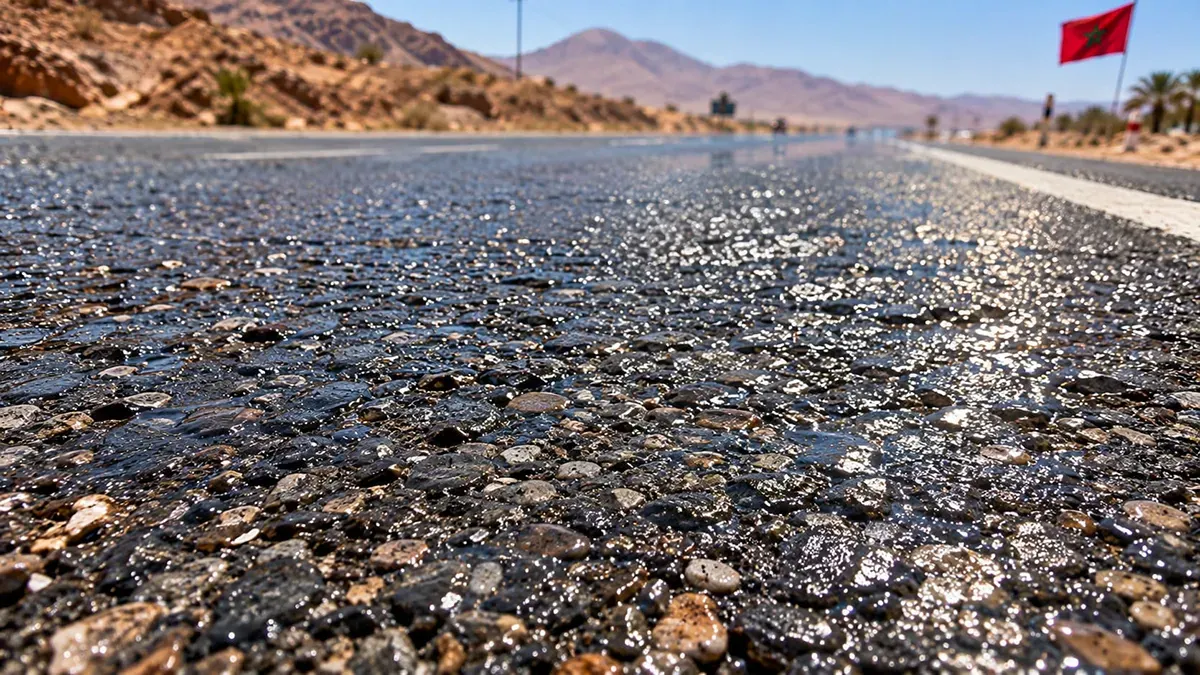
The foundation of this transformation lies in the thermodynamic behavior of the roadways that crisscross urban areas. Traditional black bituminous asphalt possesses high thermal inertia, absorbing direct solar radiation for up to twelve hours a day and slowly releasing it throughout the night, preventing a drop in nighttime temperatures. This heat retention is compounded by its impermeability, which instantly redirects rainwater into drainage systems, drying out the subsoil and increasing the risks of sudden floods during intense downpours.
Breaking this cycle necessitated a reevaluation of the material composition from the granular foundations upward. Instead of using water-resistant asphalt, the new developments incorporate highly porous, draining surfaces with open cellular structures. This innovative approach allows precipitation to infiltrate the underlying layers without forming puddles, thereby fostering the gradual formation of subsurface aquifers beneath the roadways.
Evaporation as a Thermal Shield
The principle behind regulating urban temperatures lies precisely in this water retention. Confined beneath a porous structure, the moisture does not flow into collectors but is activated by sunlight. Direct solar radiation triggers a continuous process of passive evaporative cooling, where the ground releases low-temperature vapor, neutralizing thermal radiation at the surface and minimizing the urban heat island effect before warm air can rise to pedestrian level, in line with guidelines from UN-Habitat.
The main logistical challenge arises during arid summer periods when rainfall is absent from the Maghreb calendar. To prevent the material from drying out and losing its cooling properties, the infrastructure is connected to the municipal network of treated and reused wastewater. Through micro-irrigation solely powered by recycled water, the granular bed maintains an optimal moisture level without consuming potable water, complementing the structural transformations implemented to optimize territorial resources.
The introduction of this breathable pavement extends beyond mere thermal comfort for public space users. By dissipating the heat reflection that typically strikes the facades and glass fronts of ground-floor buildings, the thermal load absorbed by constructions is significantly reduced. The decrease in external temperatures lessens the demand on air conditioning systems in homes and businesses, contributing to alleviating the electrical grid during peak summer consumption periods and mitigating economic vulnerability against unforeseen energy management challenges.
This pilot project in Marrakech and Agadir stands as a technical reference for communities facing recurrent heatwaves. By demonstrating that the solution to urban overheating does not solely rely on increased energy consumption but rather on a transformation of urban materials, Morocco's model fuels a necessary discussion about the future of roadways in the Mediterranean region.
As reported by atalayar.com.