
Marrakech Welcomes the Eighth International Aerospace Exhibition
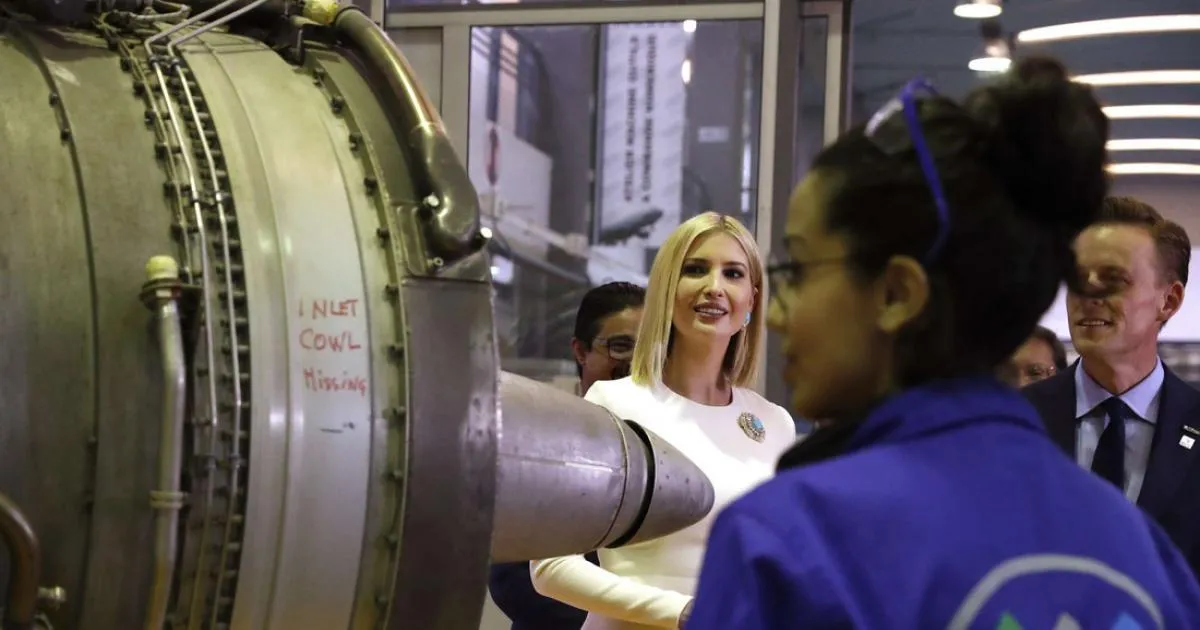
Marrakech is set to host the eighth edition of the International Aerospace Exhibition from October 7 to 10. This significant event aims to attract more international partnerships and investments, aligning with Morocco's strategic vision to localize this promising industry. With approximately 200 exhibitors from 27 countries, along with official delegations and major global companies such as Airbus, Boeing, Safran, Lockheed Martin, and L3 Harris, the exhibition stands as a testament to Morocco's growing role in the aerospace sector.
Transforming the Aerospace Landscape
The importance of the exhibition extends beyond showcasing aircraft and cutting-edge technologies; it serves as a vital platform for networking among manufacturers, suppliers, and investors. Morocco is gradually transitioning from merely hosting production units linked to global supply chains to developing a more integrated industrial ecosystem that encompasses engineering, maintenance, electronics, composite materials, and precision manufacturing. The statistics from the sector reflect a significant transformation achieved over the past years, with aerospace export revenues soaring from under one billion dirhams in 2004 to over 26 billion dirhams in 2024, as the sector now boasts more than 150 active players.
Morocco's strategy is underpinned by its capability to attract specialized international companies. For instance, Hexcel, a company specializing in composite materials used in aircraft, has expanded its facility in Casablanca to cover an area of 24,000 square meters, with expectations to increase employment at the site to around 400 employees by 2026. Additionally, Trelleborg has launched a new project in Nouacer with an investment of approximately 106 million dirhams for manufacturing insulation systems used in the aviation sector.
Safran prominently figures in this transformation with the establishment of a comprehensive industrial project for aircraft engines in Nouacer. This initiative includes a factory for assembling and testing LEAP engines, alongside a facility for maintenance and repair, with investments amounting to 2.1 billion dirhams for the assembly and testing plant, capable of handling up to 350 engines annually, and an additional project for maintenance and repair with an investment of 1.3 billion dirhams.
Rabat is also focusing on strengthening local suppliers within this system, moving beyond the mere attraction of foreign companies. In 2025, the Ministry of Industry signed agreements with companies linked to the Collins Aerospace ecosystem to develop assembly lines, electronic components, and high-precision parts, aiming to expand the scope of local industrial skills and capabilities. This approach closely mirrors the path taken by Morocco in the automotive industry, where the attraction of Renault, Stellantis, and hundreds of suppliers has led to the establishment of specialized systems and an increase in local integration.
Data from the Ministry of Industry confirms that the automotive sector has become Morocco’s largest export sector, generating revenues close to 196 billion dirhams and creating over 250,000 direct jobs. Rabat is betting on leveraging this experience in aviation by providing infrastructure, incentives, training, and connecting local companies with global groups.
The government is designating industrial spaces in Nouacer, Tangier, and other regions as part of its support framework for the aviation sector, alongside programs for investment financing, training, and technology transfer. The agreement with Boeing exemplifies this direction, targeting the creation of a supplier ecosystem for the company in Morocco comprising 120 suppliers, with expectations for annual exports to reach one billion dollars and the creation of 8,700 specialized jobs.
Through these efforts, Morocco aims to make the aviation industry a new phase in its manufacturing journey, evolving from the assembly and production of specific parts to possessing broader capabilities in engineering, engines, maintenance, composite materials, and high-precision manufacturing. The Marrakech exhibition, therefore, serves as a showcase for these ambitions and a platform to attract further investments that can expand Morocco's presence within global aviation value chains.
As reported by middle-east-online.com.