
Empowering Emerging Filmmakers at the Marrakech Short Film Festival
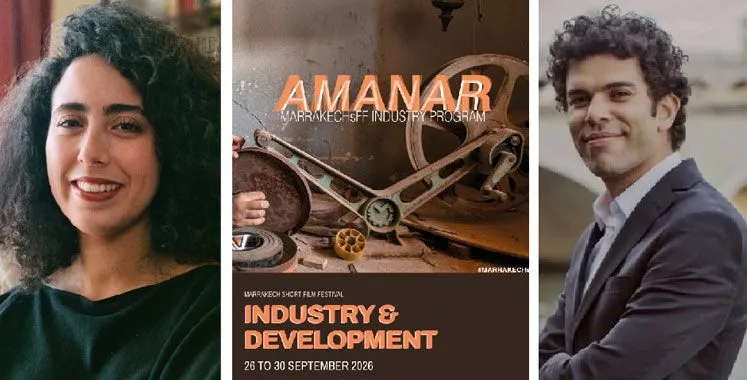
The Marrakech Short Film Festival is taking significant strides with its new Amanar 2026 initiative, which serves as a professional platform dedicated to supporting screenwriters, directors, and producers. Scheduled from September 26 to 30, this initiative aims to enhance connections between Moroccan, African, Arab, and European cinema. The term 'Amanar,' meaning 'the guiding star' in Tamazight, reflects the festival's mission to illuminate the path for emerging filmmakers. This year's event features a tripartite structure: the Industry Days on September 26 and 27 at FOLK Marrakech will gather twelve industry professionals to discuss critical topics such as development, financing, co-production, distribution, and programming. Following this, the Development Lab will take place on September 28 and 29 at the World Storytelling Cafe, where five Moroccan film projects will be refined in a closed-door setting with the guidance of international mentors. Finally, on September 30, the 'Pitch Your Short' session will offer directors the opportunity to present their projects to producers, distributors, sales agents, and programmers.
From Script to International Distribution
The program for the Industry Days is meticulously designed to reflect the various stages of a short film's lifecycle. Notably, the development and finishing processes of African films will be tackled by Moustapha Sawadogo from the Ateliers Yennenga of Fespaco and Romain Ruef from Atlantis Studios Marrakech. Discussions will also delve into the economic realities of post-production and the transformations associated with artificial intelligence. A focus on co-production in the Arab world will be led by Sophia Menni and Muhammad Taymour, while international sales expert Gilles Duffaut from Media Art will conduct a masterclass on marketing short films abroad. Participants will have the chance to learn about funding mechanisms from the CNC, presented by Morad Kertobi, followed by a roundtable on co-production with France featuring industry figures like Sébastien Hussenot, Sophia Menni, and Bertrand Rouchit. The second day will shift focus to alternative forms of circulation and collaboration, with Muhammad Taymour and Linda Mutawi sharing insights from two co-production experiences between the Arab world and Europe. Iratxe Fresneda and Daniela Stephan will address the writing and production of hybrid films centered around exile, culminating in a session dedicated to festival selection committees with Alice Kharoubi and Bertrand Rouchit.
The inaugural Development Lab of Amanar showcases five promising Moroccan projects. Over two intensive days, their directors will receive mentorship from an esteemed group including Morad Kertobi, Muhammad Taymour, Sophia Menni, Alice Kharoubi, and Linda Mutawi. The selected projects are 'Tenghity, the Forbidden Poem' by Intissar El Azhari, produced by On Set Productions; 'Unsettled' by Maria Dobli Bennani, produced by Rita Berrada-La Prod; 'Avant Première' by Saad Benidir; 'Alo Mimti' by Rida Chebbi; and 'Fragments of an Ordinary Day' by Zahra Berrada, produced by Oumayma Zekri Ajarrai-May Advisory Studio. The program will culminate in a public presentation of these projects during 'Pitch Your Short,' where the five directors will showcase their work to industry professionals and engage in discussions with the audience. The best pitch will be awarded the Amanar Development Prize. Additionally, Zinebi will invite one project to Bilbao in November 2026, while Atlantis Studios Marrakech will assist with the post-production of another project. A distinctive feature of Amanar is its commitment to long-term support; in 2027, the five directors will continue their work in Cairo under the mentorship of Egyptian experts, in collaboration with Muhammad Taymour and the Egyptian Film Producers Club. The Amanar team also plans to follow up on these projects for twelve months, facilitating monthly exchanges, networking with producers, and providing guidance on labs and platforms that can aid in their development. According to Tarek Bouraque, the Amanar program director, addressing the deficit in access to professional networks is crucial. He believes that emerging filmmakers need opportunities to connect with those who 'read scripts, fund, co-produce, sell, and select films.'
As reported by aujourdhui.ma.