
Marrakech Set to Benefit from Innovative Desalination Project
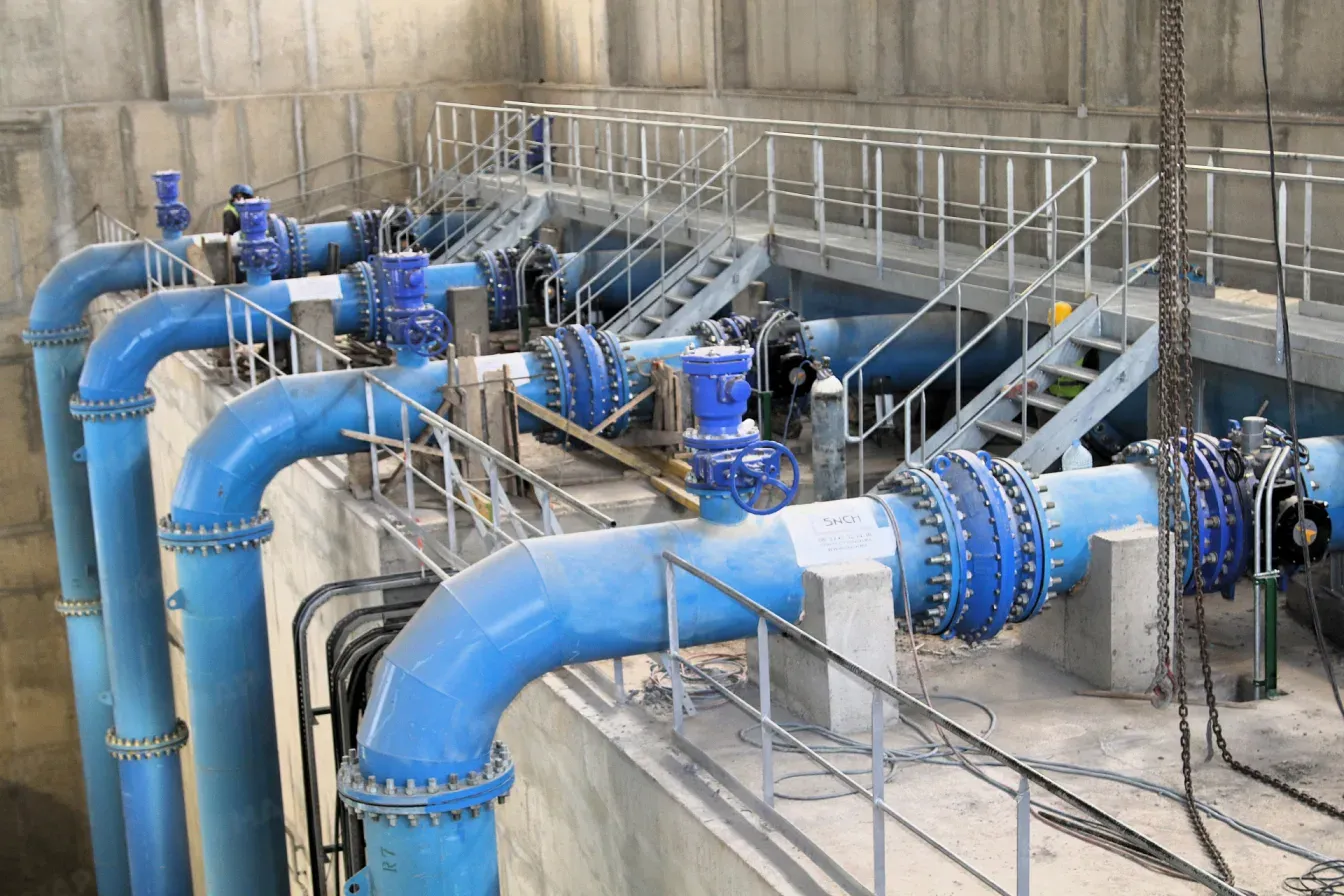
Greater Marrakech is on the verge of a transformative water management initiative, as it prepares to receive desalinated seawater from the coastal city of Safi by the end of July. This initiative stands as one of Morocco’s most ambitious water infrastructure projects to date, aimed at addressing the persistent water scarcity challenges that have affected the region. The ambitious project, which is nearing its completion, is being executed by the Société Régionale Multiservices (SRM) of Marrakech-Safi and involves the construction of a desalination plant operated by OCP Green Water, the water division of the leading phosphate company OCP Group. This facility has the capacity to pump approximately 100 million cubic meters of desalinated water annually through an extensive network of 185.3 kilometers of steel adduction pipelines, ensuring a reliable water supply to Morocco’s premier tourist destination.
According to Mohamed Meziani, provincial director for the SRM Marrakech-Safi and the director overseeing the transfer project, this initiative is heralded as one of the most critical undertakings at the national level, particularly in securing a sustainable supply of drinking water. He confirmed that technical trials are expected to commence shortly to validate the effective transfer of water to Marrakech. The financial investment for this noteworthy infrastructure project amounts to MAD 4.2 billion (approximately $420 million), funded through the state general budget and the Ministry of Interior, with a designed capacity to deliver a continuous flow of 3.2 cubic meters per second from Safi to Marrakech.
Addressing Water Scarcity Through Innovative Solutions
The Marrakech-Safi region has consistently ranked among Morocco’s most water-stressed areas, grappling with issues stemming from recurring drought cycles and increasing pressure on traditional water sources. As a consequence, the adoption of unconventional solutions such as desalination has become not only desirable but essential. The water transfer system incorporates several sophisticated components, including three pumping stations and a regulation reservoir situated near Centre 44 Oulad Dlim in the prefecture of Marrakech. Hicham El Haou, head of the drinking water works service at SRM Marrakech-Safi, elaborated that this reservoir will receive water from the pumping stations at a rate of 3.2 cubic meters per second before channeling it by gravity toward Marrakech via a steel pipeline, which culminates in a distribution chamber that feeds into the city’s broader water network.
This distribution system further divides into two major pipelines. The first pipeline directs water to the RamRam reservoir, located northwest of Marrakech, which boasts a capacity of 30,000 cubic meters. Additionally, a new reservoir with a capacity of 60,000 cubic meters is currently under construction at the same site to accommodate the incoming volumes of desalinated water. The second pipeline, extending approximately 35 kilometers, supplies the Route d’Ourika reservoirs, which hold 85,000 cubic meters and cater to the wider urban area. Furthermore, Meziani highlighted additional storage capabilities within the system, which include a 20,000-cubic-meter reservoir, two reservoirs of 10,000 cubic meters each, and a 10,000-cubic-meter surge tank that facilitates the gravitational flow of water to Marrakech.
This groundbreaking project aligns with a broader national strategy aimed at enhancing water resource management across Morocco. By facilitating the transfer of water resources from coastal production zones to inland regions facing structural deficits, similar arrangements have already been implemented in cities such as Settat and Khouribga, where desalinated water is utilized for drinking supply. Currently, Morocco's annual desalination capacity stands at 420 million cubic meters, with ambitious plans to scale this up to 1.7 billion cubic meters, as noted by Minister of Equipment and Water Nizar Baraka. A new desalination facility in Tiznit, projected to have a capacity of up to 350 million cubic meters, is expected to commence construction by the end of next year.
In addition to these desalination efforts, Morocco is also advancing significant interconnection projects aimed at linking water basins, including the Bouregreg and Oum Er-Rbia basins, set to begin in December, along with future expansions connecting Oued Laou to the Sebou basin. These interconnections are anticipated to facilitate the annual transfer of between 1 and 1.2 billion cubic meters of water to provinces facing deficits, thereby addressing both drinking water requirements and agricultural irrigation in the Doukkala and Chaouia regions. For Marrakech, the implications of this project extend far beyond mere residential consumption, as the city’s stature as Morocco’s leading tourist hub, coupled with ongoing demographic growth, has precipitated a significant surge in water demand that current resources can no longer satisfy. Once fully operational, the pipeline is expected to provide Greater Marrakech with a permanent supplementary source of water, resilient to drought conditions, thereby strengthening the city’s distribution network and diminishing its vulnerability to the cyclical nature of water scarcity that has historically plagued the region.
As reported by moroccoworldnews.com.