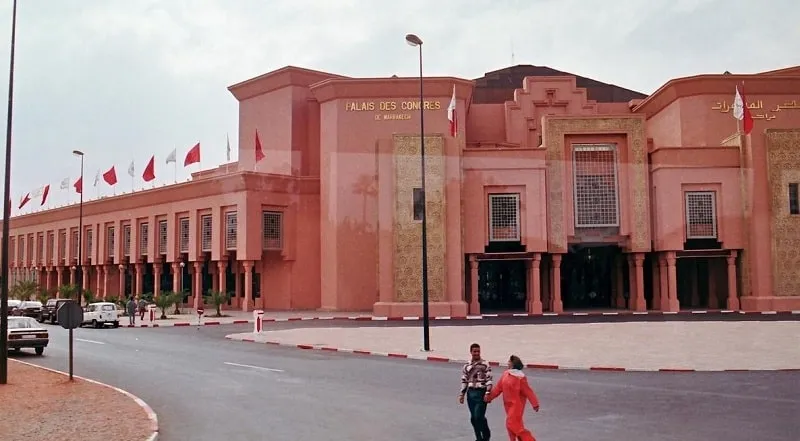

The Marrakech Congress and Exhibition Palace has been heralded as a "strategic project" aimed at bolstering the city's position in the business tourism sector for the past two decades. However, this ambitious initiative remains in limbo. Various sources from both the public and private sectors indicate that current impediments primarily stem from governance issues, with the project's realization now hinging on the decisions of the forthcoming government. This situation raises significant questions about the management of major projects in Morocco.
This long-anticipated facility, which was supposed to serve as a key asset in enhancing Marrakech's appeal in the business tourism domain, continues to be delayed. Despite the tourism sector exceeding the national roadmap's targets, with expectations to attract 26 million visitors two years ahead of schedule, the completion of this critical structure is unlikely before 2029 or 2030, according to multiple reliable sources.
The progression of the project appears to be regressing rather than advancing. According to insiders, the delays are not attributed to funding issues or technical constraints; rather, they are rooted in a complex governance structure that complicates the involvement of various stakeholders. The multitude of entities required to approve different stages of the project, including the regional and municipal authorities, the ministries of Tourism and Interior, the Moroccan Tourism Engineering Company (SMIT), and the CDG, which owns the land, has led to prolonged decision-making processes.
Fragmented Governance Hindering Progress
A public official closely associated with the project has indicated that the focus on organizing the Africa Cup of Nations (CAN) in 2025 has delayed critical decisions. However, the primary challenge arises from the sheer number of participants involved in validating the project's various phases. As the official explains, when an ambitious project relies on multiple decision-making centers, the procedures become cumbersome and timelines more challenging to manage. This sentiment is echoed by several industry stakeholders, who identify the dispersion of responsibilities as a significant factor in the repeated postponements of project deadlines.
Professional Consensus on Project Value
Despite the ongoing delays, there seems to be a unanimous agreement among stakeholders about the project's strategic importance for Marrakech. A leader from the National Confederation of Tourism (CNT) asserts that all parties recognize the project's potential benefits. The main deficiency to date has been the lack of a sufficiently centralized management structure to expedite decision-making and effectively coordinate the various stakeholders involved.
Industry professionals view the Congress Palace as a crucial lever for developing business tourism, particularly within the MICE segment (Meetings, Incentives, Conventions, Exhibitions), which has been identified as a high-potential growth area for several years. This clientele is particularly appealing to tourism operators as they tend to travel primarily during the week, thus helping to maintain activity levels during times when occupancy rates are typically lower compared to weekends and holidays.
As the upcoming legislative elections approach, the project appears to be postponed to the next parliamentary term. Observers note that this new timeline highlights the ongoing governance challenges affecting certain key projects, despite broad consensus on their necessity. A regional council leader has suggested that the project is unlikely to reach fruition before 2029 or 2030, emphasizing that its success will depend largely on the next government’s ability to foster more effective coordination among the various involved institutions and prioritize this project accordingly.
As reported by medias24.com.