
Marrakech's Traditional Music Enriches Doctoral Thesis
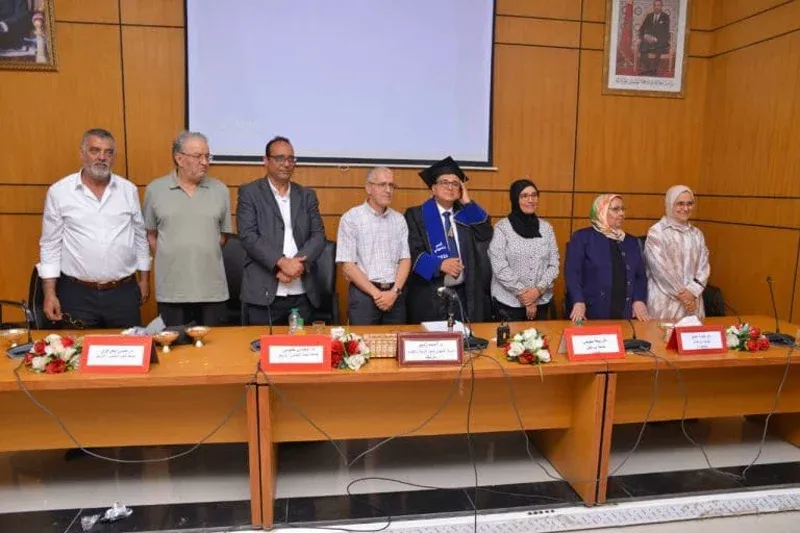
Anas Al-Malhouni, a researcher at the Faculty of Languages, Arts, and Humanities at Ibn Tofail University in Kenitra, has successfully defended his doctoral thesis titled "Challenges in the Study of Moroccan Popular Singing Arts: Towards Developing an Analytical Approach to the Art of Marrakech’s 'Daqqa'". This thesis aims to explore methodologies for studying, documenting, and analyzing Moroccan folk music heritage through a multidisciplinary scientific lens.
The thesis is anchored in a central issue concerning the transition from a general and impressionistic description of Moroccan popular singing arts to a complex scientific analysis that encompasses their musical, anthropological, social, and symbolic dimensions. It emphasizes the importance of preserving the unique characteristics of these arts, which fundamentally rely on oral traditions, live performance, and collective memory.
Al-Malhouni chose the art of 'Daqqa' from Marrakech as a practical model for his approach, as it is a deeply rooted artistic expression in the cultural memory of the city, closely tied to local neighborhoods, the celebrations of Ashura, and communal performance rituals. This art form is distinguished by its unique blend of melodic words, rhythm, movement, instruments, and performance leadership.
The researcher highlights that Moroccan popular singing arts constitute a rich cultural repository, encompassing texts, sounds, rhythms, instruments, movements, rituals, and collective memory. However, he notes that their presence in academic research, scientific documentation, and educational methodologies still requires more systematic attention that aligns with their cultural significance.
Al-Malhouni explained that the selection of his thesis topic resulted from the intersection of three pathways in his personal and professional experiences: emotional, media, and educational. His over twenty years of experience at Marrakech Radio allowed him direct interaction with Moroccan folk singing arts through program preparation, interviews with researchers and practitioners, festival coverage, and documentation of testimonials from several bearers of this heritage.
This extensive experience revealed a contradiction between the richness of the oral heritage preserved in the memories of elders, groups, and practitioners, and the limited written scientific material documenting the lives of artists, texts, instruments, rhythms, and performance contexts.
Moreover, Al-Malhouni asserted that his experience teaching music education has contributed to enhancing this interest, as he observed the limited representation of many Moroccan popular music genres in school curricula and textbooks, despite their potential roles in developing aesthetic taste, rhythmic sensitivity, and enhancing students' understanding of Morocco’s rich cultural and artistic diversity.
The thesis concludes with a call to transition from viewing popular art merely as entertainment to recognizing it as a living cultural and anthropological document, encapsulating patterns of memory, values, social relationships, and forms of collective expression. It underscores the importance of documenting oral singing heritage, particularly texts, rhythms, instruments, performance rituals, and knowledge retained by practitioners, in light of rapid social and cultural transformations that may affect the continuity of certain components.
It is noteworthy that this thesis aims to contribute to filling part of the gap concerning the scientific archiving of Moroccan oral arts, linking university research with heritage bearers in the field, while also paving the way for the application of accumulated scientific knowledge about these arts in the educational sector.
As reported by hespress.com.