

According to sources from AP and EFE, a significant number of Moroccan migrants who crossed into Spain have been returning from the border city of Ceuta, which lies adjacent to Morocco. This mass repatriation follows a recently announced agreement between the two nations and the dire lack of basic supplies to meet the needs of these migrants. The situation has been reported extensively by police sources, highlighting the urgency of the crisis.
On Friday, Spanish Prime Minister Pedro Sánchez condemned the massive influx of migrants, labeling it an “attack” and a “violation of Spain's territorial integrity.” He attributed this crisis to human trafficking networks that exploit vulnerable individuals seeking a better life in Europe. The situation has drawn international attention, as it has been leveraged by the Trump administration in the United States to rally electoral support ahead of the midterm elections. Trump, without providing evidence, warned that if Democrats regain control of Congress, the U.S. could face a similar immigration crisis.
“What is happening in Spain, with tens of thousands of illegal immigrants invading the country, happened in the United States during ‘sleepy’ Joe Biden's administration,” Trump stated in a social media post on Friday. He further asserted that such a crisis would reoccur, potentially worse, if Democrats were to regain power.
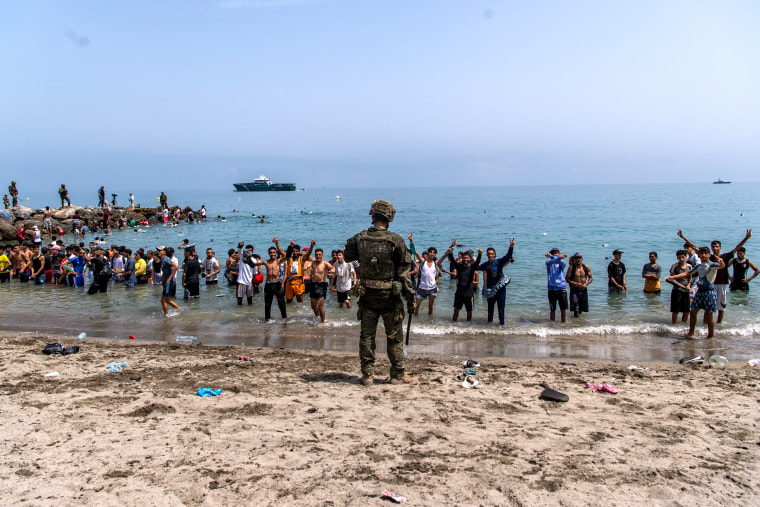
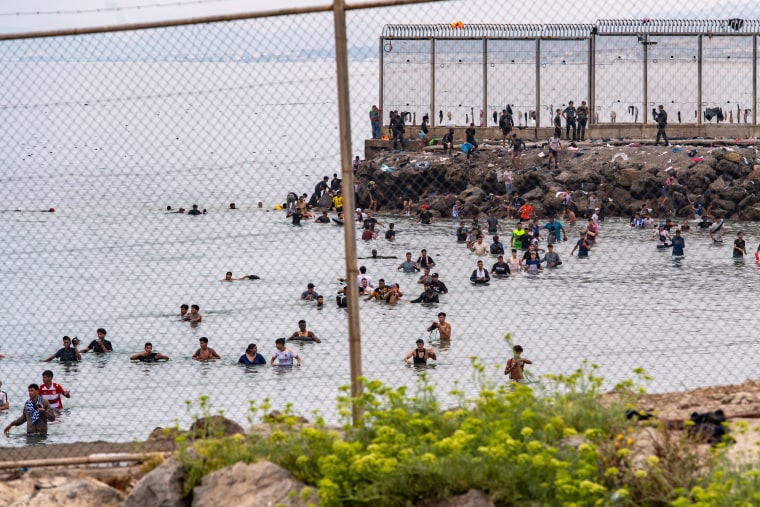
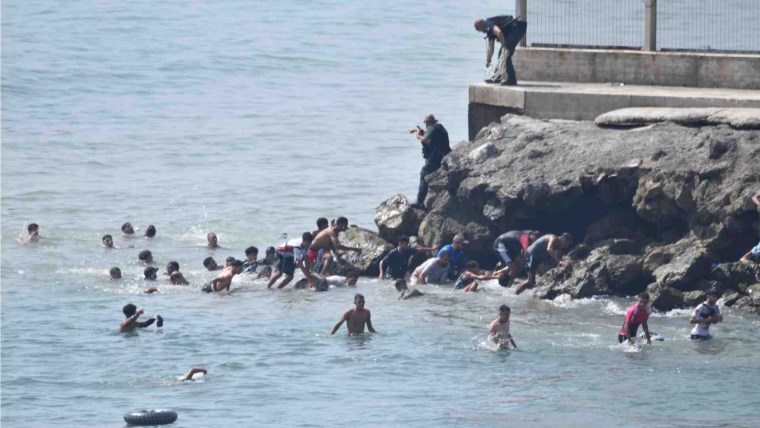
From last Thursday, it is estimated that around 50,000 migrants irregularly entered Ceuta, a city located in North Africa. Approximately 40,000 of these individuals have opted to return voluntarily after enduring days without access to basic necessities. Tragically, these recent crossings have resulted in the loss of at least 67 lives, with local authorities recovering bodies along the Ceuta coastline. The Civil Guard is actively searching for more victims in areas near the Tarajal border pier, where many migrants swam to reach Ceuta.
With this latest report, the total number of migrants who have perished in 2023 while attempting to swim into this Spanish city has risen to 99. Many Moroccan migrants are driven by the hope of finding better opportunities in Europe amidst the lack of prospects in their home country. A 21-year-old aspiring teacher, Abdulah Buji, expressed his determination to seek a brighter future, stating, “Spain offers you the chance to build your future, unlike Morocco.” However, upon arriving in Ceuta, Buji and others quickly realized that their dreams were still far from reach.
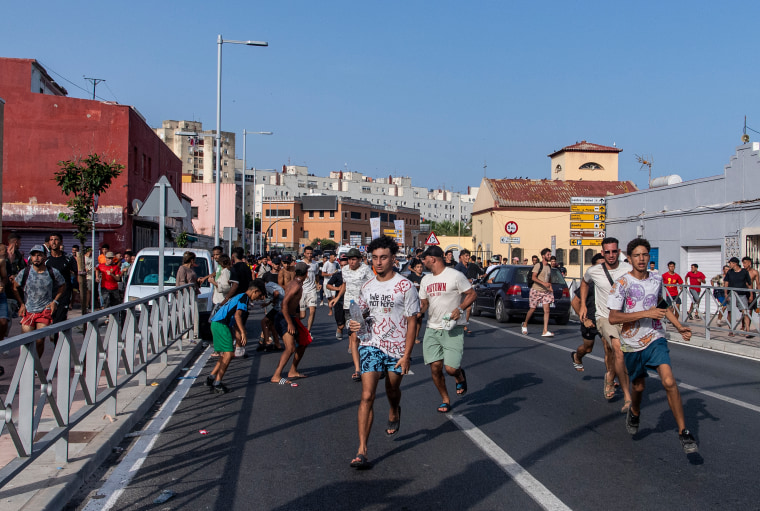
Ceuta's streets are currently filled with thousands of individuals, leading local businesses and bars to close as migrants struggle to find shelter and food. Buji recounted a harrowing near-miss with death while attempting to swim to Ceuta, losing his belongings and money in the process. Facing a potential legal limbo and detention, he ultimately made the difficult decision to turn back.
In response to the ongoing crisis, both the military and police in Ceuta are conducting operations in areas known to harbor small illegal migrant settlements. Authorities have been clear in informing migrants that they must approach the border and that their situations will not be regularized. Ceuta's conservative leader, Juan Jesús Vivas, emphasized that the city has not yet returned to normalcy, as thousands remain on the streets, stating that the crisis “remains open.”
Vivas urged Sánchez’s government to take a “firm, strong, and immediate” response, utilizing all available legal and operational tools at the State's disposal. He also highlighted that Ceuta and Melilla are the only land borders of the European Union on the African continent, underscoring the need for effective policy measures to prevent such crises from recurring.
As videos and reports of migrants arriving in Ceuta circulated on social media, an increasing number of individuals began their journeys northward, hoping to reach European territory. Train stations in Morocco's capital, Rabat, and its largest city, Casablanca, became overcrowded as people sought to travel to the Ceuta border, with local reports indicating that police were blocking some from boarding trains and buses.
While the exact trigger for this influx remains unclear, social media was flooded with posts encouraging Moroccans to attempt entry into Ceuta days before the phenomenon began, according to Myriam Cherti, a senior researcher at the Centre on Migration, Policy and Society at the University of Oxford. These posts included practical information on how to cross the border and what migrants should say to increase their chances of being allowed to stay. Cherti noted that some migrants she interviewed had lost count of how many times they had tried to cross the border, driven by desperation and the desire to support their families.
In the United States, recent comments from politicians regarding the migration crisis have escalated tensions between the socialist government of Pedro Sánchez and American officials concerning Spain’s defense spending as a NATO member and Spain's refusal to allow the U.S. military to use joint bases for operations related to Iran. Republican Representative Mario Díaz Balart from Florida remarked in an interview that Ceuta and Melilla “are not in Spain but in Morocco” and suggested that the crisis should be a topic of discussion among “friends and allies.” These statements reflect a shift in how some American officials view the Spanish enclaves in North Africa, indicating that their status may be up for debate.
As reported by telemundo.com.