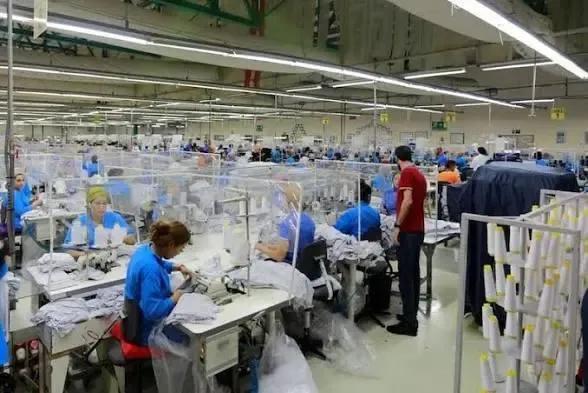

Major Investment Initiative in Morocco's Textile Industry
The Shengtai Group from China has recently announced its intention to establish a significant textile industrial complex in Morocco, following the acquisition of an overseas investment certificate and registration notification from Chinese authorities. The total investment is projected to reach approximately 2.29 billion dirhams, equivalent to about 1.716 billion Chinese yuan. This ambitious project aligns with an investment agreement signed by the group with the Moroccan government in March 2025, which aims to create the "Shengtai Morocco Green Textile Industrial Park" specializing in the production of high-quality threads, fabrics, and garments.
Project Scope and Employment Opportunities
The industrial complex is set to be developed across two manufacturing units located in Skhirat and Fez, covering a total area of nearly 34 hectares. The facilities will include production workshops and related infrastructures, with an expected completion timeline of five years. The project will feature a fully integrated production chain encompassing spinning, weaving, dyeing, finishing, and garment manufacturing, with an announced annual capacity of 100,000 spindles of cotton yarn, 10,800 tons of dyed and finished fabrics, 15 million meters of woven fabrics, and 22 million pieces of clothing. In terms of employment, this initiative is anticipated to create around 7,000 direct jobs and 1,500 indirect jobs, bringing the total to approximately 8,500 job opportunities.
This project emerges amid a surge in Chinese investments in Morocco's textile sector, particularly with the Sunrise project, which has also secured an investment agreement worth 2.3 billion dirhams to establish two manufacturing units in Fez and Skhirat, projecting the creation of about 8,500 direct and indirect jobs. Both projects intersect in their operational locations and activities, particularly in the production of threads, fabrics, and garments, and they share a commitment to developing a comprehensive production chain, enhancing local sourcing, and reducing logistics costs and timelines, thereby reinforcing the competitiveness of the Moroccan textile sector and its ability to access global markets.
As reported by sabahagadir.ma.