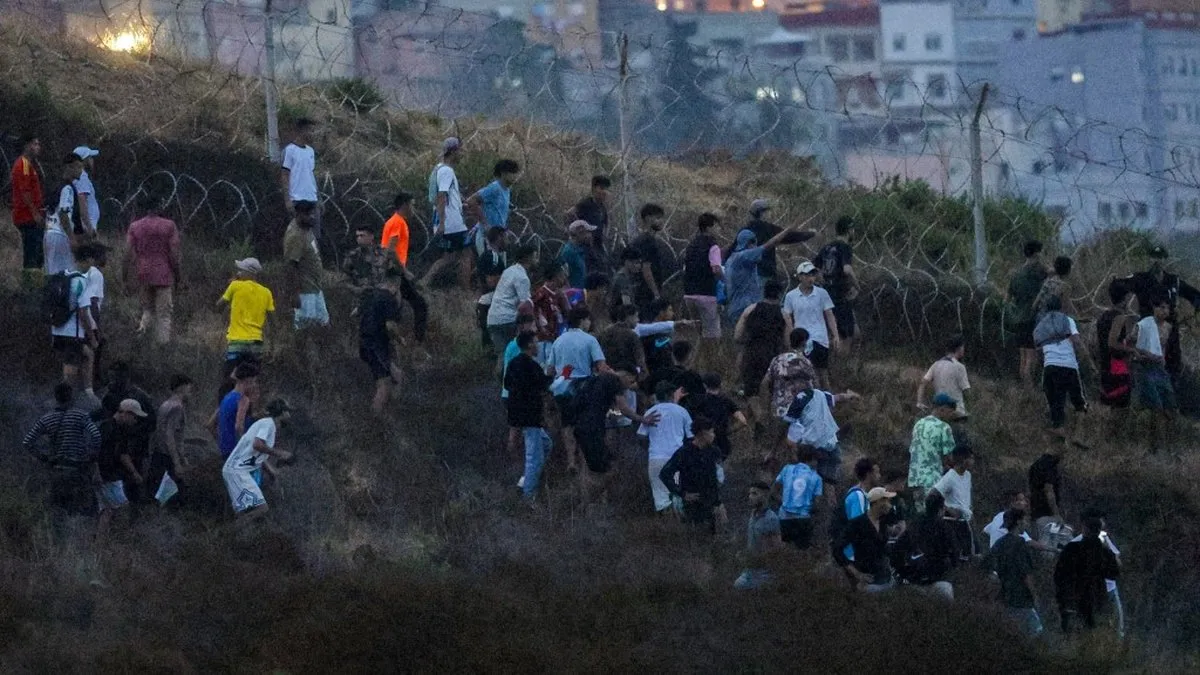

Understanding the Recent Surge of Migrants in Ceuta
In recent days, Spain's enclave of Ceuta has witnessed an alarming surge of migrants crossing illegally from Morocco, with reports indicating that thousands have arrived, many of whom are young men. This influx has led to tragic outcomes, including the loss of lives, as at least ten individuals drowned in the Mediterranean during their perilous journey. The Spanish government is responding to this emergency by deploying military personnel to the area, while the Moroccan authorities have remained silent regarding the situation. The incident has raised significant concerns not only in Spain but across Europe, prompting discussions about border security and immigration policy.
What Triggered This Mass Migration?
Eyewitness accounts reveal that the migrants, arriving by foot and swimming, were met with an overwhelmed Guardia Civil, who had to open the gates to prevent chaos. Many of these migrants reportedly believed that the border had been opened, leading to a rush from the Moroccan town of Fnideq, located just 15 kilometers south of Ceuta. As the crisis unfolds, the Spanish government has announced a plan to regularize many migrants already in the country, which seems to have sparked renewed interest among those seeking to reach Europe.
In response to the crisis, Spain's government is mobilizing additional resources, including the deployment of soldiers to enhance security in Ceuta. Prime Minister Pedro Sánchez is expected to visit the enclave soon to assess the situation firsthand. The political opposition in Spain has seized on the crisis, with leaders decrying it as a national security issue, citing the need for urgent and effective governmental action.
Across Europe, reactions have varied, with some political figures calling for Spain's suspension from the Schengen Zone to better secure European borders. Critics argue that Spain's current immigration policies, particularly the promise of regularization for undocumented migrants, have contributed to the current crisis. However, the Spanish government insists there is no direct correlation between the two events. They clarify that to qualify for the regularization process announced earlier this year, migrants must meet specific criteria that many of the recent arrivals do not fulfill.
As the situation continues to develop, it poses challenging questions for both Spain and the broader European community regarding immigration policies, border security, and humanitarian responses to those seeking refuge. The gravity of the situation underlines the complexities involved in managing migration in an increasingly interconnected world.
As reported by ladepeche.fr.