
Addressing Key Infrastructure and Water Scarcity Issues in Taounate
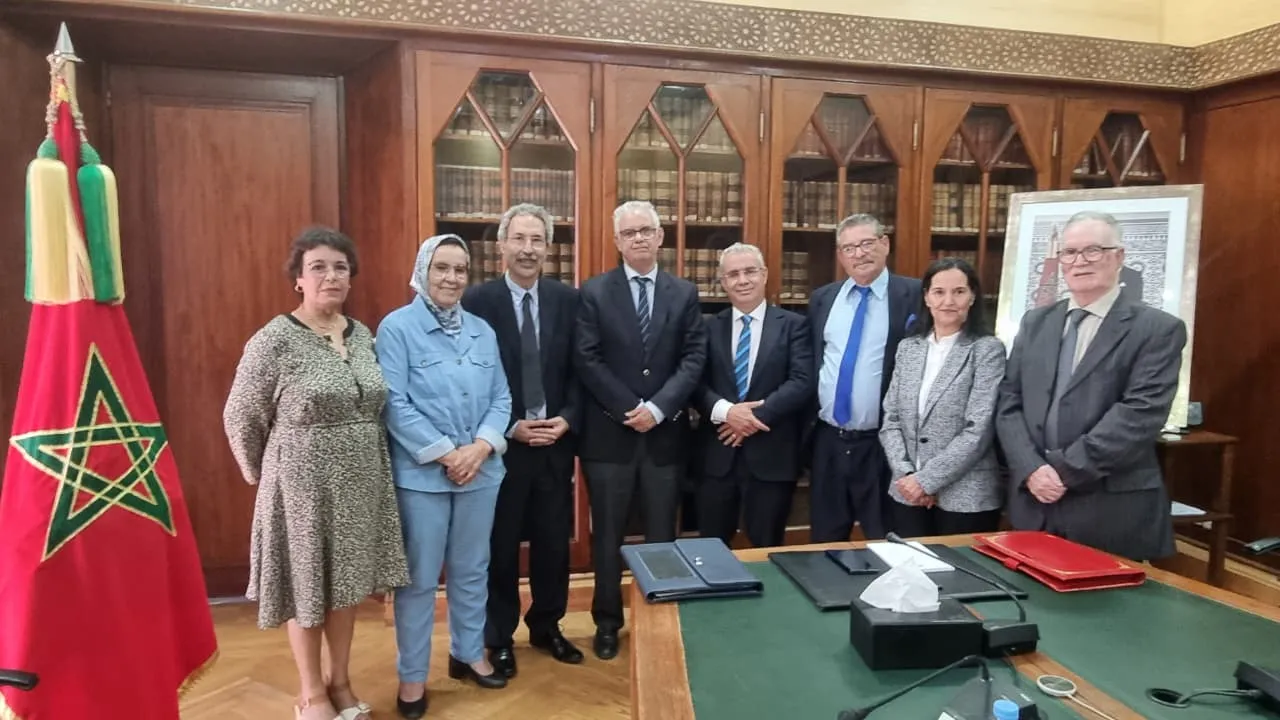
On May 26, 2026, Minister Nizar Baraka welcomed a delegation from the Taounate Competencies Forum for the second time at the ministry's headquarters in Rabat. The delegation was led by Forum President Idris Al-Wali, along with parliamentary member Khadija Zoumi, union advisor Khalid Al-Satti, forum secretary general Said Al-Ghoul, and other prominent members including Dr. Fatima Mazi, Dr. Mohamed Al-Sharadi, and Professor Nadia Marshid, all representing the forum's executive office.
During his address to the minister, President Al-Wali emphasized that despite the abundant natural and human resources in Taounate, the region continues to face significant challenges, particularly in infrastructure and water scarcity. He pointed out that the region is home to several major and medium-sized dams, yet many areas still struggle with water shortages, especially during the summer months. The forum has identified two critical projects that require urgent attention to improve the living conditions for residents in the region.
The first priority is to expedite the dualization of National Road No. 8, which connects Fez to Taounate. Al-Wali described this project as not only vital for Taounate but also for the entire Fez-Meknes region. The road serves as a crucial artery linking Taounate to various regions and provinces. However, the progress on the construction of the second and third sections of the road has been disappointingly slow, failing to accommodate the increasing traffic, which has led to safety concerns and daily struggles for road users, particularly during religious occasions.
Al-Wali stressed the urgent need for the official launch of the fourth and final section of National Road No. 8, which has yet to commence. He urged Minister Baraka to prioritize and accelerate the completion of this project, as it directly impacts road safety, alleviates isolation, encourages investment, and fosters economic and social development in the region.
The second pressing issue highlighted was the problem of water scarcity affecting numerous communities and villages in the region, especially during the summer months. Despite efforts to construct new dams, including the recent Sidi Abou and Ratba dams, many areas still suffer from frequent water supply interruptions and severe shortages of potable water.
In light of this, the forum appealed to Minister Baraka to enhance and expedite water-related projects in the region, expand supply networks, and find sustainable solutions to ensure water security for the population, particularly in rural and mountainous areas. Al-Wali also noted that Taounate has recently experienced floods and climate fluctuations that have caused significant damage to infrastructure and roads, exacerbating the difficulties faced by rural communities. This situation underscores the urgent need to classify Taounate as a disaster-stricken region, which would necessitate bolstering preventive infrastructure and accelerating interventions related to river management, water facilities, and road repairs, alongside adopting a proactive approach to tackle climate change effects and protect the population.
Parliamentary advisor Khalid Al-Satti commended the points made by Al-Wali and urged Minister Baraka to speed up the dualization of National Road No. 8 and to advance all water-related projects in the region. Contributions from parliamentary member Khadija Zoumi, Dr. Fatima Mazi, and Professor Nadia Marshid also echoed the importance of the road and the efficient management of water resources to enhance regional development.
Dr. Al-Sharadi expressed concerns from the residents of Beni Walid and surrounding villages regarding the water saturation risks posed by the Beni Wender dam. Meanwhile, Al-Ghoul called on the minister to find a solution to the water scarcity issue and to expand technical studies aimed at connecting the Bouhuda and Sahla dams to the Sebou watershed, which would help alleviate pressure on the Al-Wahda dam. He also suggested deploying a technical team from the ministry to work closely with local authorities in Taounate to monitor the ongoing road construction between Fez and Taounate effectively.
In response, Minister Baraka assured the forum delegation that the ministry would continue to work on the construction of several highways across the country, including the Taounate-Fez highway, which commenced in 2022 and spans 73 kilometers with a total cost of approximately 1.56 billion dirhams. He noted that the first section between the southern entrance of Taounate and the Ouled Daoud municipality is nearly complete, despite some soil erosion due to recent floods. Construction is actively progressing on the second section between Ouled Daoud and Wadi Jumaa, as well as the third section. The minister indicated that the contract for the fourth section is expected to be announced soon, with completion anticipated by the end of 2027.
Regarding the impact of recent floods, the minister acknowledged the need to collaborate with specialized companies for maintenance work on affected areas. For the fourth section, he stated that a load plan would be established in the contract specifications to expedite the implementation and prevent companies with inadequate resources from participating multiple times. Financing for the dualization of National Road No. 8 involves contributions from the Ministry of Equipment and Water amounting to 985 million dirhams (63.1%), the Fez-Meknes region providing 485 million dirhams (31.1%), the Taounate Regional Council contributing 40 million dirhams (2.6%), along with support from the Northern Regions Development Agency.
Minister Baraka also highlighted that the recent floods have caused several damages in Taounate, and in coordination with the Ministry of the Interior, a new road maintenance program will commence next month, even though Taounate is not classified as a disaster area under international insurance criteria. He indicated that 45 road segments would be maintained, with others being rebuilt to modern standards, and studies in this regard have already begun, including Taounate within their scope.
Moreover, an agreement was reached with the General Directorate of Meteorology to create a satellite-based alert system for flooding, allowing real-time text alerts to reach at-risk residents. To combat water scarcity, the forum has identified villages facing shortages and is exploring water sourcing options, proposing the establishment of water stations near new dams to maximize benefits, even if the financial costs are higher.
Minister Baraka emphasized the importance of re-engineering water resources to ensure a permanent water supply for all citizens in Taounate. Concerning potential flooding risks from the Beni Wender dam, the minister reassured the delegation and residents that the situation is under control, with all scenarios considered. In conclusion, after a one-and-a-half-hour meeting, Idris Al-Wali expressed the community's desire for greater spatial justice and tangible projects that would enhance quality of life and boost economic and social development opportunities.
On behalf of the forum, which comprises a network of competencies and talents from the region, both domestically and abroad, Al-Wali expressed their readiness for positive collaboration and responsible advocacy with all authorities to serve the interests of the region and its residents. He also thanked Minister Baraka for the warm reception and positive engagement, hoping this meeting would mark a significant step towards fulfilling the developmental demands of the local population.
As reported by aljarida24.ma.