
Morocco's Bensaid Addresses Cost of Living, Support, Housing, and Employment
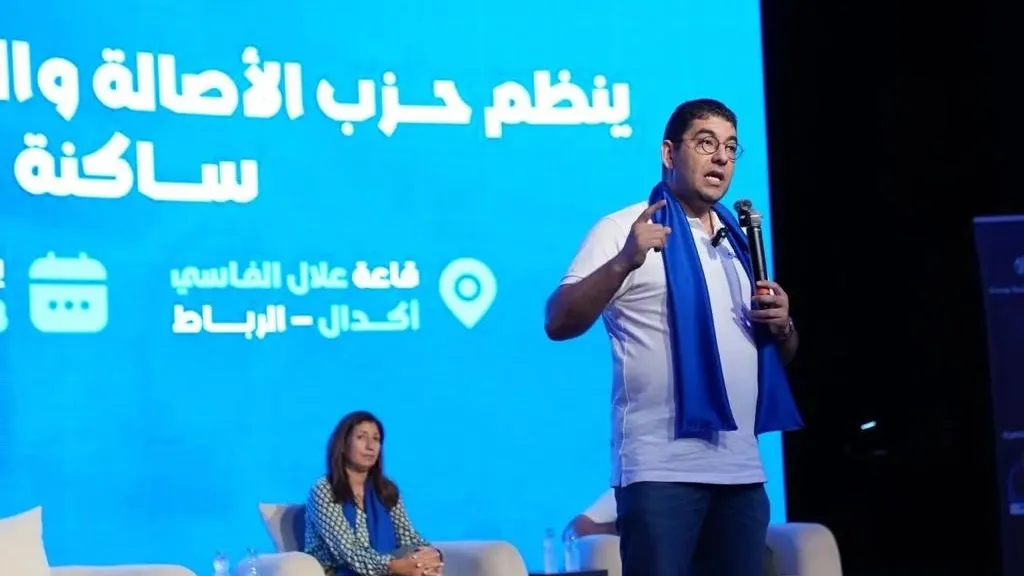
Mohamed Mahdi Bensaid, the candidate representing the Authenticity and Modernity Party in the Rabat-Souissi district, is actively advancing his election campaign from the Agdal neighborhood, where he recently held a communication meeting at the Allal El Fassi Hall attended by over 350 individuals. This gathering was dedicated to presenting and discussing several commitments outlined in the party's electoral program, particularly those related to purchasing power, employment, housing, and social support.
The event served as a platform for party leaders and candidates to elaborate on the proposals encapsulated in the program titled "For a Change in Direction... A Unified Voice," linking them with the concerns of the local population. Key issues ranging from prices, income, and pensions to housing, working conditions, and social services were discussed in depth.
Bensaid, who also serves as the Minister of Youth, Culture, and Communication, emphasized the importance of social support, addressing a significant area of concern for many families. He introduced the idea of shifting from reliance on generic indicators to a more targeted approach, focusing on individuals based on their actual income. He asserted that the real challenge lies not only in allocating support but ensuring it reaches those who genuinely need it.
In discussing the housing sector, Bensaid stressed that government support should yield tangible benefits for citizens. He clarified that supporting companies does not necessarily guarantee that assistance will effectively reach the intended recipients, highlighting the need for genuine, direct benefits for the public in conversations surrounding housing policies. Transitioning from housing and purchasing power, the dialogue shifted to pensions, brought to light by Majid Khloua, another candidate from the Authenticity and Modernity Party, who highlighted the struggles faced by retirees in managing their daily expenses, alongside the challenges experienced by widows, which form a critical part of the social protection dialogue.
The party's electoral program commits to establishing a minimum pension of 3,000 dirhams (approximately $300) starting from the second year, alongside proposals to increase widows' pensions to 100% of their deceased spouse's pension, as opposed to the current 50%. These measures are part of what the party refers to as the Purchasing Power Charter.
Bensaid also revisited the issues surrounding wages and income tax, indicating that reducing income tax could directly enhance families' disposable income. He pointed out that a portion of the funds currently directed towards taxes could remain with employees, thereby improving their ability to manage expenses throughout the year rather than solely at the end of the month. The party's electoral framework proposes a maximum income tax cap of 20%, with tiered proposals based on income levels, all integrated within the Purchasing Power Charter, which also addresses pricing, wages, pensions, and direct social support.
However, the discussion in the Allal El Fassi Hall extended beyond purchasing power to encompass employment and working conditions. Minister Bensaid underscored that the focus should not only be on creating new job opportunities but also on enhancing working conditions for those in long-hour jobs, specifically mentioning security guards who may work for up to 12 hours. This conversation is part of the youth integration charter that the party prioritizes, alongside decent work, housing, and professional mobility, aiming to create at least one million net jobs during the five-year term, with an annual target of 200,000 jobs based on the figures provided by the party.
Among the various topics discussed by Bensaid was the role of the state in directing support towards housing and public services, linking purchasing power, social integration, and service quality. These issues are encapsulated within five charters the party assembles, including purchasing power, youth integration, citizenship, security, growth, and sustainability.
Thus, the platform in Allal El Fassi Hall transitioned into a space for showcasing the program's details rather than merely serving as a rhetorical stop. Each participant aimed to address different aspects of the concerns affecting residents of the Agdal-Souissi district of Rabat, covering everything from the prices of essential goods to pensions, support, housing, taxes, and working conditions, culminating in Bensaid's synthesis of these issues within the party's vision for the upcoming phase.
In conclusion, Bensaid framed the discussion within a national context that transcends the Rabat-Souissi district, clarifying that the issues presented are not confined to a specific region but are interconnected with challenges faced by citizens across Morocco. He emphasized that altering operational methodologies remains a fundamental aspect of the party's electoral program. As the date for the legislative elections set for September 23 approaches, Bensaid continues his outreach efforts throughout the Rabat-Souissi district, engaging in both field meetings and larger venues while striving to communicate the substance of the party's electoral program and align its commitments with the daily discussions of the community. The anticipated voting will ultimately determine the representatives for the district within the legislative institution.
As reported by elaph.com.