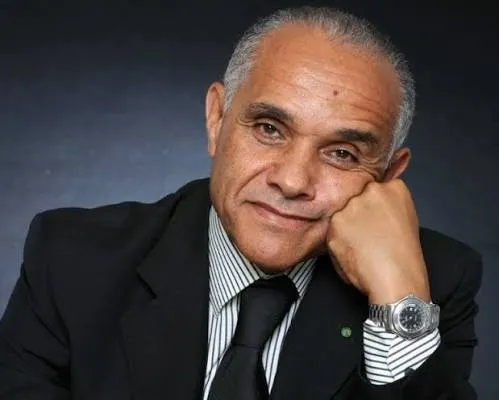

In modern football, the distinction between elite national teams is no longer solely based on the individual prowess of their players; it also hinges on their ability to adapt their playing styles while maintaining their unique identities. This is precisely the philosophy that Mohamed Wahbi appears to be fostering through his insightful reading of the game and his strategic player selections in preparation for the 2026 World Cup.
Much of the analysis and criticism has been rooted in a traditional perspective that centers on the notion of inviting the 'best players.' However, this approach misses the essence of Wahbi’s project. He is not merely calling upon individual names or talents; rather, he is assembling a cohesive tactical framework. His selection is driven not by hierarchy but by situational needs. Each player represents a specific match scenario, tactical position, or strategic necessity. In other words, he is not just constructing a team; he is designing a dynamic, adaptable, and pragmatic system.
We are witnessing a renewed continuity. Wahbi’s project does not seek to break away from the previous era under Walid Regragui but rather to smartly develop and enhance it. The Moroccan national team’s performance during the 2022 World Cup stands as one of the greatest achievements in African football, characterized by sophisticated defensive organization, immense collective discipline, and optimal utilization of counterattacks. However, this model naturally reaches its limits when it becomes predictable and easily readable, highlighting the need for essential changes that must be considered promptly.
Wahbi appears to have grasped this reality well. He is not aiming to erase the legacy of his predecessors but to develop and enrich it. Alongside a robust defensive structure, he is instilling an ambition for ball possession: controlling the game, dictating the tempo, directing play, and diversifying solutions. This ambition was clearly demonstrated during his management of the under-20 national team.
Morocco no longer just wants to survive matches; it aspires to learn how to control and dominate them. Here, the notion of 'tactical hybridity' becomes a genuine doctrine that Wahbi is determined to instill within the squad. The core of Wahbi’s vision revolves around the concept of a hybrid national team—one that is not hesitant but versatile, capable of altering its structure and tactical dynamism at any moment during a match.
At the highest levels of competition, rigidity is a weakness. Top teams know how to transition between different styles of play within a single match: defending with a low block or applying high pressure, maintaining possession before launching quick attacks, slowing the tempo or neutralizing the opponent's offensive transitions. This adaptability has become a fundamental requirement for successful competition.
When facing a powerhouse like Brazil, controlling the ball transforms into a defensive tool. Against a retreating opponent, it becomes an offensive weapon. In physically demanding matches, this must be accompanied by the ability to win second balls and maintain a high intensity. Wahbi rejects the notion of a Moroccan team that solely reacts; he envisions a squad capable of imposing its identity while simultaneously adapting instantly to the flow of the game. Therefore, he prioritizes selecting players who can comprehend and integrate into this doctrine, revealing a profound functional understanding of football through his roster choices.
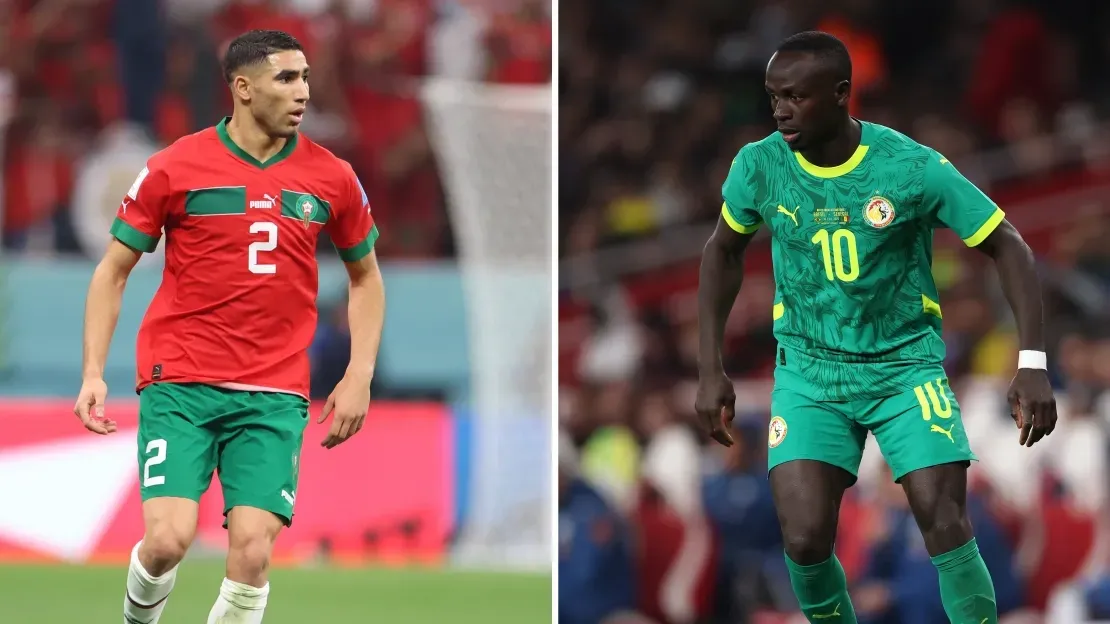
Achraf Hakimi, in this context, transcends his traditional role as a full-back. He is a constant source of disruption, a lateral playmaker whose offensive freedom provides balance to the collective system, much like he does with Paris Saint-Germain. Ayoub El Kaabi is not merely a goal scorer; he serves as an attacking pivot that stretches opponents' lines and opens spaces between them. Meanwhile, Sofiane Rahimi consistently poses a vertical threat, essential for forcing opponents to retreat and limiting their high-pressing audacity.
In contrast, Ismail Sabiri embodies the role of a false nine, capable of linking play between lines, absorbing pressure, and providing fluidity to attacking sequences, all while being unpredictable in his movements. Wahbi does not simply repeat the same characteristics; he multiplies solutions and gives himself multiple options, thereby elevating the technical level of the team and enhancing its effectiveness.
Another clear indicator is the expressed desire to transition Morocco towards a style of football rooted in control. With names like Ounahi, Khannous, Bouhaddi, Ainawi, and Brahim Diaz, a playing mold emerges that can resist pressure, organize ball progression, and manage the pace of matches. This choice reflects a significant cultural shift.
African teams have long been pigeonholed into images of physicality or reliance on quick transitions, rarely recognized as teams capable of control and dominance. Morocco aims to shatter this implicit ceiling by advocating for a football philosophy predicated on intelligent possession and high-quality technical and tactical reading. This ambition is built upon a generation nurtured in high-level tactical environments, capable of performing multiple roles, adapting to various conditions, and recognizing risk as an essential part of any grand project—because, by nature, such a project entails a degree of uncertainty.
The hybrid team risks losing its clarity if its mechanisms are not thoroughly understood. Additionally, an abundance of options can sometimes lead to hesitation. Control-based football requires time, collective harmony, and high tactical intelligence. Nevertheless, Wahbi embraces this challenge. While others hide behind proven models, he chooses to evolve, placing his project within a long-term vision.
Wahbi bets on a simple truth: in the World Cup, defensive solidity alone is not sufficient. There must also be the capability to seize the ball, impose periods of dominance, break down defensive blocks, and manage challenging moments through means beyond mere resistance. Only then will the Moroccan national team's position truly change.
At its core, this roster reveals a deeper transformation. Morocco no longer wishes to be merely a team that causes surprises; it seeks to enforce its logic and rules. This shift is as much mental as it is tactical.
Wahbi's challenge extends beyond merely selecting eleven players. He aspires to build a team capable of reading the game, accelerating when necessary, slowing down when required, enduring without collapsing, dominating to win, penetrating when needed, and most importantly, knowing when to change tactics without losing cohesion.
This is how great teams are defined: by their ability to control moments within matches. It appears that this is precisely the horizon that Mohamed Wahbi intends to lead Morocco towards.
As reported by almountakhab.com.