
Strengthening Trust Between Citizens and Institutions
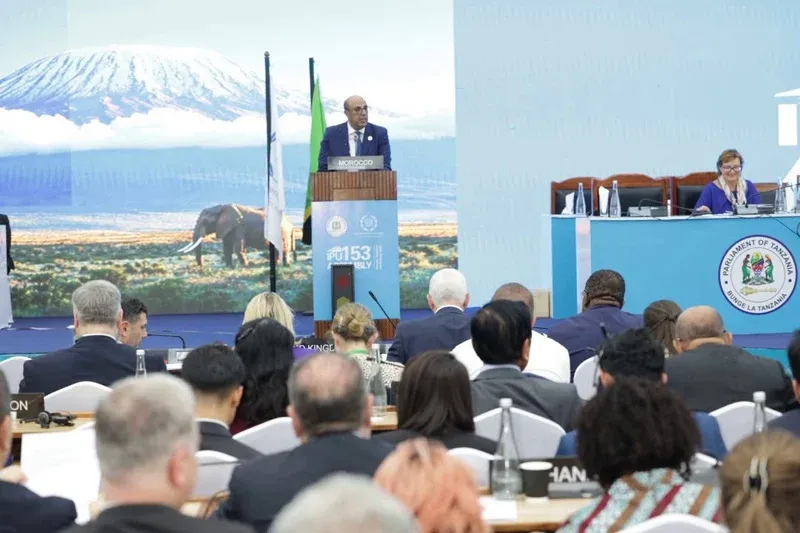
During the 153rd General Assembly of the Inter-Parliamentary Union held in Arusha, Tanzania, Mohammed Ould Errachid, the President of the House of Councillors, emphasized that enhancing trust between citizens and institutions is fundamental to institutional work. This trust ensures that citizens actively participate in public decision-making, allowing them to express their priorities and contribute to public affairs management. Ould Errachid remarked that these principles form part of the comprehensive reform process led by the Kingdom of Morocco under the guidance of King Mohammed VI.
He underscored that the 2011 Constitution established core principles such as good governance, citizen democracy, participatory governance, equality before the law, equal opportunities, and special care for disadvantaged social groups. These principles have been further supported by ongoing reforms and initiatives, wherein the parliament plays a crucial role in their implementation through legislation, oversight, and public policy evaluation.
Legislative Reforms and Women's Political Participation
Ould Errachid pointed to several significant legislative measures, including the framework law on social protection, laws on direct social support, and the establishment of the National Agency for Social Support, along with the National Agency for the Protection of Childhood. These reforms are designed to enhance the protection and empowerment of women, youth, and individuals with disabilities.
The President of the House of Councillors also highlighted efforts to increase participation in political life, particularly for women. He mentioned the allocation of 90 parliamentary seats in the House of Representatives for women through regional electoral districts, while allowing them to compete in local districts as well. Furthermore, mechanisms have been established to encourage youth participation and motivate political parties to broaden the representation of women, youth, and persons with disabilities.
In a notable milestone for women's political participation in Morocco, Ould Errachid pointed out the historic appointment of a woman as the head of government for the first time, marking a qualitative advancement in women's presence in decision-making roles and solidifying their access to the highest levels of executive responsibility.
He further discussed the importance of empowering local areas, asserting that expanding citizen participation and protecting their rights necessitates empowering the regions they inhabit and bringing developmental decisions closer to them. Ould Errachid emphasized the role of advanced regionalization as a major choice for the Kingdom, aimed at enhancing the roles of regions and local communities in managing development. This approach leads to a new generation of integrated territorial development programs that address the specific needs and potentials of each area, ultimately striving to reduce disparities and expand development opportunities.
He cited the southern regions of Morocco as a prime example of this path, referencing the new development model for Moroccan Sahara and the substantial investments it has attracted, benefiting both the population and the environment, thereby strengthening the developmental dynamics in the region and affirming the role of its residents through elected institutions in managing their affairs and shaping their developmental choices.
Ould Errachid noted that the legislative elections held on September 23 reaffirmed this direction, as the regions of Moroccan Sahara recorded the highest levels of participation nationwide. He pointed out that this outcome transcends mere voting, reflecting the population's strong connection to their nation and their commitment to its unity.
In closing, Ould Errachid stated that the Moroccan parliament looks forward, coinciding with the Inter-Parliamentary Union's preparations for electing new leadership, to this event serving as a new impetus for the union's journey. This will enhance its unity and effectiveness, safeguard its mission, and strengthen its presence in multilateral parliamentary work. He concluded by reiterating that the Moroccan Parliament will remain an active partner in this journey, firmly believing in the capacity of parliaments to voice the concerns of peoples in decision-making circles and to serve peace and development.
As reported by hespress.com.