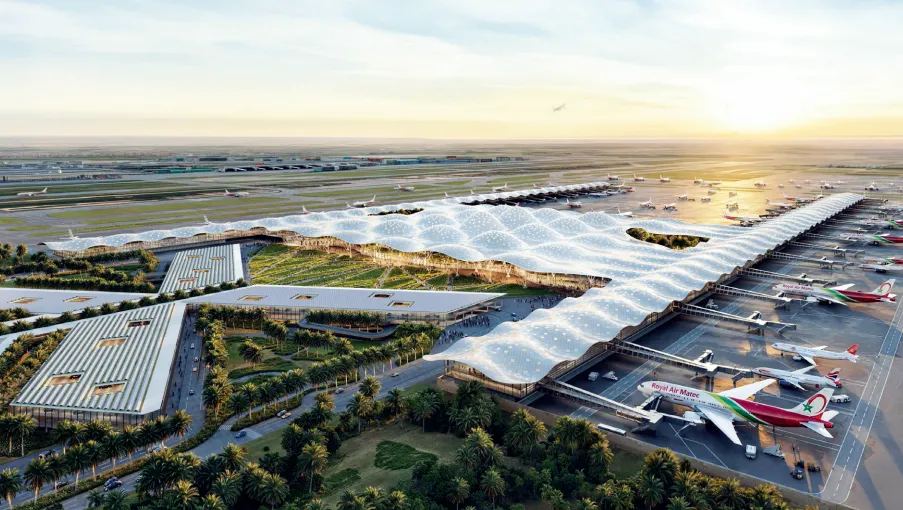

Significant Growth in Passenger Traffic
Moroccan airports experienced a remarkable surge in passenger traffic, accommodating 36.3 million travelers in 2025, a notable increase from 32.7 million in 2024. This growth trend is not limited to major hubs; regional airports are also witnessing significant advancements, propelled by the introduction of new flight routes, the rise of low-cost airlines, and an expanding tourist demand. While this dynamic growth is promising, it highlights a critical challenge: airport capacity must keep pace without compromising the overall travel experience. The strategic initiative known as "Airports 2030" is designed to address this crucial equation.
Aiming for Enhanced Capacity and Experience
The ambitious goal is to elevate Morocco's airport capacity to approximately 80 million passengers. Key cities such as Casablanca, Marrakech, Agadir, Tangier, Fes, and Rabat are poised to play increasingly significant roles in the country’s tourism landscape. The stakes extend beyond the World Cup, as major events catalyze investments, raising an essential question about the future: how can these infrastructures serve as sustainable catalysts for tourism, investment, and regional connectivity? Casablanca is expected to remain a central hub, with Mohammed V Airport solidifying its position as an international gateway, particularly among Africa, Europe, the Middle East, and the Americas. In contrast, Marrakech faces the challenge of managing already high traffic levels, especially during peak seasons. Agadir, strategically, requires more direct connections to enhance its appeal as a beach, sports, and nature destination.
In southern regions, air travel is often the sole means of significantly reducing distances. The risk lies in viewing airport expansion solely in terms of square meters and nominal capacity. An airport can expand without improving operational fluidity. The quality of passenger experience depends on numerous factors, including human resources, digital processing, and coordination with border police, customs, airlines, taxis, shuttles, and tourism operators. A slow or chaotic arrival experience can diminish the promotional efforts made beforehand.
By 2030, the challenge for Moroccan airports will be twofold: to accommodate more passengers while also ensuring a more efficient distribution of travel flows. To prevent overcrowding at select destinations, regional airports must evolve into genuine tourism accelerators. Morocco already boasts a strong brand; however, it must now develop entry points that reflect this ambition, transforming traffic growth into tangible value for its regions. Achieving this growth also requires a nuanced understanding of diverse clientele. A tourist arriving for a city break in Marrakech will have different expectations compared to a business traveler in Casablanca, a kitesurfer in Dakhla, or a Moroccan expatriate during the summer.
Therefore, airports will need to differentiate passenger journeys more effectively: streamlined security for peak periods, multilingual information, digital services, well-organized transit areas, clearly arranged transport zones, and improved baggage handling. The rise of low-cost airlines introduces another layer of complexity. While these carriers can open new markets, reduce access costs to certain destinations, and support lesser-known regions, they also necessitate operational regularity, well-managed slots, and the ability to handle grouped arrivals. It is important to note that low-cost tourism does not equate to low standards; rather, it demands robust organization, as travelers quickly compare destinations based on efficiency, price, and time lost.
As reported by fnh.ma.