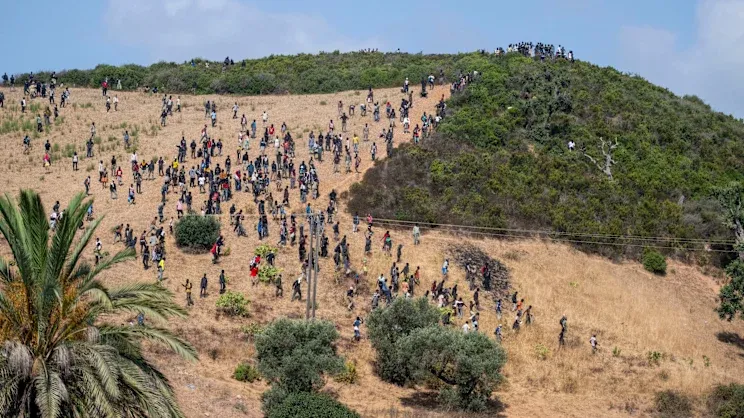

In a significant escalation of border control efforts, Moroccan police have successfully thwarted the attempts of hundreds of migrants seeking to cross into the Spanish enclave of Ceuta. This crackdown comes on the heels of a surge in social media activity encouraging asylum-seekers to make the perilous journey, reminiscent of a recent border crisis that saw an overwhelming influx of migrants just weeks prior.
On Saturday afternoon, Moroccan authorities reported that over 200 individuals were prevented from rushing the border, resulting in the arrest of 61 people to restore order. The police action was a direct response to the chaos that erupted two weeks ago, when approximately 72,000 migrants crossed from Morocco into Ceuta, under the impression that they could secure asylum and subsequently relocate to Spain.
In the aftermath of that incident, most of the migrants were returned to Morocco, yet about 5,000 individuals remain in Ceuta, with some vulnerable children expected to be transported to mainland Spain. The situation has reignited discussions on social media regarding further attempts to breach the border, despite stern warnings from authorities in both Spain and Morocco about the dangers of crossing, including the risk of drowning while attempting to swim to the enclave.
Recent footage captured on the Moroccan side of the border depicted hundreds of migrants anxiously trying to cross into Ceuta, with Spanish media outlets such as El Pais and El Mundo closely reporting on the unfolding events. Most of the migrants involved are believed to be from sub-Saharan Africa and were reportedly hiding in the vicinity of Castillejos, a town adjacent to Ceuta.
Moroccan police took decisive action, apprehending 111 individuals who were attempting to make the crossing, of which 109 were identified as migrants from sub-Saharan Africa and the remaining two as Moroccan citizens. Although the number of attempts recorded this time was significantly lower than the staggering 72,000 who crossed earlier, it highlights the ongoing tensions at the border and raises questions about the effectiveness of Moroccan authorities in managing the migration crisis.
Interior Minister Fernando Grande-Marlaska has asserted that the government will continue to deploy necessary resources to restore order and prevent a repeat of the events witnessed on July 30. Currently, approximately 5,000 migrants are still present in Ceuta, many of whom are seen seeking refuge from the sweltering heat under makeshift shelters on El Trampolin, an urban beach.
Grande-Marlaska emphasized that migrants who entered the enclave irregularly will not be granted permission to remain, travel to mainland Spain, or obtain legal status, except in rare circumstances involving extreme vulnerability. Those without legal grounds to stay will be repatriated to Morocco, he stated. In a further effort to manage the influx, Moroccan police have begun transporting asylum seekers on government-chartered buses to locations such as Ouarzazate, situated over 800 kilometers from the Spanish border.
As reported by smh.com.au.