
Moroccan Authorities Act to Prevent Migrant Crossings into Ceuta
In a significant move to manage migration flows, Moroccan authorities successfully intercepted over 100 migrants on Saturday who were attempting to cross into Ceuta, a Spanish exclave located on the North African coast. According to Moroccan security sources cited by various media outlets, including Spanish press and the Reuters news agency, the migrants were blocked near the town of Fnideq, also known as Castillejos in Spanish, which lies just 3 kilometers (1.8 miles) from the border. This operation follows an alarming incident that occurred two weeks prior when around 78,000 migrants made their way to Ceuta by sea within a short span of hours, tragically resulting in the deaths of at least 100 individuals, as reported by the city's mayor.
Increased Security Measures Amid Rising Tensions
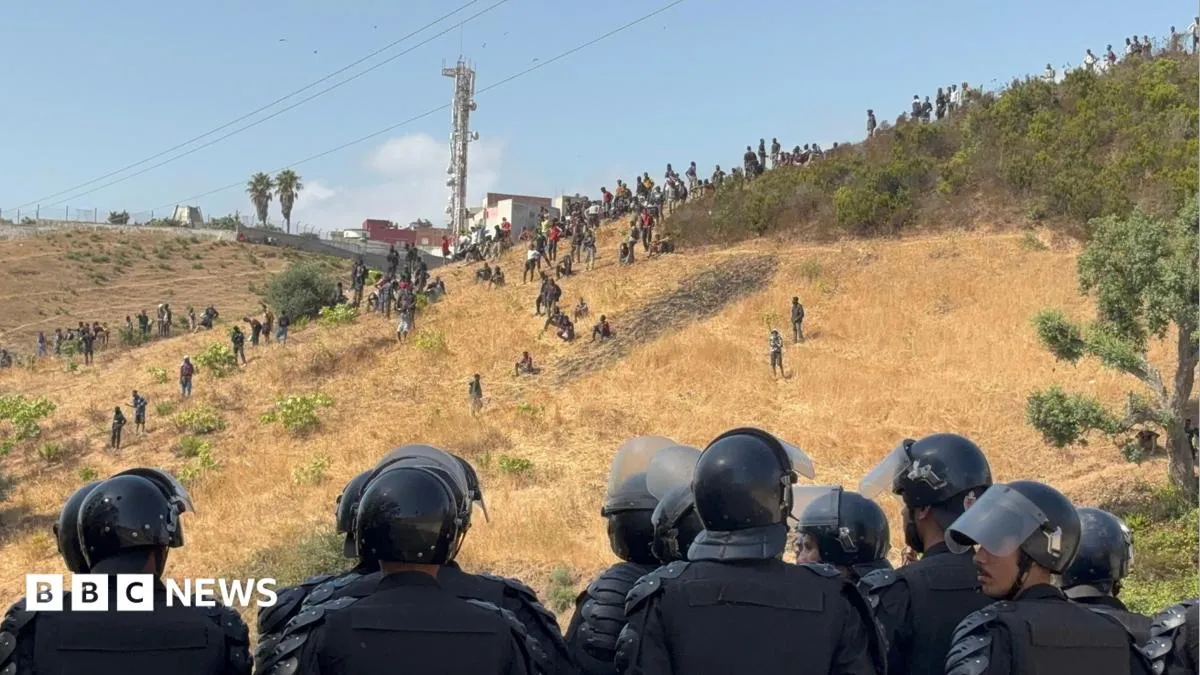
In response to the recent surge in migrant activity, both Spanish and Moroccan authorities have significantly bolstered security measures in the region. This includes heightened patrols and the deployment of more than 1,500 security officers by Madrid to monitor the border area closely. Moroccan police, equipped with riot gear, engaged in crowd control using tear gas to disperse groups of migrants who had gathered on hills overlooking the border. Earlier in the week, Rabat had issued warnings regarding social media posts encouraging a mass crossing attempt, stating that those organizing or participating in such events would face legal repercussions. Reports indicate that security at the breakwater entrance has been strengthened considerably, with new barriers and military personnel deployed to deter further attempts at illegal crossings. This ongoing crisis has not only raised concerns within Morocco but has also sparked a diplomatic rift among EU nations sharing open borders, prompting Italy to suspend its Schengen agreement with Spain and calls from the Czech Republic for a temporary suspension of Spain's Schengen membership. Despite the current tensions, Spanish Prime Minister Pedro Sánchez emphasized that Ceuta is not part of the Schengen area, highlighting the complexities involved in managing migration in this geopolitically sensitive region.
As reported by bbc.co.uk.