
Increased Vigilance at the Moroccan-Spanish Border
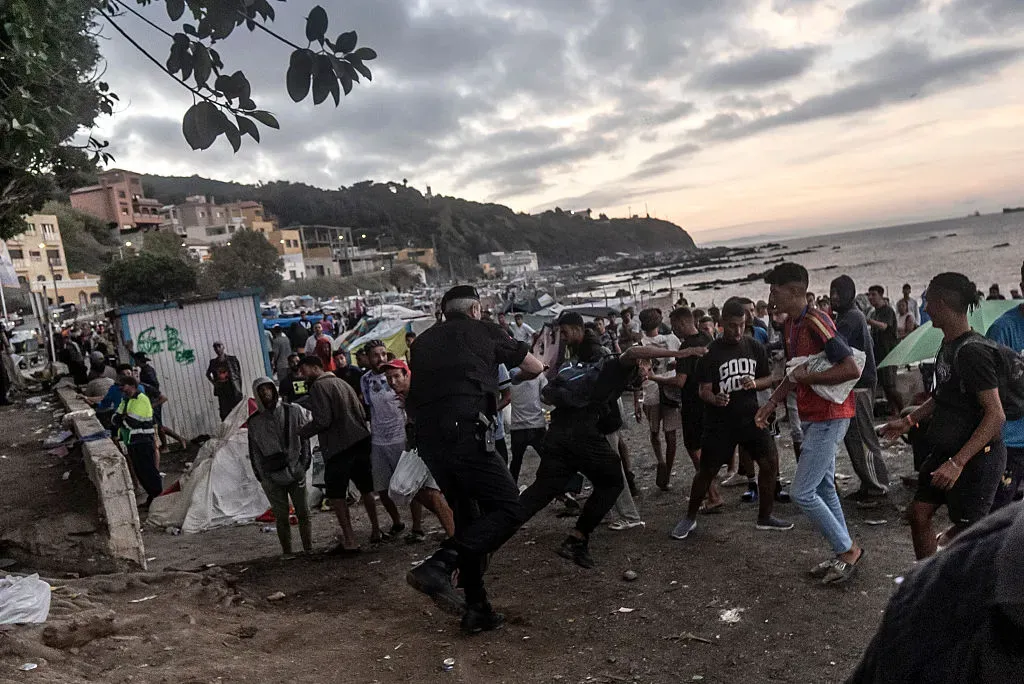
In a significant development over the weekend, Moroccan authorities successfully intercepted a considerable number of migrants attempting to cross into the Spanish exclave of Ceuta, located in North Africa. According to security sources cited by various Spanish media outlets and the Reuters news agency, more than 100 individuals were blocked as they tried to reach the border near the town of Fnideq. This operation comes just two weeks after a staggering influx of approximately 78,000 migrants reached the exclave by sea within a short period, resulting in the tragic loss of 100 lives, as reported by the city's mayor.
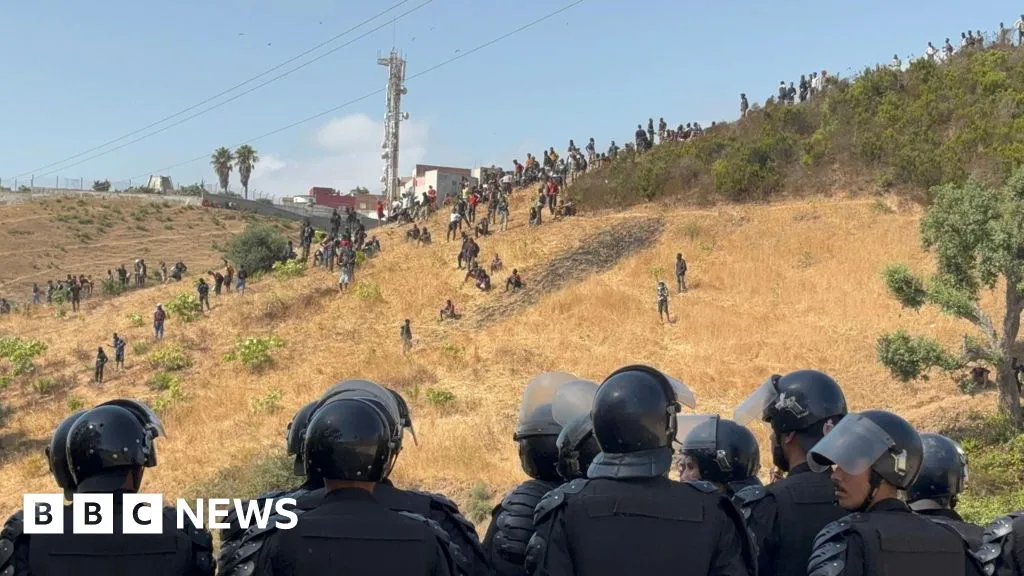
In response to this recent surge, both Spanish and Moroccan officials have bolstered security measures in the region, particularly following social media rumors suggesting that another mass crossing attempt would occur over the weekend. Moroccan security sources indicated that 111 individuals were detained in and around Fnideq, known in Spanish as Castillejos, with the majority hailing from sub-Saharan Africa. To manage the situation, Moroccan police, some equipped with riot gear, deployed tear gas to disperse groups of migrants who had gathered on nearby hills, illustrating the tense environment surrounding the border.
Military and Security Reinforcements at the Border
Earlier this week, the Moroccan government announced that it was closely monitoring social media activity related to the potential mass crossing, emphasizing that it would take legal action against both organizers and participants involved in such actions. Reports from Spanish newspaper El País highlighted that security at the breakwater entrance was significantly intensified, being described as "ten times stronger than the previous day." In addition to erecting a metal fence and a floating barrier earlier in the week, Morocco sent army officers, navy speedboats, and drones to the border to ensure heightened surveillance and control.
Meanwhile, Spain has deployed over 1,500 security personnel to patrol the region effectively. The situation, which has somewhat stabilized since the initial crisis erupted in late July, has nevertheless fueled tensions among EU nations with open borders. Criticism has been directed at the Spanish government regarding its handling of the situation. Italy has even suspended its Schengen agreement with Spain, supported by Finland and Denmark, while the Czech Republic has called for Spain's temporary suspension from the Schengen zone, despite Prime Minister Sánchez's clarification that Ceuta is not part of this agreement.
As reported by bbc.com.