
Moroccan Community in Spain: A Unique Demographic Insight
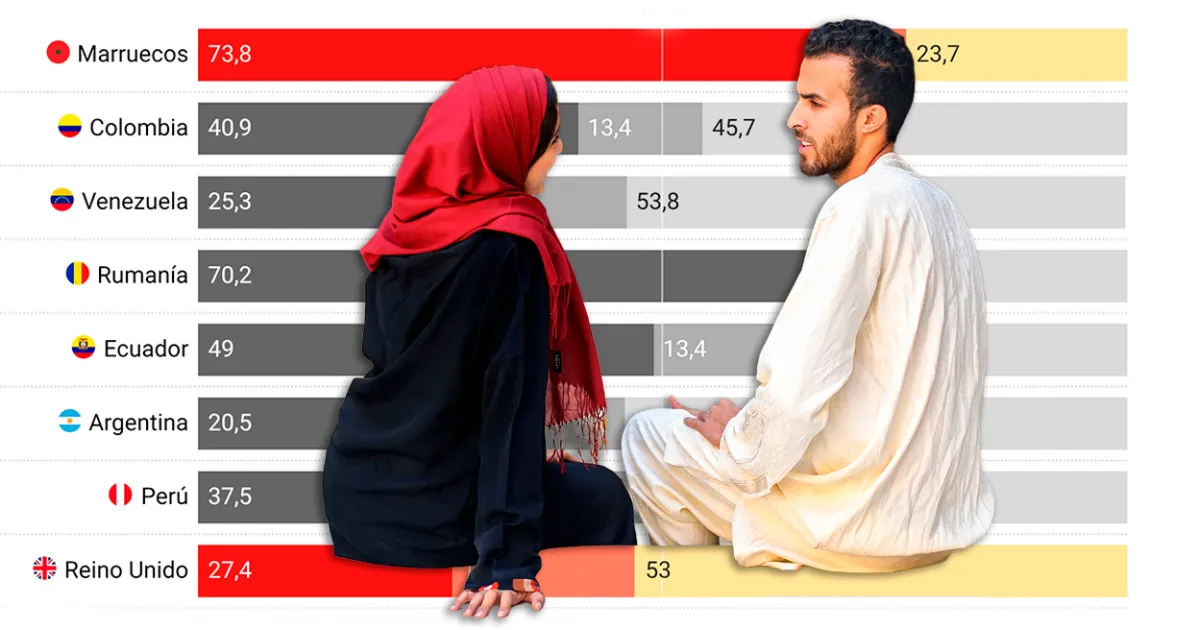
The Moroccan population in Spain represents one of the largest foreign communities, yet it exhibits a remarkable tendency towards endogamy, which is evident in the creation of family units. Specifically, a striking 73.8% of children born in Spain to at least one Moroccan parent have parents who are both of Moroccan nationality. In contrast, only 23.7% of these children have one parent born in Spain. This demographic trend highlights the limited integration of the Moroccan community compared to other significant immigrant groups within the country.
When analyzing the marriage patterns among different ethnicities in Spain, it becomes apparent that the Moroccan community is less likely to form mixed families, which consist of a Spanish and a Moroccan partner. In fact, the Moroccan community has the highest percentage of endogamous unions among the ten largest foreign nationalities residing in Spain. This pattern is further exemplified by the mere 2.5% of children born to a Moroccan parent and a parent from a different nationality, with Algeria and Romania being the most common of these unions.
Interestingly, the Moroccan demographic is not alone in this trend, as other nationalities such as Chinese, Bangladeshis, Indians, and Pakistanis also display high levels of endogamy. For instance, 90.5% of children born to Chinese parents have both parents from China, while 78.0% of children with Pakistani parents share the same nationality. In contrast, the Moroccan community's endogamy is less pronounced when compared to these groups, indicating a complex interplay of cultural and social factors influencing these marriage choices.
Gender Dynamics in Moroccan Partnerships
Gender dynamics also play a crucial role in understanding the marriage patterns within the Moroccan community. It is more common for Moroccan women to marry Spanish men than vice versa, leading to a scenario where six out of ten mixed couples consist of a Moroccan woman and a Spanish man. Conversely, only four out of ten mixed couples involve a Moroccan man and a Spanish woman. This trend suggests a potential preference or societal acceptance of such unions, reflecting broader gender norms and cultural dynamics at play.
In stark contrast, other foreign communities in Spain exhibit lower rates of endogamy. For example, Cuban, Argentine, Venezuelan, and British nationals tend to form more mixed partnerships with Spanish citizens. In Cuba, only 16.6% of children born to at least one Cuban parent have both parents from the island, while 72.5% have a Spanish parent. Similarly, Argentines show a preference for having children with a Spanish partner, with 54% of cases indicating this trend. Such insights into the demographic behaviors of various communities in Spain serve to highlight the diverse cultural fabric of the nation and the differing degrees of integration among its immigrant populations.
As reported by eldebate.com.