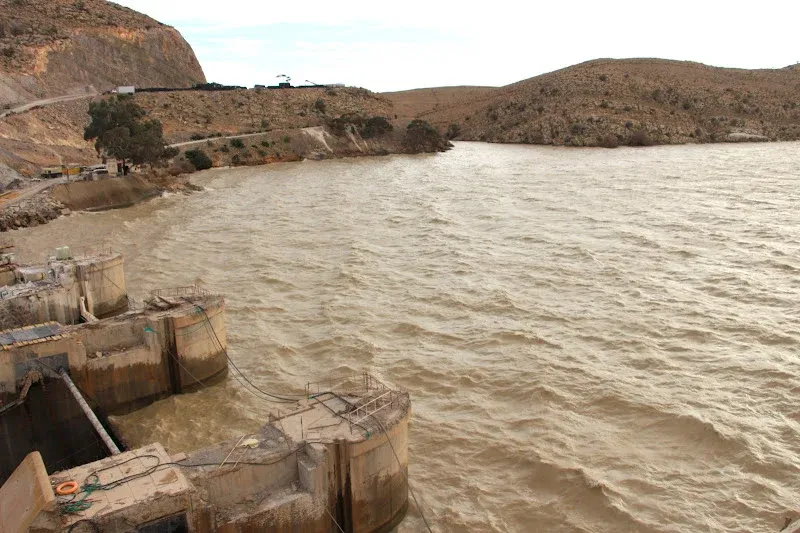

Resilience of Moroccan Dams Amidst Rising Temperatures
Recent data from the General Directorate of Water Research and Planning, part of the Ministry of Equipment and Water, has highlighted the remarkable resilience of Morocco's dams in the face of ongoing heat waves at the beginning of September. As of Sunday, the overall national dam filling rate reached 67.15%, a significant increase compared to just 33.51% during the same period last year, marking nearly a twofold improvement within a single year. This positive trend reflects the effective management of water resources in the country, showcasing the enduring impact of rainfall experienced during the winter and spring seasons of this year.
The total volume of water stored in Moroccan dams has surged to approximately 11.43 billion cubic meters, out of a normal capacity estimated at 17.03 billion cubic meters. This stands in stark contrast to around 5.7 billion cubic meters recorded at the same time last year, illustrating how recent precipitation has bolstered water reserves significantly. Notably, four major watersheds are leading the national statistics with filling rates exceeding 78%: the Sebou watershed ranks first at 80.14%, followed by the Loukkos watershed at 79.18%, and both the Tensift and Abid Raqraq watersheds are close behind with rates of 78.85% and 78.84%, respectively. One of the standout dams, Sidi Idriss in the Oum Er-Rbia basin, has achieved a full capacity of 100% for the second consecutive year.
Geographical Disparities in Water Resource Management
The Oum Er-Rbia basin has experienced the most remarkable annual increase, with its filling rate jumping from a mere 10.07% in 2025 to 59.16% currently, a staggering rise of over 49 percentage points. This improvement can be partially attributed to successful water management practices, including effective filling of the Bin El Ouidane dam. Furthermore, both the Moulouya and Souss-Massa basins have seen their filling rates improve by approximately 29 percentage points each compared to last year. However, the southern and southeastern basins remain the most vulnerable nationally. The Drâa and Oued Noun basin has only reached a filling rate of 32.33%, reflecting a slight increase of just 3.5 points compared to the previous year, marking the weakest improvement across the country. Meanwhile, the Souss-Massa basin stands at 48.22%, despite the observed enhancement.
Interestingly, the Ziz Ghir Ghris basin represents a unique case, as its filling rate has decreased from 47.22% in 2025 to just 39.28% this year, indicating a decline of nearly 8 percentage points and making it the only basin to experience a downturn instead of an improvement. Overall, the current water map underscores a clear geographical disparity across the regions of Morocco: while northern and central basins associated with Sebou, Loukkos, Abid Raqraq, and Tensift show comfortable filling levels exceeding three-quarters of their capacity, the southern and eastern basins, from Souss-Massa to Drâa and Ziz Ghir Ghris, remain below the halfway mark despite the overall national improvement. This situation reinforces the persistent regional disparities in access to water resources, posing a significant challenge for national water policy moving forward.
As reported by hespress.com.