
Morocco is set to channel nearly 200 billion dirhams, equivalent to approximately 20 billion dollars, into both public and private investments aimed at revitalizing its economy, enhancing infrastructure, and bolstering the tourism sector as the nation prepares to co-host the prestigious FIFA World Cup in 2030. This ambitious initiative, detailed in a comprehensive report by the daily Les Inspirations Éco, underscores Morocco's view of the centenary World Cup as more than just a sporting event; it is perceived as a crucial opportunity for long-term structural transformation across various sectors in the country.
The Moroccan government has dedicated more than 190 billion dirhams specifically to improve transportation, mobility, hospitality, and urban amenities. Officials highlight the substantial economic benefits realized from the recent 2025 Africa Cup of Nations, which generated over €2 billion in returns from approximately €1 billion invested in sports. This event not only engaged around 3,000 local companies but also created over 60,000 direct and indirect job opportunities, demonstrating the potential for significant economic uplift.
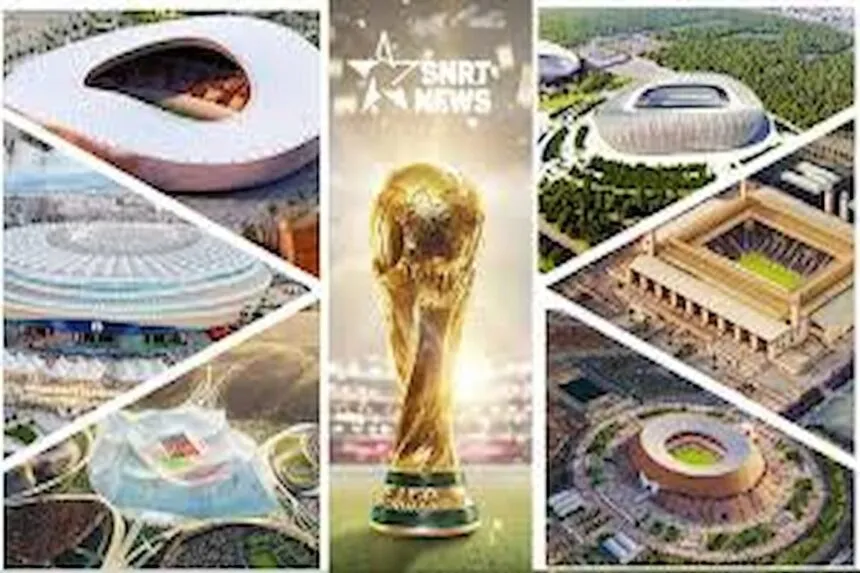
The Africa Cup of Nations served as both a trial run and a validation of Morocco’s capability to host the World Cup, providing valuable insights into organizing large-scale international tournaments. Among the key infrastructure initiatives are the renovation of six existing stadiums located in Tangier, Rabat, Casablanca, Fez, Marrakech, and Agadir, all upgraded to meet FIFA's stringent standards, as well as the construction of the new Hassan II Grand Stadium in Benslimane. This monumental facility, designed to accommodate 115,000 spectators, is being developed using cutting-edge technologies like Building Information Modeling (BIM) and Lean Construction, and is expected to host the opening match or the final.
Furthermore, Morocco's high-speed rail network is set to expand by 430 kilometers to better link key cities such as Kenitra, Rabat, and Marrakech. Regional express networks are also being planned around major urban centers, while the national motorway network is projected to increase from 1,850 kilometers to 3,000 kilometers by 2030. Key projects, including the Rabat–Casablanca continental highway and the Tit Mellil–Berrechid route, will significantly enhance connectivity. Casablanca’s Mohammed V Airport is also undergoing expansion, with a new third terminal being added to reinforce its status as an intercontinental hub.
With the goal of welcoming approximately 26 million tourists by 2030, up from nearly 20 million in 2025, Morocco is committed to adding 60,000 hotel beds to its already impressive capacity of over 300,000. This expansion aims to ensure sufficient accommodation for World Cup fans while securing long-term occupancy within a tourism sector that contributes around 7% to the national GDP.
Recently, the preparation efforts entered a more operational phase during a tripartite business forum that brought together Morocco’s CGEM (Confédération Générale des Entreprises du Maroc), Spain’s CEOE, and Portugal’s CIP at the Mohammed VI Football Complex. This meeting emphasized a robust model of public-private partnership that actively involves the national business community, ensuring a collaborative approach to the forthcoming challenges.
Morocco continues to exhibit strong economic fundamentals, with growth projections exceeding 5%, inflation rates hovering around 1%, and unprecedented levels of foreign direct investment. An estimated 35 cities across the country are expected to benefit directly from enhancements in sanitation, urban regeneration, environmental upgrades, and improvements to public spaces. By fostering opportunities for small and medium-sized enterprises throughout the value chain, Morocco is strategically positioning the 2030 World Cup as a platform for enduring economic and social advancement rather than merely a month-long spectacle.
As reported by northafricapost.com.