
Succession Disputes in the Moroccan Majzén
Within the Moroccan Majzén, which represents the elite surrounding the king, a succession dispute has been brewing for some time. This internal conflict remains largely absent from official statements and state television broadcasts, making it a quiet yet significant struggle. It is neither an outright war nor a declared dynastic clash but rather a covert battle among clans, intelligence services, and advisors positioning themselves for the eventual end of King Mohammed VI's reign. The primary contenders in this power struggle appear to be Crown Prince Moulay Hassan and his uncle Moulay Rachid, the king's brother.
King Mohammed VI, aged 63, has been grappling with chronic health issues for over a decade, which have dramatically reduced his public appearances and necessitated long periods spent abroad, particularly in France. Reports indicate that he has suffered from back pain, shoulder surgeries, and other chronic ailments that have led to official resting periods. Unofficial sources, such as journalist and academic Omar Brouksy in his book _Fin de règne_ (End of Reign), suggest that the king may be suffering from an autoimmune disease (Hashimoto) combined with respiratory issues (COPD), significant weight loss, and an increasingly frail appearance. While the palace issues reassuring statements, the perception of an impending 'end of reign' has taken root both within and outside Morocco.
Ceuta and the Hybrid Warfare Tactics
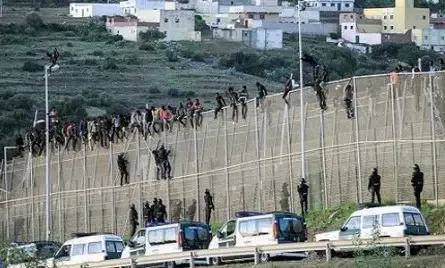
This internal tension coincides with an unprecedented surge of 80,000 individuals seeking entry into Ceuta, which many in Spain have interpreted as a calculated act of pressure rather than a spontaneous influx. Reports from border police indicate that there has been 'active guidance' of migrants from the Moroccan side, coupled with a controlled relaxation of border surveillance. In a highly centralized regime like Morocco, such hybrid operations, where migratory flows are utilized as a diplomatic pressure tool, do not happen by chance. They typically require explicit approval or, at the very least, the non-intervention of security apparatuses that oversee the border. When the highest authority is perceived as weakened or absent, the maneuvering space for intelligence services and the most powerful advisors expands significantly.
Some Moroccan opposition figures link the intensity of these incidents to internal power struggles, emphasizing the necessity of reinforcing territorial claims over Ceuta and Melilla during this period of succession uncertainty. Morocco's long-standing territorial claims over these cities have been a consistent theme in the political discourse of the Alaouite dynasty. Former King Hassan II left these issues for the 'next generation,' as recounted by former King Juan Carlos in his memoirs _Reconciliation_. King Mohammed VI has maintained a more diplomatic approach but has never entirely relinquished these claims. In a transitional context, reigniting pressure on Ceuta and Melilla serves multiple purposes: it can unify internal factions, distract from social issues, and strategically position powerful actors within the Majzén for the future reign.
While there is no documented evidence that Moulay Hassan or Moulay Rachid directly instructs operations concerning Ceuta, a palpable atmosphere of covert rivalry exists among power structures. Media outlets like _Ecsaharaui_ suggest that the monarchy operates with diminished public presence from the king and increasingly employs hybrid tools—such as immigration, disinformation, and diplomatic pressure—especially when the monarch's health raises more uncertainties.
As reported by okdiario.com.