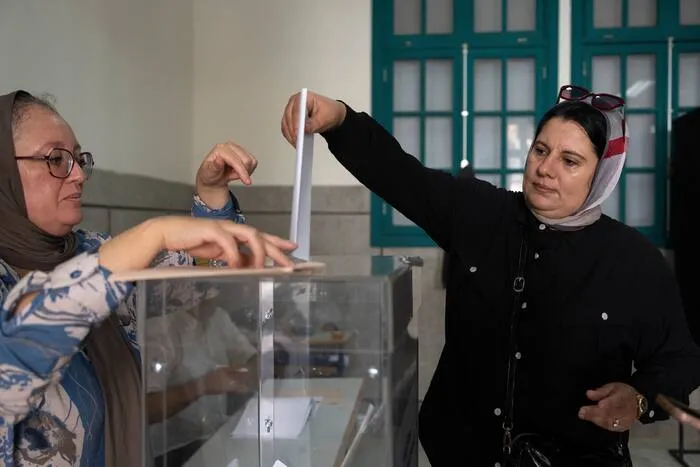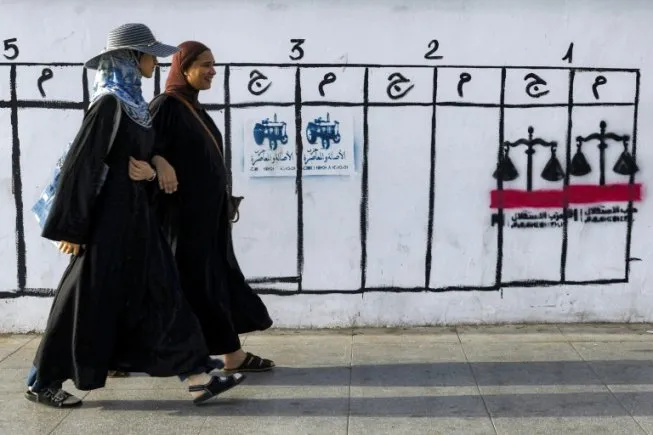

On Wednesday, Moroccan citizens cast their votes in legislative elections marked by significant concerns surrounding purchasing power, employment, and social inequalities, all set against a backdrop of widespread distrust towards political parties. With approximately 16 million out of a total population of 36 million eligible voters, the stakes are high as they elect 395 representatives for the House of Representatives.
The participation rate, particularly among the youth demographic, is under close scrutiny. As reported by the Ministry of the Interior, by noon, the national turnout rate stood at 11.34%. High unemployment, soaring prices, and a crisis of confidence in the political class are central issues influencing these elections, occurring less than two months after a large influx of migrants, predominantly young Moroccans, headed towards the Spanish enclave of Ceuta. This migration has brought to light the social malaise and lack of opportunities faced by a segment of the youth, despite the country experiencing steady economic growth.
Disillusionment with the promises made by political parties also resonates across different age groups. Majda Bakatir, a 59-year-old resident of Rabat, expressed her sentiments to AFP, stating, "I will not vote because I have lost all faith in the political class. We want our country to move forward, but politicians do not seem to care about our issues related to health, education, and purchasing power." Conversely, 55-year-old Karim Ennaciri, found at a polling station in the capital, argued that the electoral process is crucial for determining whether there will be a renewal within the parties.
Preliminary results are expected to be announced late in the evening, with polling stations open from 8 AM to 7 PM GMT. The new head of government will be from the party that secures the most votes in these elections. Appointed by King Mohammed VI, this leader will be tasked with forming an executive for a five-year term, although major strategic decisions will remain under the monarch's purview.
Without any pre-election polls, which are banned by electoral law, media and observers have positioned the National Rally of Independents (RNI), which currently leads the governing coalition, as a frontrunner. Despite stepping down from the leadership of the RNI, Prime Minister Aziz Akhannouch has actively campaigned for his party. "We have implemented reforms in education and health, we have increased salaries... We have been there when Moroccans needed us," he declared during a campaign rally, defending his administration's record. However, the wealthy businessman often finds himself facing accusations of conflicts of interest related to his company, Afriquia, a leader in the distribution of hydrocarbons in Morocco.
The other favored political party is the Authenticity and Modernity Party (PAM). Both center-right parties share similar ideologies and were founded by individuals closely associated with the palace. Recently, the PAM has successfully attracted a popular figure: Budget Minister Fouzi Lekjaa, who is known for his leadership role at the Royal Moroccan Football Federation. "Through our program, we aim to empower youth to become a force that adds value rather than being left behind," Mr. Lekjaa stated during the campaign.
With no clear leader, the PAM's other prominent figure is Fatima Ezzahra Mansouri, the Minister of Spatial Planning and Mayor of Marrakech, who is tipped by local media to potentially become the first female head of government in the nation’s history should her party win. However, the PAM has faced challenges, including a corruption scandal that resulted in two of its prominent members receiving prison sentences ranging from 10 to 12 years for drug trafficking.
Additionally, the Istiqlal Party (right-wing), a historical party led by Nizar Baraka, the current Minister of Equipment, is also a contender with its focus on the country’s social issues. In opposition, the Justice and Development Party (PJD, Islamist) claims to represent a "break" to combat corruption.
As reported by actu.orange.fr.