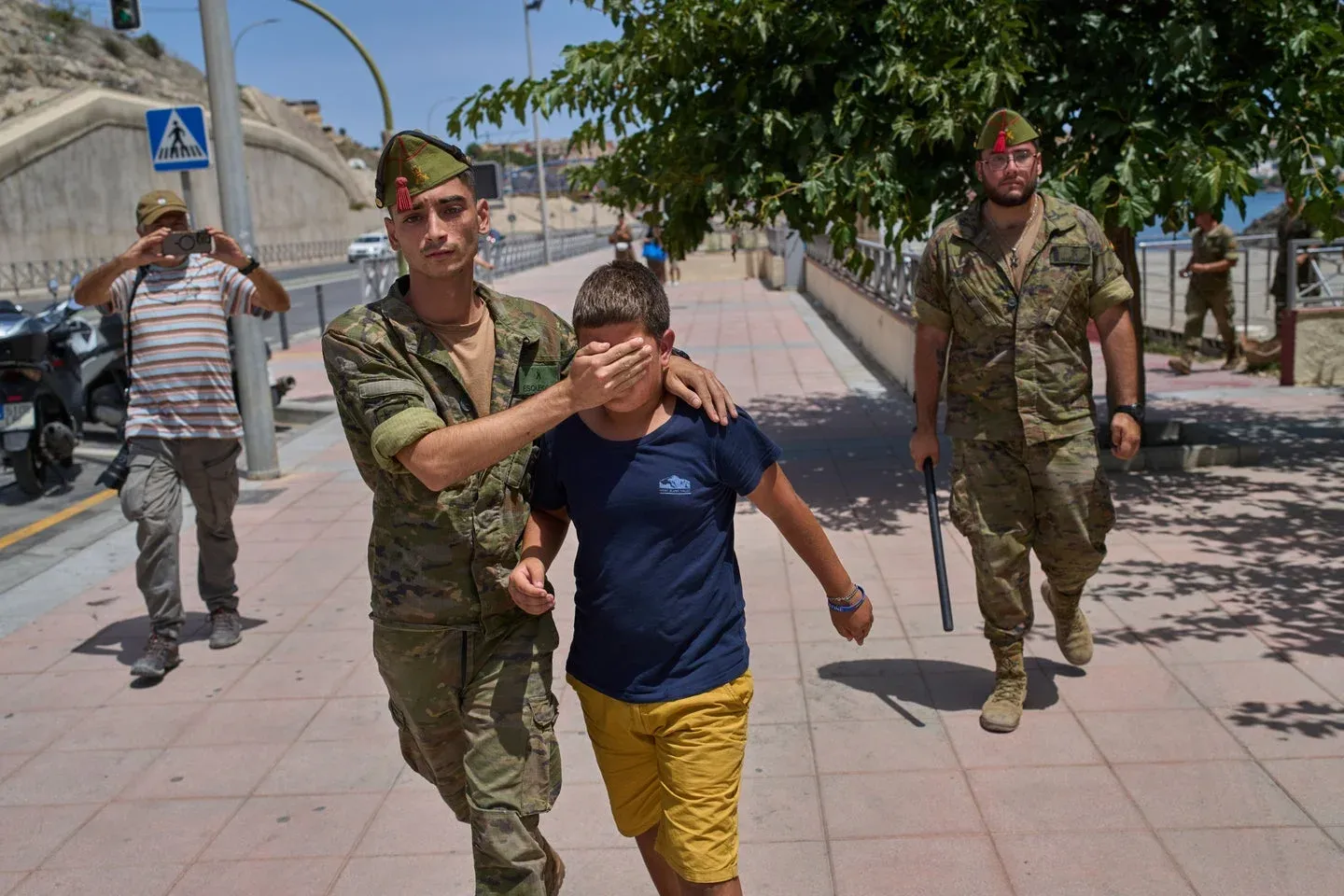

The Moroccan Minister of Justice, Abdellatif Ouahbi, has called for the return of Moroccan minors currently residing in Spain, including those who arrived in Ceuta during the recent migration wave. This initiative aligns with royal directives issued to relevant Moroccan ministries aimed at facilitating the identification and repatriation of these minors. However, a precise count of the minors affected remains to be established. According to the latest statistics released by Spanish authorities on August 12, there are 1,527 unaccompanied minors in Ceuta following the crisis. Nonetheless, this figure does not necessarily reflect the number of youths who arrived on July 30 and 31, as some were already present in the enclave prior to the influx.
Existing Agreement Between Rabat and Madrid
Contrary to some beliefs, the return of Moroccan minors is not prohibited under Spanish law. Since 2007, Madrid and Rabat have maintained a special agreement focused on preventing irregular migration of unaccompanied minors, ensuring their protection, and facilitating their "coordinated return." This agreement specifically mandates cooperation between the two countries to locate the families of minors and enable their return to their families or hand them over to the appropriate Moroccan authorities when conditions permit. However, the agreement does not provide for a collective and automatic return. Spanish law requires that the best interests of each child be individually assessed before any return can take place. The administration is tasked with gathering information about the child's family situation, consulting with Moroccan authorities, and allowing the minor to present their views. The public prosecutor also plays a role in this process.
This commitment to individually assess each case explains why minors are treated differently from adults during immediate return operations. Their irregular entry into Spanish territory does not negate their status as minors, which necessitates protection from Spanish authorities.
Legal Precedents and Political Tensions
The caution surrounding the return of minors is directly related to a previous crisis in Ceuta. In August 2021, following a significant influx of migrants into the enclave, hundreds of minors were returned to Morocco as part of an operation organized by Spanish authorities. However, the Spanish judiciary later penalized this procedure. In January 2024, the Supreme Court confirmed that the returns conducted in 2021 were illegal, primarily due to the failure to adhere to the safeguards outlined in Spanish legislation. The judge particularly highlighted the absence of adequate individual assessments regarding the minors' situations.
This judicial precedent now poses a substantial obstacle to any collective return. Even if Rabat requests the repatriation of its citizens and Madrid also wishes to avoid persistent overcrowding in Ceuta, Spanish authorities must ensure that every return operation complies with the legal guarantees in place. Meanwhile, to address the acute situation of overcrowding in Ceuta, the Spanish government has activated mechanisms to transfer some unaccompanied minors to other autonomous regions. This action does not preclude the possibility of their return to Morocco being considered simultaneously, as these are two distinct processes.
The issue has sparked intense political tensions in Spain, with the central government advocating for the distribution of minors among regions to alleviate pressure on Ceuta, while the Popular Party insists that priority should be given to their return to Morocco. Furthermore, the Mayor of Melilla, Juan José Imbroda, has called for the implementation of the 2007 agreement with Rabat. Thus, the current situation is less about a refusal by the Spanish government to return minors to Morocco and more about a legally constrained process. Rabat demands their return and affirms its readiness to receive them. Madrid can accept this return, but it is obligated to organize it on a case-by-case basis.
The real challenge in the coming weeks will be to ascertain whether cooperation between the two nations will facilitate the swift identification of the minors' families and provide the necessary conditions for their return. The judicial precedent from 2021 serves as a reminder that any hastily executed collective operation could once again expose Spanish authorities to legal challenges.
As reported by ar.yabiladi.com.