
High-Stakes Elections in Morocco's 'Death Circles'
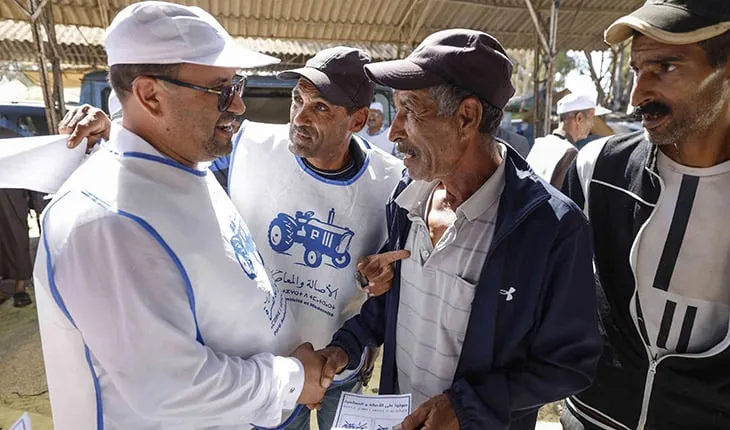
As the date for the upcoming legislative elections in Morocco approaches, scheduled for September 23, the political landscape is marked by intense competition among prominent candidates, particularly in areas deemed 'death circles.' This term, widely used in media, refers to electoral districts where high-profile political figures have historically faced significant challenges, often resulting in their political downfall. These districts are characterized by a fierce battle not only for parliamentary seats but also for the survival and relevance of various political parties. The media and public alike are keenly interested in these 'death circles' since they provide a stage for political leaders to showcase their strengths or reveal their weaknesses, making the outcome of these elections a focal point of political discourse.
Among the most notable of these 'death circles' is the 'Rabat Surrounding' constituency in the Moroccan capital, which has gained attention not merely for the limited number of available seats but also for the heavyweight political figures competing for them. This constituency, which elects four deputies, has turned into a battleground among notable candidates, with the Party of Authenticity and Modernity fielding Minister Mohamed Mehdi Ben سعيد, while the Justice and Development Party counters with former minister Mustafa El Khalfi. The Socialist Union also enters the fray with another former minister, Abdel Karim Benatiq, alongside candidates from other parties. For these candidates, this race extends beyond mere party affiliation; it serves as a critical test of their political stature and public popularity, essentially turning the electoral process into a high-stakes examination.
The importance of the 'Surrounding' district is further amplified by its electoral history. The political landscape here has never been stable; the four parliamentary seats have not been monopolized by any single party, which means that even influential candidates must cultivate a genuine local support base. Notably, the competition is fierce, with the 'Boulmane' district in the Fès-Meknès region emerging as a close contender in terms of political significance. Similar to the 'Surrounding' constituency, Boulmane's race is characterized by heavyweight candidates such as Mohamed Choukri, the leader of the National Rally of Independents, and seasoned politician Mohand L'Ancer from the Popular Movement. The current parliament member Rachid Hamouni from the Progress and Socialism Party also competes here, with additional candidates from various other parties vying for one of the three available seats, adding to the complexity and competitiveness of the race.
Intensifying Competitions in Major Cities
In Casablanca, the economic capital of Morocco, the concept of a single 'death circle' is less applicable due to the high population density that incites fierce competition across multiple districts. The 'Anfa' constituency stands out, particularly with Najwa Kakkos, the head of the national council for the Party of Authenticity and Modernity, running as a candidate. This district holds strategic importance for her party. Alongside Anfa, the 'Moulay Rachid' district emerges as another fiercely competitive area, relying on local organization and mobilization rather than just party star power.
The electoral map extends to include Fès, Marrakech, and Agadir, all of which hold significant political weight. In Fès, the competition is divided across the 'Northern Fès' and 'Southern Fès' districts, each with four parliamentary seats, resulting in a total of eight seats up for grabs. This situation has intensified following the significant changes seen during the 2021 elections, where the Justice and Development Party lost its parliamentary representation in the city after previously holding four seats. In Marrakech, the 'City - Sidi Youssef Ben Ali' district, allocated three seats, has also experienced notable shifts between the 2016 and 2021 elections, with veteran candidate Fatima Zahra Mansouri from the Party of Authenticity and Modernity returning to the competition, adding a broader political dimension to the electoral stakes. Meanwhile, Agadir Idawtan, which also has four seats, remains a critical area to watch due to the political weight and shifts in its electoral results over past elections, particularly considering the influence of the National Rally of Independents in the region, a key stronghold for Prime Minister Aziz Akhannouch.
As reported by alquds.co.uk.