
Moroccan Outrage Over Spanish Police Allegations
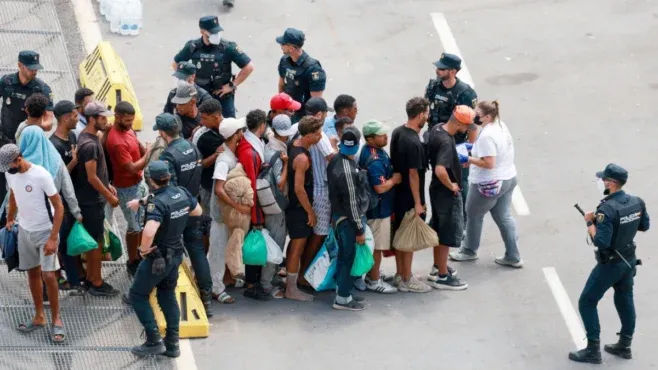
In the wake of a substantial influx of migrants from Morocco into the Spanish territory of Ceuta, Moroccan media outlets have voiced strong criticism regarding a police report released by Spain. This report, which accused Morocco's security forces of negligence during a chaotic surge that saw over 70,000 migrants crossing into Ceuta on July 30 and 31, has been met with skepticism and condemnation from various Moroccan news platforms. The event led to tragic outcomes, with multiple lives lost and a renewed debate within the European Union about migration policies. The Spanish police document suggested a Moroccan response characterized by “total permissiveness,” claiming that some officers even directed migrants towards the water, which has raised significant questions about the accuracy and integrity of these assertions.
Despite the serious allegations made in the report, Spain's Prime Minister Pedro Sanchez has refrained from placing blame on Morocco, emphasizing the absence of concrete evidence that would support the notion that the North African nation orchestrated this mass migration. Sanchez's administration has made efforts to stabilize relations with Morocco, particularly given the historical complexities surrounding Ceuta and Melilla, Spain's other North African enclave. As the Moroccan authorities remain silent regarding the leaked report, various media outlets in Morocco have stepped in to challenge its validity and defend the nation's security forces.
The Moroccan news site Hespress labeled the Spanish police report as “particularly weak,” pointing out its lack of substantive evidence and the presence of significant contradictions within its narrative. Furthermore, Le Desk criticized the report as “botched,” noting factual inaccuracies, including an erroneous reference to the date of June 30 instead of the actual surge on July 30. Additionally, TelQuel refuted claims from certain media that the report directly implicated Morocco in orchestrating the influx, clarifying that it did not name any Moroccan officials as responsible for the alleged failures. In a further challenge to the report's claims of permissiveness, Medias24 contended that the assertion was based on a single satellite image, which they deemed insufficient to establish a comprehensive narrative.
In conclusion, as the situation continues to unfold, the Moroccan media landscape remains vigilant, actively disputing the claims made in the Spanish police report while emphasizing the need for a nuanced understanding of the complex realities surrounding migration issues in the region. The response from both nations will undoubtedly shape future interactions and policies regarding migration and border security.
As reported by arabnews.jp.