
US Initiates Controversial Deportation Policy
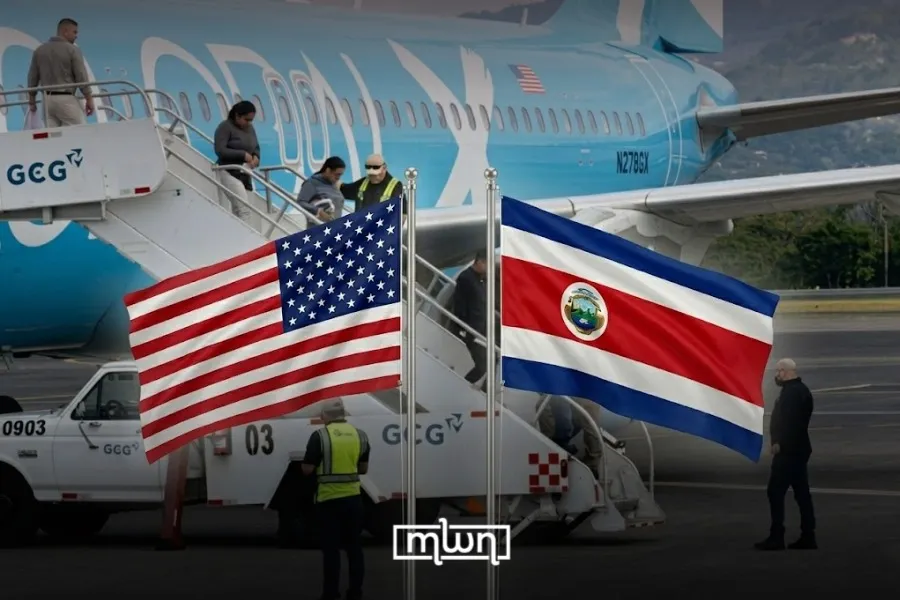
The United States has recently commenced the deportation of migrants from various nations, including Morocco, to Costa Rica as part of its contentious "third-country" deportation strategy. According to a report by Reuters, a total of 25 migrants from diverse backgrounds—spanning countries such as Albania, Cameroon, China, Guatemala, Honduras, India, and Kenya—were deported on a Saturday, marking the first wave of this new policy in action.
This initiative is the result of a treaty established between the US and Costa Rica back in March, wherein Costa Rica has agreed to accept up to 25 migrants each week. In return for this arrangement, the US has promised financial aid, which will be complemented by the International Organization for Migration providing essential food and shelter for the deported individuals during their initial week in Costa Rica. However, this policy has drawn significant criticism from humanitarian organizations and advocates who raise moral and legal concerns regarding this approach to migration.
Concerns and Criticism Surrounding the Policy
In April, the World Organization reported that the US had deported approximately 15,000 individuals to countries where they may not have originated. The range of countries that accepted these deportees includes Mexico, El Salvador, Eswatini, and South Sudan, among others. Critics have voiced strong objections to the US policy, arguing it leaves deportees in a precarious situation and raises serious ethical and legal dilemmas.
Beyond humanitarian considerations, US Democrats have pointed out that these deportation agreements with foreign nations impose a heavy financial burden on American taxpayers, with a study indicating that over $32 million has been directly allocated to five countries involved. As of January 2026, around 300 individuals from third countries have been accepted, predominantly consisting of Venezuelans deported to El Salvador. The high costs of these deportations are exemplified by a case involving a Jamaican man, whose transfer to Eswatini incurred expenses exceeding $181,000, despite a ruling mandating his return to Jamaica.
The US government has pledged to persist with its extensive deportation campaign, asserting that such measures are necessary to allocate resources more effectively and enhance opportunities while restoring safety. These deportations take place amidst growing dissatisfaction with former President Trump's migration policies, particularly following the suspension of the Diversity Visa (DV) program in December after a mass shooting incident at Brown University and the subsequent murder of MIT professor Nuno F. Gomes Loureiro. These events prompted the Department of Homeland Security to halt visa issuances and ongoing applications for a comprehensive security procedure review.
Many Moroccan nationals who were awarded the 2026 Diversity Visa have expressed their concerns about delays in their interview scheduling. A spokesperson from the US Department recently communicated to Morocco World News (MWN) that the Trump administration is committed to safeguarding the nation and its citizens by maintaining rigorous national security and public safety standards through its visa process. The spokesperson emphasized that the US mission in Morocco is scheduling DV appointments according to its capacity, urging applicants to routinely check their status online for updates regarding interview scheduling.
As reported by moroccoworldnews.com.