
Voluntary Return of Migrants from Benítez Beach
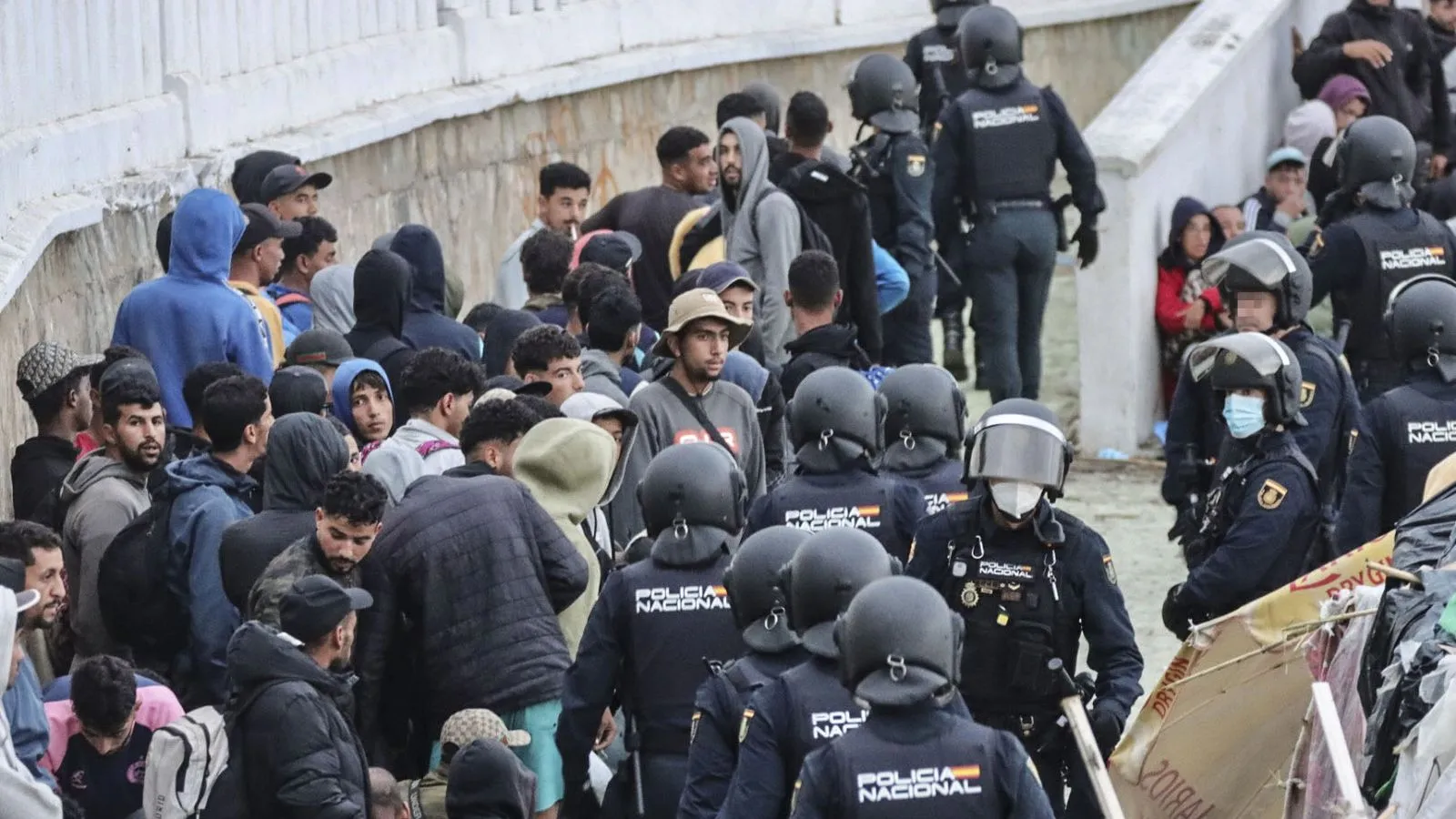
In a significant development in Ceuta, a considerable number of Moroccan migrants who had been residing in the settlements at Benítez Beach have made the decision to return voluntarily to Morocco. This decision came after they were informed of their option to do so during the operation aimed at relocating residents from the area to the Temporary Attention Center for Foreigners (CATE) for processing. Starting around 9:30 AM, buses began arriving at the Tarajal area to transport these migrants from Benítez Beach. Some migrants, whose numbers have yet to be determined, opted to return to Morocco from the border at El Tarajal. A large contingent of the National Police has been actively working since early morning to organize and group the individuals who were staying in the settlements for their bus transfer.
The buses first transported the migrants to the facilities at El Tarajal, where the CATE is located, to process their registration and handle the various situations of those who had entered Ceuta. Following this, they will be relocated to the Loma Colmenar reception camp, as confirmed by officials from the Ceuta Superior Police Headquarters. During the operation, an interpreter accompanied the officers to explain the procedure to the migrants and reassured them about the destination of the buses. Contrary to their fears, they were informed that the buses were not headed to the border for expulsion, but rather to the CATE, where they could be registered and have the opportunity to request international protection.
Impact of International Protection Regulations
The interpreter also conveyed that those who wished could opt for voluntary return to Morocco. This information prompted dozens of Moroccan nationals to choose to return, leading to their transportation by bus to the vicinity of the El Tarajal border. Since the onset of the crisis, the Spanish government has emphasized that requests for international protection must align with the criteria established by regulations, indicating that purely economic or labor-related reasons do not suffice for asylum eligibility. This clarification is causing some Moroccan citizens to reconsider their decision and explore the option of voluntary return to their home country.
As part of the operation, the National Police had organized around 300 to 400 migrants who had spent the night at the beach before escorting them to the buses headed for CATE, located in the Tarajal facilities. A group of about thirty migrants attempted to flee along the beach towards the city center. To prevent the movement of more than 4,000 migrants who were camping at nearby Trampolín Beach, five vans were strategically placed close to Benítez Beach. The police operation began at 7:00 AM, and by 8:00 AM, approximately fifty riot police were deployed on the sand, waking the migrants with firm instructions to gather their belongings and leave. The migrants complied without resistance, collecting their possessions and forming lines to head towards the beach promenade, where buses were expected to arrive shortly for their transfer to CATE.
Police sources have indicated plans to perimeter the access to Benítez Beach from the desalination plant area to prevent future occupations following the eviction, as has been experienced in previous instances at Trampolín. The eviction at Benítez Beach was deemed necessary for safety reasons, given the presence of an overflow area for a reservoir, which releases water during periods of heavy rainfall. The rainy season commenced on Monday, prompting urgency in these measures. According to consulted police sources, the National Police have employed drones in monitoring the water conduit that transports water from the reservoir to Benítez and have confirmed, using thermal cameras, that individuals are living within these structures.
As reported by canalsur.es.