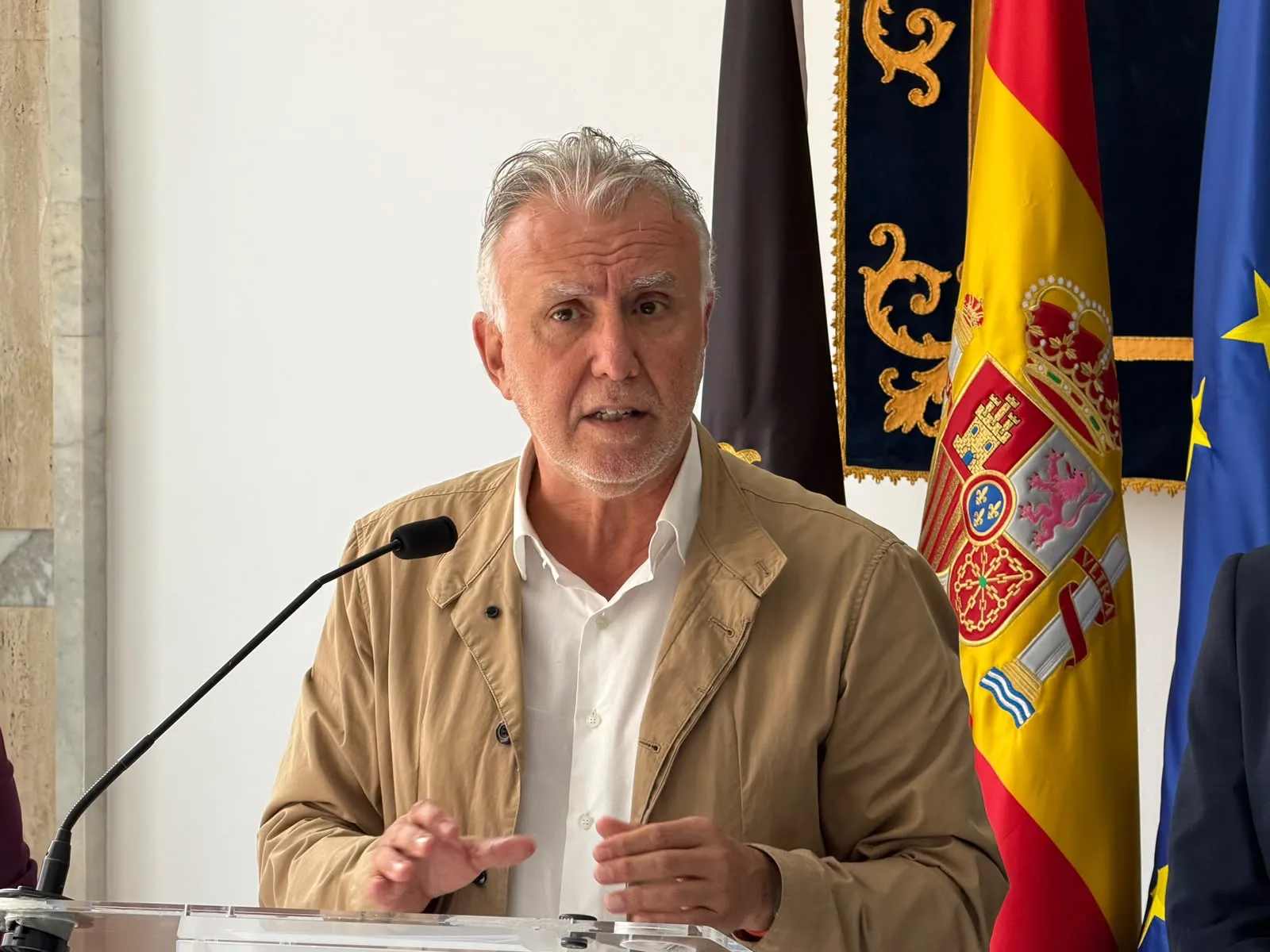

On Wednesday, Ángel Víctor Torres, the Minister of Territorial Policy and Unified Command, provided an update on the evolving immigration situation in Ceuta following a recent meeting of the Situation Committee. This committee includes representatives from the Spanish government and the autonomous city, and it plays a crucial role in addressing the ongoing challenges faced by the region due to significant immigration inflows since August.
Minister Torres shared important developments, including the establishment of a new emergency site adjacent to the Ceuta Penitentiary, which is managed by the Ministry of the Interior through the Penitentiary Institutions. This site will serve as a last resort should there be a need to increase capacity for accommodating immigrants who remain in the city. The decision to include this new resource was unanimously approved by the National Security Council and communicated to the Situation Committee.
With the introduction of this facility and existing resources outlined in the Royal Decree, the government believes it will have sufficient capacity to accommodate the individuals still staying overnight in Ceuta. Furthermore, the government has met with unions to clarify the characteristics of the new site and address any existing concerns regarding its implementation.
Expanding Capacity: 840 Places for Women and Accompanied Minors
In conjunction with these measures, the government has continued its efforts to relocate and reorganize immigrants. Minister Torres reported that 63 women have already arrived at the Hípica center, and once renovations at the former cavalry barracks football field are completed, an additional 540 places for women will be available. This will be complemented by another 300 places designated for women and accompanied minors at the mosque area, bringing the total to approximately 840 places dedicated to this vulnerable demographic.
Additionally, the minister detailed the operation conducted on Tuesday at the Benítez beach, which was different from previous efforts and followed protocols established by the Security Group forces. This operation, executed in small groups, successfully cleared individuals from the area, allowing the beach to be reopened. Torres estimated that around 400 individuals were present there and were subsequently transported to the CATE and holding facilities. He emphasized that the operation was completed without any personal injuries among either the agents or the immigrants involved, and he expressed his gratitude to the security forces and organizations that participated in this operation.
Looking ahead, the government plans to continue relocating individuals to various available resources in the coming days while maintaining the necessary discretion in these movements.
Government Resources and Return Statistics
During his address, Minister Torres reviewed the resources included in the Royal Decree. These resources comprise land from the Ministry of Defense at Loma Margarita, which is already operational; facilities at Hípica; the former football field at the cavalry barracks, which will be utilized shortly; and lands from the Ministry for Ecological Transition at the old Guano Factory, used for operations related to immigrants, albeit not as a closed facility. The K8 barracks land remains listed, although Torres indicated that its use is unlikely to be necessary. Additionally, the list includes two plots from the Ministry of Transport at the Port of Ceuta and land from the Ministry of Housing at Loma Colmenar.
As of Wednesday, the government reported that 8,223 individuals have been returned to Morocco since August 10, with an increase of 1,432 since the last ministerial update, averaging over 200 daily returns during this period. Torres also mentioned that the total returns include 453 expulsions, bringing the overall number of individuals returned to nearly 9,000. The government is committed to continuing the processing and return of individuals whose cases warrant their removal.
In relation to minors, whose care is primarily the responsibility of the autonomous city, Torres highlighted that the Spanish government has allocated 88 million euros to support the establishment and operation of reception resources, including costs associated with minor representation. As of this week, 2,566 minors have been registered within the protection and triage system.
Moreover, ten family reunification cases for minors in Morocco have already been sent to the neighboring country, alongside 69 minors who have been reunited with families in other parts of Spain, all of whom arrived in Ceuta after July 30. Torres noted that a total of 213 minors who were in Ceuta during August and September have since been relocated to other areas in Spain, primarily on the mainland.
In conclusion, Minister Torres expressed his gratitude to the outgoing government delegate, Miguel Ángel Pérez Triano, for his efforts over the past weeks, particularly his engagement in the Situation Committee sessions and his communication with the public during the challenging months of August and September. He welcomed the new government delegate, wishing him success in his new role while acknowledging the difficulty of the preceding situation for Triano and his family.
As reported by elfarodeceuta.es.