
The Role of Moroccan Phosphate in Global Fertilizer Production
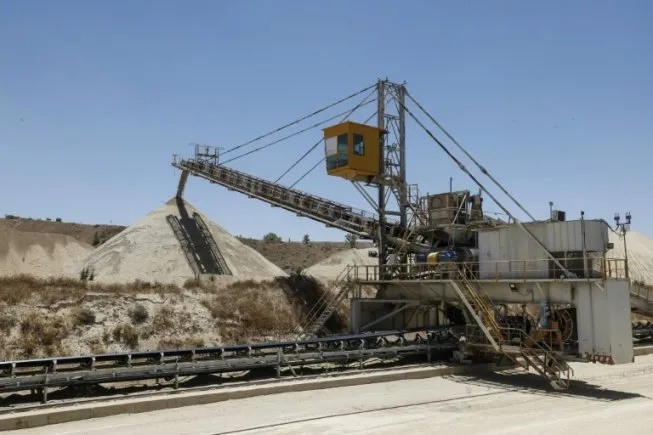
In Morocco, a country rich in phosphate reserves, massive excavators work diligently to extract this essential mineral, which is crucial for fertilizer manufacturing. As discussions around cadmium—a toxic heavy metal—intensify across Europe, this strategic resource is increasingly at the forefront of public health debates. The public entity OCP Group, formerly known as the Office Chérifien des Phosphates, holds a monopoly on the mining of Moroccan phosphate and claims to have developed innovative technologies to reduce cadmium levels in their fertilizers, thereby addressing health concerns linked to this hazardous substance.
Health Implications and Regulatory Developments
Cadmium, which poses significant health risks including kidney damage and an elevated risk of cancer, has garnered increased attention in Europe. In a notable legislative move, French lawmakers passed a bill in June aimed at limiting public exposure to cadmium. Naturally occurring in phosphate, cadmium can accumulate in agricultural soils and subsequently enter the food chain. According to the French Agency for Food, Environmental and Occupational Health & Safety (Anses), sediment deposits in Morocco, the United States, and Tunisia contain particularly high concentrations of cadmium, contrasting sharply with those found in South Africa and Russia.
Morocco is home to approximately 70% of the world's known phosphate reserves, totaling around 50 billion tons, which includes a significant deposit located in the disputed territory of Western Sahara, claimed by the Polisario Front. As the second-largest producer of phosphate globally, following China, Morocco leads the African market. In the Sidi Chennane mine, located near Khouribga, enormous machinery named 'Marion,' weighing 3,000 tons, excavates the earth to reveal the phosphate beneath. After extraction, the rock undergoes washing and is either exported in its raw form or processed into phosphoric acid—a fundamental component of phosphate fertilizers—at a facility near Casablanca. Depending on the desired fertilizer type, this phosphoric acid is combined with ammonia or other elements.
Since 2025, OCP has claimed to offer fertilizers with cadmium concentrations lower than 20 milligrams per kilogram, significantly below the European Union's maximum allowable limit of 60 mg/kg. As the EU is not mandated to conduct systematic monitoring of cadmium in imported products, it lacks the capacity to verify producers' claims. However, an EU official confirmed that a major Moroccan producer has invested in technologies to ensure cadmium levels remain below 20 mg/kg in their European exports.
The OCP has explained that it utilizes specific additives during the processing of phosphoric acid to effectively capture cadmium before repurposing the purified acid for fertilizer production. Faris Derrij, CEO of OCP Nutricrops, a subsidiary of OCP, stated that significant investments have been made to adapt production in response to varying regulatory approaches across different markets, although he did not disclose specific financial figures or the cadmium content of exports outside Europe.
Beyond cadmium concerns, the phosphate industry is also grappling with environmental issues, such as the disposal of phosphogypsum—an extremely polluting byproduct containing heavy metals and acidic substances resulting from fertilizer production. By 2027, OCP plans to construct a land storage facility to mitigate massive oceanic discharges. The company is also conducting research aimed at valorizing this byproduct. According to Sylvain Pellerin, a research director at the French research institute INRAE, excessive use of phosphate fertilizers in agriculture can lead to negative environmental impacts, such as water contamination and the emission of nitrous oxide, a greenhouse gas.
The geopolitical landscape presents another challenge for OCP, particularly as global fertilizer demand rises. Since the onset of conflict in the Middle East in late February, supply chains have been disrupted, driving up global fertilizer prices. The region accounts for 30% of the world's fertilizer supply, with the Strait of Hormuz—controlled by Iran—serving as a critical transit point for sulfur and ammonia, essential inputs for fertilizer production. Several Gulf factories have halted or reduced production, notably in Qatar, a major producer of ammonia and urea, which are highly sought-after fertilizers, as well as in the UAE, Saudi Arabia, Iran, and Jordan.
While he did not quantify the impact, Faris Derrij acknowledged that the ongoing crisis has affected timelines, costs, and supply flows. Nevertheless, he emphasized that OCP has managed to maintain operational continuity, thanks to its stockpiles and strategic geographic position.
As reported by actu.orange.fr.