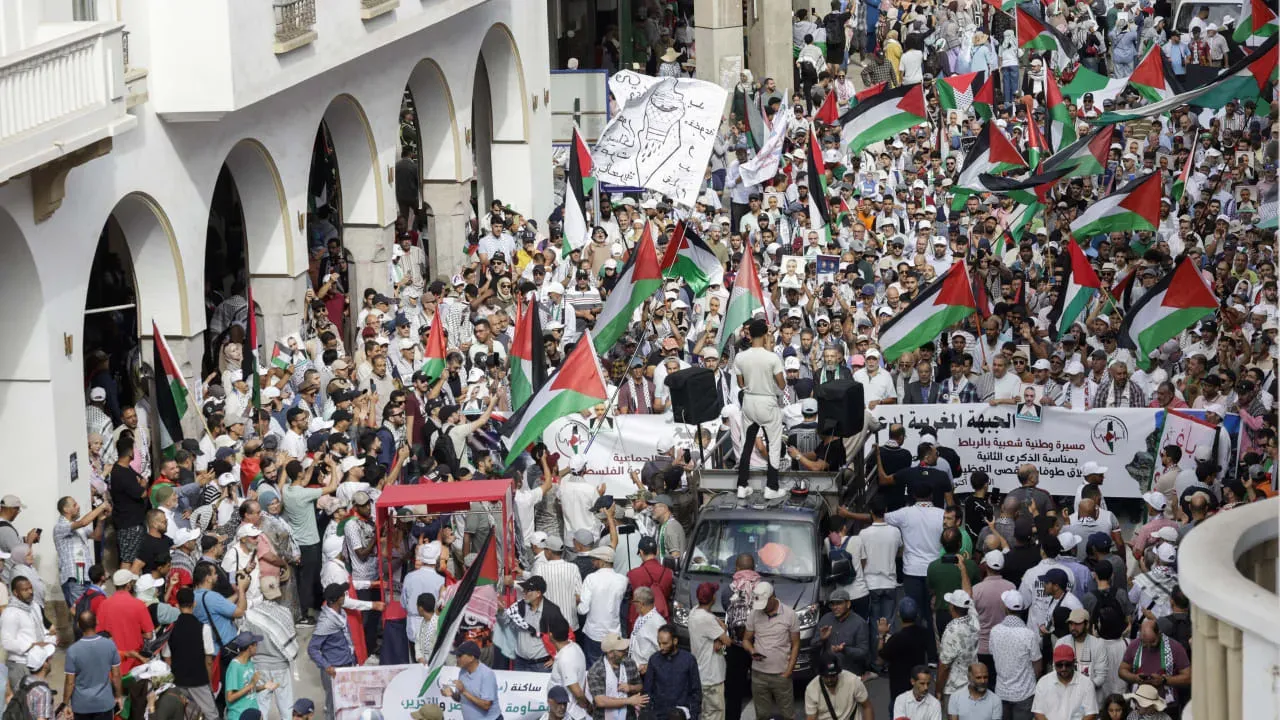

In a significant display of dissent, Moroccan opponents of normalization with Israel have concluded three days of protests against the government's recent decision to elevate diplomatic relations to a full embassy status. This wave of demonstrations comes on the heels of a September 16 announcement made in New York by Moroccan Foreign Minister Nasser Bourita, Israeli Foreign Minister Gideon Sa’ar, and U.S. Ambassador to the United Nations Mike Waltz, confirming that the nations would be upgrading their liaison offices to embassies and appointing ambassadors. They also agreed to finalize investment protection and double taxation agreements by the end of the year, solidifying their economic ties.
Political scientist Yasmine Hasnaoui from Hassan First University in Settat remarked on the ongoing nature of the protests, stating, "There are always demonstrations against normalization. Morocco does not stop those things." She emphasized that Morocco views itself as a mediator in the Israeli-Palestinian conflict and has not altered its course regarding its relations with Israel since the 2020 agreement that restored formal ties, during which former U.S. President Donald Trump acknowledged Moroccan sovereignty over Western Sahara.
The Moroccan Front for Supporting Palestine and Opposing Normalization initiated the protest campaign, viewing the embassy upgrade as a troubling deepening of relations with Israel. The Moroccan Commission for Supporting the Nation’s Causes reported organizing 76 events across 45 cities, highlighting the widespread opposition to the normalization process.
Demonstrators in Rabat rallied outside Parliament, chanting slogans like “The people want the fall of normalization,” while those in Marrakech declared, “No ambassador, no embassy.” Despite the fervor of the protests, no significant unrest was reported. Moaz al-Hajri, the national coordinator of the Front, criticized the relocation of the Israeli liaison office, labeling it a provocation to the Moroccan people, especially considering the historical significance of Mehdi Ben Barka, a prominent opposition figure who disappeared in 1965.
Political Climate and Electoral Outcomes
As Morocco navigates its complex political landscape, recent parliamentary elections brought to light the tensions surrounding the normalization issue. Final results indicated that the palace-aligned Authenticity and Modernity Party secured 97 out of 395 parliamentary seats, while the National Rally of Independents and the Istiqlal Party followed with 66 and 65 seats, respectively. The Islamist Justice and Development Party (PJD) experienced a notable resurgence, increasing its seats from 13 to 54. However, voter turnout fell to approximately 38%, a decline from about 50% in previous elections.
PJD leader Abdelilah Benkirane attributed the party's improved performance to divine intervention, distancing the gains from the anti-normalization protests. Hasnaoui pointed out the irony, noting that while the PJD has historically opposed normalization, their government was in power when relations with Israel were restored. She emphasized that the protests would not undermine Morocco's sovereignty regarding Western Sahara.
Expert Einat Levi highlighted that the relationship between Morocco and Israel is rooted in historical ties and shared interests that transcend party politics, driven by the strategic vision of the Moroccan monarchy. Western Sahara remains a pivotal issue within this framework, as Morocco claims sovereignty over the territory contested by the Algeria-backed Polisario Front.
Continued Commitment to the Palestinian Cause
Despite embracing diplomatic relations with Israel, Morocco has publicly maintained its commitment to the Palestinian cause. At the United Nations, Foreign Minister Bourita defended the UN Relief and Works Agency for Palestine Refugees in the Near East (UNRWA) and condemned Israeli annexation proposals. The agency has been a point of contention, with accusations of Hamas infiltration and the ongoing debate over Palestinian refugee status.
Morocco is also set to deploy a military field hospital to Gaza and chairs the Organization of Islamic Cooperation’s Al-Quds Committee, further asserting its role in mediating between conflicting parties. The Bayt Mal Al-Quds Acharif Agency has been actively engaging with Palestinian officials, aiming to shift from direct aid to promoting employment and entrepreneurship in Jerusalem.
As the diplomatic landscape evolves, challenges remain. Israel's diplomatic presence in Morocco has faced setbacks, including the recall of the first envoy due to misconduct allegations. As the newly upgraded embassy awaits the appointment of an ambassador amid impending Israeli elections, the future trajectory of Moroccan-Israeli relations remains uncertain.
In the backdrop of these developments, the Moroccan government must address pressing domestic issues, including social inequalities and youth discontent. Hasnaoui pointed out the stark contrast between Morocco's ambitious infrastructure projects and the everyday realities faced by its citizens, emphasizing the need for inclusive development that extends beyond physical advancements.
As Morocco prepares to open the Museum of Moroccan Jewish Culture in Fez, a monumental step in recognizing the country’s diverse heritage, the ongoing discussions surrounding normalization, political representation, and economic development will be crucial in shaping the nation's future.
As reported by jpost.com.