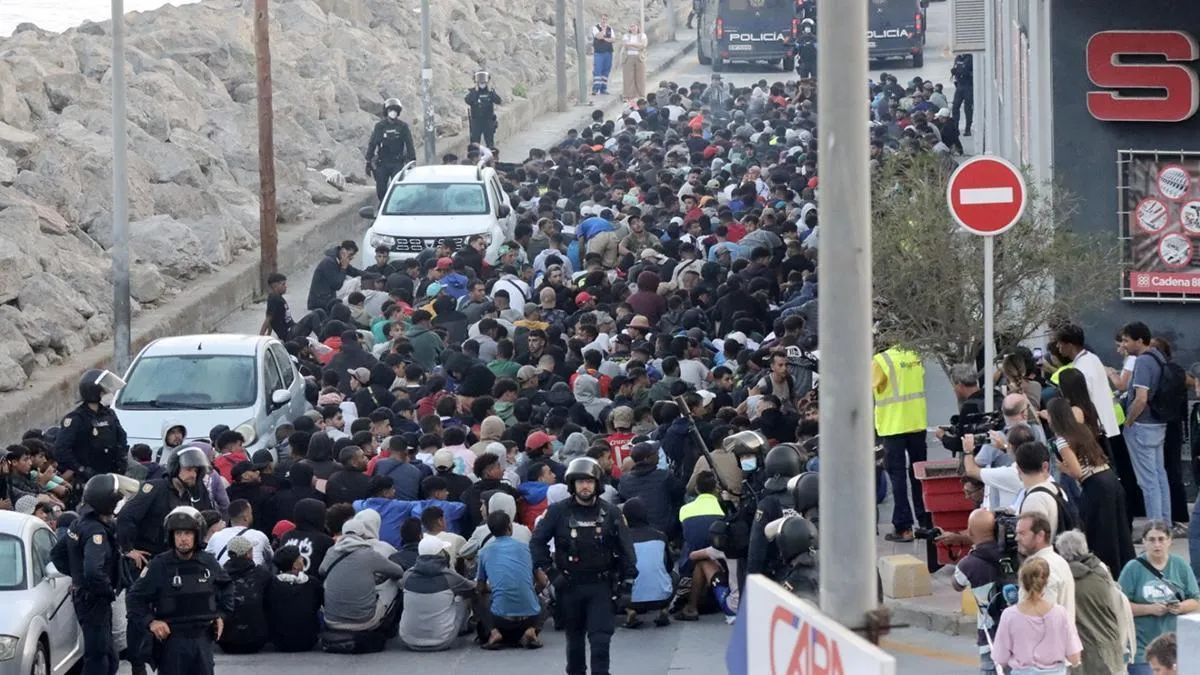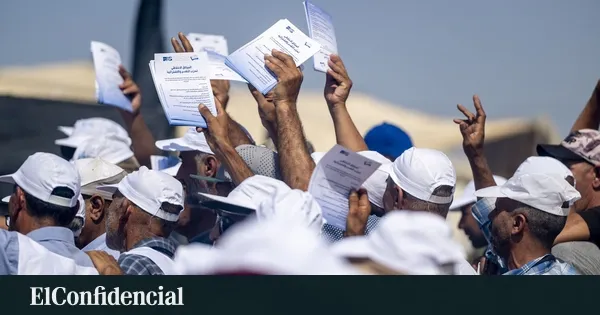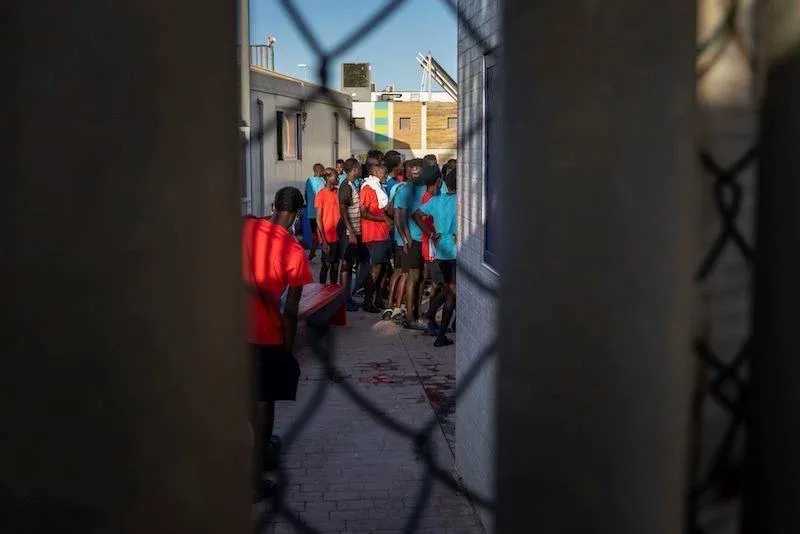

Moroccan researchers specializing in migration issues have expressed strong criticism towards the new European law that allows for the expulsion of migrants back to their home countries. This legislation, which was recently approved by the European Parliament, introduces stricter regulations concerning the return of migrants whose asylum applications have been rejected. Researchers argue that these provisions undermine fundamental human rights principles and international obligations related to the protection and dignity of asylum seekers.
These experts have raised alarms about the potential for Morocco to be included on a list of countries that the European Union might designate for establishing "return centers" beyond its borders, where migrants could be detained prior to deportation. They highlight that this trend reflects an increasing European inclination to export migration management to neighboring countries, raising serious questions about the political and human rights burdens that may be imposed on host nations.
Concerns Over Human Rights Violations
Abdel Karim Belkandouz, a university researcher specializing in migration, stated that the new regulations put forth by the European Parliament infringe upon human rights. He emphasized that Morocco should not become a platform for returning migrants whose asylum requests have been denied. He pointed out that this role contradicts human rights principles and the spirit of Morocco's new migration policy.
In an interview with the online publication Hespress, Belkandouz noted Morocco's role as a leading actor within the African Union regarding migration issues. He asserted that it would be challenging for Morocco to adopt policies that contradict this orientation. He mentioned existing forms of security cooperation between Morocco and the European Union, including arrangements tied to the European agency responsible for protecting the EU’s external borders. Belkandouz remarked, "It appears that the EU is trying to develop practical cooperation models between this agency and certain countries, including Morocco."
However, he pointed out that these matters remain insufficiently clear, as Moroccan authorities do not provide precise information regarding the progress or nature of these agreements. While Morocco’s security role in managing borders and combating irregular migration is often praised, it is crucial to emphasize that such cooperation has clear limits that should not harm migrants' fundamental rights.
Belkandouz elaborated that issues surrounding this topic are continually raised in negotiations between Morocco and the European Union. He highlighted that Europe has been seeking to negotiate a readmission agreement with Morocco since the beginning of this century. The objective of this agreement is not solely to return individuals in an irregular status who are Moroccan citizens but also to include foreign nationals who have passed through Moroccan territory before reaching Europe.
He acknowledged that numerous negotiation rounds have taken place, but Morocco’s stance has been clear: when it comes to Moroccan citizens, the country is willing to accept them as long as their rights are respected and their dignity is ensured. On the other hand, concerning foreign nationals, particularly migrants from Sub-Saharan Africa, Morocco has been cautious and resistant to assuming this responsibility.
The Need for Clear Policy Frameworks
Belkandouz highlighted practical concerns, questioning the evidence that a person apprehended in East Lyon or North Stockholm actually passed through Morocco. Beyond these practicalities, there are deeper political considerations; Morocco does not wish to take on the role of a 'guard' or 'checkpoint' for individuals presumed to have crossed its territory before being returned. He noted that such a role could create tensions with African countries, especially as Morocco has significant strategic interests and major issues that require attention, with clear historical and African ties.
Khalid Mouna, an academic researcher in migration issues, stated that the discussion regarding the establishment of centers for housing asylum seekers outside the European Union is not new. It aligns with a broader European trend that has been tested in various contexts. He explained that several European countries, including Italy, have implemented similar mechanisms that involve transferring migrants to centers situated outside their territories or in other countries, particularly in Eastern Europe, to assess their cases before making final decisions on their applications.
Mouna added that what is currently unfolding reflects a movement towards formulating a more unified European policy in managing asylum and migration cases, which entails relocating asylum seekers to third countries that would temporarily host them until their legal statuses are resolved. He pointed out that while this approach is presented as a solution to alleviate pressure on European countries, it is also tied to electoral consumption and raises complex legal, human rights, and political issues.
The Moroccan researcher dismissed the likelihood of Morocco being one of the countries designated to undertake this task, whether by hosting centers for housing migrants or handling asylum applications. He emphasized that Morocco already faces challenges in managing migration on its own territory, making it difficult to take on additional responsibilities that exceed its administrative and institutional capacities.
Mouna noted that the issue is not solely related to economic capabilities or potential numbers but fundamentally concerns how this matter is managed and its multiple complexities. He clarified that Morocco seeks to establish itself as a strategic partner in its relationship with the European Union, negotiating from a position of equality rather than merely serving as a space for exporting European migration and asylum crises.
He cautioned that accepting such a role could expose Morocco to increasing criticism regarding migrant rights, potentially reinforcing the image of the kingdom as the 'police' or 'guard' of Europe’s borders, a notion that Moroccan authorities have officially rejected, despite its continued presence in political and media discussions surrounding Moroccan-European cooperation on migration.
Mouna remarked that Europeans might propose this initiative to Morocco in the future, given the geographical proximity and intertwined migration issues between the two shores. However, he asserted that pursuing such a step would carry significant political and social costs. He stressed that Morocco's priority should focus on improving its national migration policy management while safeguarding its strategic interests and internal balances in any potential negotiations with European partners.
As reported by hespress.com.