
Morocco Urges Europe to Stop Decisions Hindering Development
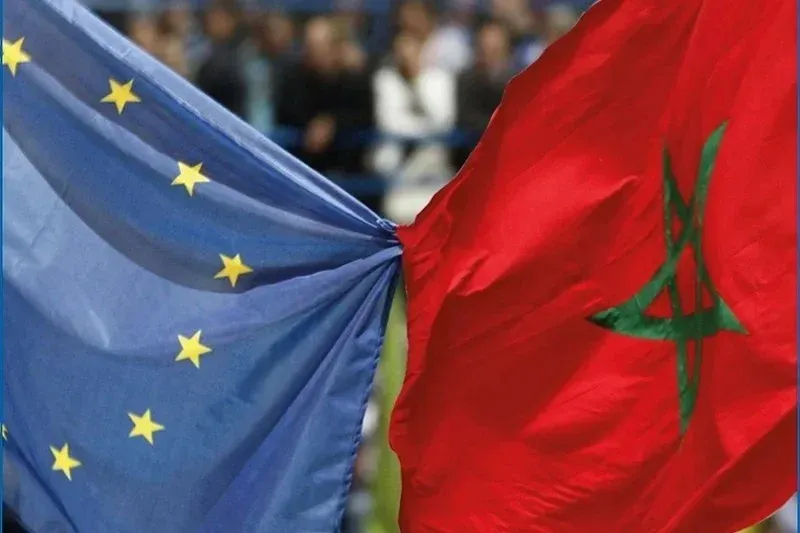
In light of recent developments in the relationship between the Kingdom of Morocco and the European Union, official positions have emerged, articulated in a statement by a Moroccan government source to the Moroccan News Agency. The statement emphasizes the necessity for Europe to become a true partner concerned with Morocco's development, explicitly calling for a halt to decisions and regulatory measures that could obstruct this developmental dynamic. This call aims to protect strategic national sectors that have become pillars of the Moroccan economy, including ports, the automotive industry, finance, services, transport, and outsourcing.
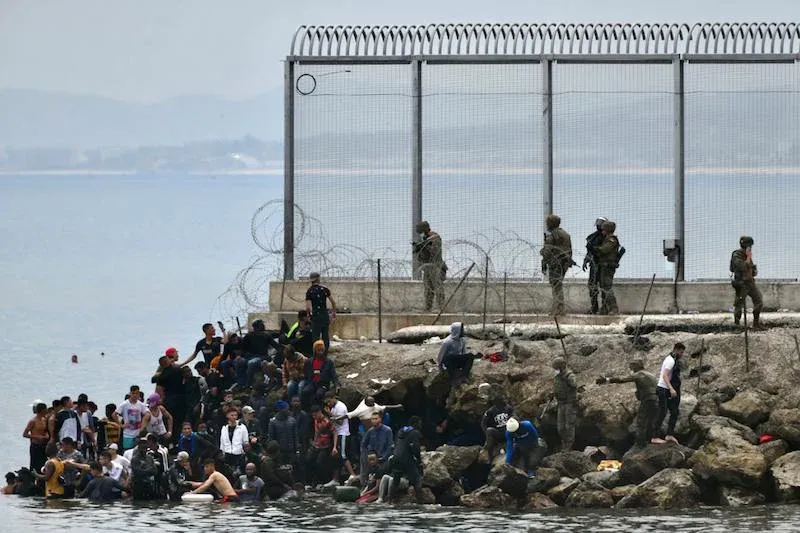
Experts and economic analysts have been working to decipher the messages behind this government stance, elucidating the "economic damages" that Morocco has been incurring as a result of bearing the brunt of migration issues and the ongoing European measures that limit the competitiveness of its economy. According to Rashid Sari, an economic analyst and president of the African Center for Strategic Studies and Digitalization, the primary challenge for Morocco in the migration file stems from its role as a transit point for migrants heading to Europe, rather than being a final destination for them. Sari pointed out that these transient migrants do not contribute to development or add any value to the national economy, making their presence a heavy financial burden for the kingdom. The social and economic repercussions of this situation have prompted some migrants to engage in practices that further strain the community. He stressed that the financial support Morocco receives from the European Union in this regard is insufficient compared to the responsibilities and burdens it shoulders, a sentiment echoed by recent official data.
Sari also noted that countries like Spain have previously urged the European Union to increase the financial aid directed to Morocco, asserting that the approach should not solely focus on security aspects but should expand to include economic dimensions, with funding for developmental programs and small enterprises within Morocco. Such initiatives could help mitigate the negative impacts of migration and facilitate the integration of migrants across various demographics.
Critique of European Policies and the Need for Balanced Partnerships
Turning to the economic relations and trade exchanges with the European Union, Sari criticized the constraints and pressures faced by Moroccan agricultural exports, which sometimes reach levels of 'destruction and aggressive treatment' without the necessary protection from the European partner. He also highlighted the strict financial regulations imposed on transactions by the Moroccan diaspora abroad, which surpassed 122 billion dirhams in remittances. These regulatory pressures significantly limit the volume of internal investments from the diaspora and the potential for even greater remittance levels that could have been achieved without such obstacles.
Sari concluded his analysis by calling for a move away from the condescending approach of the European Union, urging a reevaluation of the perception that confines Morocco to a mere regional guard role. He stressed the need for a balanced partnership based on mutual benefit that respects the dignity of African individuals. He reiterated that migrants primarily aim to reach Europe, thereby necessitating that the European partner fully assumes its responsibilities and actively contributes to creating economic growth conditions that would allow Morocco to provide a dignified life for these individuals, rather than solely imposing financial and developmental burdens on the Moroccan economy.
In the view of Khaled Hamoss, an economics professor at Mohammed V University in Rabat, the government statement should not be interpreted as an accusation against Europe for hindering Moroccan development in general. He pointed out that the European Union remains Morocco's primary trading partner, the largest source of foreign direct investment, and one of the leading providers of aid and cooperation programs. Hamoss added that the statement likely reflects a political and economic message indicating that Morocco sees itself as a strategic partner of the European Union. Some sectoral or regulatory European policies might not align with this ambition, as they could undermine the competitiveness of the Moroccan economy in critical growth sectors such as logistics, automotive manufacturing, and financial services.
In essence, Hamoss suggested that the government message could be seen as a call to align European policies with the principles of economic partnership, ensuring that regulatory, industrial, or environmental measures do not weaken the sectors Morocco relies on for its development strategy. However, he cautioned that it is important to differentiate between economic analysis and establishing causal relationships, emphasizing that claiming a sector has suffered due to a particular European measure requires thorough examination of each case and the specific decision involved, as well as measuring its actual impact on investment, exports, or employment. Nonetheless, the statement serves as a strong signal and a reminder for the European Union to engage responsibly with its prominent southern partner in North Africa.
Regarding the potential for revising the existing strategic partnership between Rabat and Brussels, the same economic analyst indicated that Moroccan-European relations are gradually shifting from a reliance-based relationship to a strategic partnership founded on mutual dependence. He noted that while Morocco previously depended heavily on the European market, the European Union is now increasingly in need of Morocco as a partner.
As reported by hespress.com.