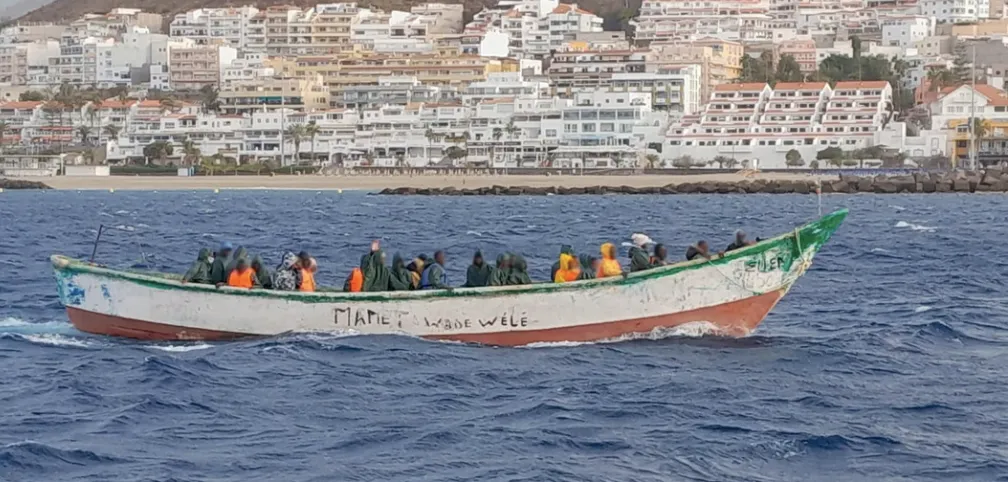

Strengthened Surveillance in Key Ports
The Moroccan security forces have significantly ramped up their surveillance efforts along the Atlantic ports and coastlines as a response to months of increased migratory pressure directed towards the Canary Islands. The strategic ports of Agadir, Tan-Tan, and El Aaiún have become focal points for intensified controls concerning vessels, port access, vehicles, and networks involved in organizing clandestine departures. This shift in strategy comes in the wake of the political fallout following the Ceuta crisis, underscoring Morocco’s ability to tighten or ease migratory pressure at will.
Heightened Measures and Political Implications
Morocco has intensified its monitoring capabilities at the ports of Agadir, Tan-Tan, and El Aaiún—three critical points along the Atlantic corridor that directly face the Canary Islands. The presence of police, along with heightened controls on individuals, vehicles, and vessels, has become more pronounced during this particularly sensitive period, following the Ceuta crisis which placed immense political strain on Spain-Morocco relations. In light of this, Moroccan authorities have escalated the involvement of various security agencies, including the police, the Royal Gendarmerie, maritime forces, and the Royal Navy. Their new strategy extends beyond simply intercepting boats once they are already at sea; it now also aims to act preemptively by enhancing surveillance at ports, on roadways, along coastal areas, and on vehicles suspected of transporting individuals or fishing boats that may be exploited by networks to facilitate illegal crossings.
In Tan-Tan, the increased pressure has become particularly visible, with the area under close observation due to its significance in maritime routes leading to the Canary Islands. Recent days have witnessed operations targeting groups allegedly involved in organizing irregular departures. Numerous vessels attempting to reach the archipelago have been intercepted in this corridor. Similarly, in El Aaiún, heightened vigilance is evident, with stricter identification checks for port workers and authorized personnel, alongside increased scrutiny of vehicles and boats. This is aimed at preventing port facilities from becoming staging grounds or departure points for migratory operations. The concern now extends beyond traditional wooden boats or inflatable rafts to the potential misuse or theft of fishing vessels, which possess greater autonomy and range for covering the long distances to the Canary Islands.
Agadir is acutely aware of this risk, especially following an incident where a fishing boat disappeared from its facilities and was subsequently found in nearby waters off Lanzarote with individuals aboard. This incident raised alarms regarding port security and the potential for organized networks to exploit professional vessels to reach the Islands. As a direct response, the scrutiny of such vessels has become a significant aspect of Morocco’s maritime enforcement strategy.
The increased intensity of these controls inevitably raises a political question: why now? Morocco has once again demonstrated its capacity to substantially heighten pressure on migration routes whenever it chooses to bolster its security presence. While it cannot prevent every departure—given the impossibility of monitoring every kilometer of its coastline—it can complicate the logistics of such operations and shift the points of departure for migrants. The geographical layout plays a crucial role in this situation. The corridor stretching from Agadir southward includes Tiznit, Tan-Tan, Tarfaya, El Aaiún, and further down to Dajla. Over the years, various locations along this coast have been used to organize departures to the Canary Islands. When a particular area becomes heavily monitored, networks are compelled to seek alternative beaches, relocate individuals, or alter their methods. This dynamic transforms irregular migration into a continuous race between those attempting to establish new routes and those striving to close them off.
The distinction lies in the intensity with which available resources are deployed. Currently, Morocco is applying these measures with greater vigor, implementing more access controls, enhancing identification protocols, increasing police presence, boosting maritime surveillance, and conducting more operations against smuggling networks. This intensification follows the Ceuta crisis, which has triggered a political earthquake in Spain, bringing relations with Rabat back into the spotlight.
Recent movements leave a clear conclusion: Morocco possesses the ability to act decisively on many of the routes departing from its territory toward Spain. This is evidenced by the reinforcement of the Gendarmerie, stricter controls at ports, the identification of vehicles and personnel, tracking networks, and heightened maritime vigilance. While this does not imply that Morocco can completely seal off its extensive coastline or prevent every departure, it can significantly elevate the challenges associated with organizing migratory operations. This brings us to the fundamental political issue at hand. Spain and the European Union have long viewed Moroccan cooperation as a vital element in curbing irregular migration. When this cooperation intensifies, the routes feel the pressure; when it wanes, the repercussions inevitably reach the Canary Islands, Ceuta, Melilla, or the mainland.
This context makes the timing of these actions particularly noteworthy. In the aftermath of the seismic political events surrounding Ceuta, Agadir, Tan-Tan, and El Aaiún are once again under far more intense scrutiny. Morocco repeatedly proves that it possesses the means to close pathways, target networks, and complicate departures. The question now extends beyond whether it can do so, but rather why it sometimes exerts its full capacity and at other times does not.
As reported by lagacetadecanarias.com.