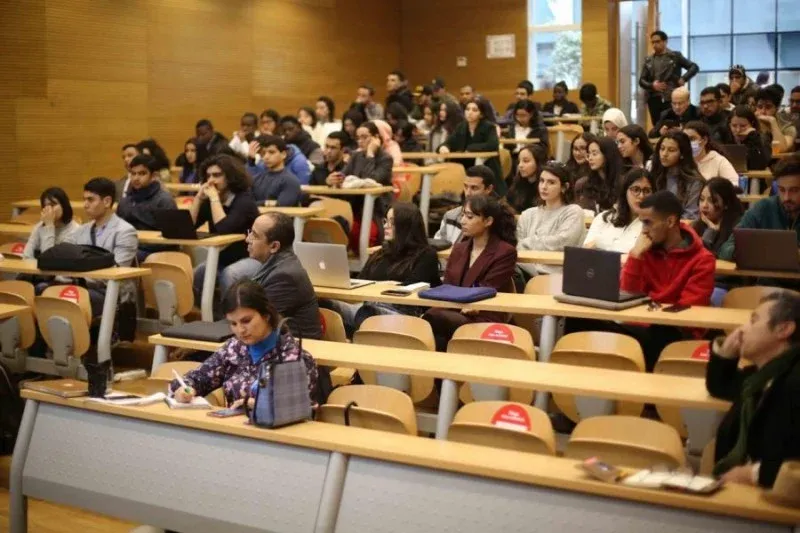

Moroccan students aspiring to pursue their education in France are bracing for a steep increase in tuition fees as the French government enforces long-overdue regulations that will drastically elevate costs for non-European Union students. Starting from the upcoming academic year, most international students hailing from outside the EU will be required to pay between approximately €2,900 and €3,900 annually at public universities. This represents a staggering increase, with costs rising to nearly 16 times what many have previously paid.
The announcement was made by Higher Education Minister Philippe Baptiste, who clarified that universities can no longer provide widespread exemptions from these elevated fees. Although a policy allowing varied tuition rates has technically been in place since 2019, institutions had been quietly granting exceptions to a vast majority of students. Moving forward, universities will be permitted to offer full fee waivers to only up to 10% of non-EU students, meaning that the majority will be subjected to the new higher rates: approximately €2,895 per year for bachelor’s degrees and €3,941 for master’s programs.
This new financial burden could have a considerable impact on Moroccan students, who constitute one of the largest international demographics in France. Historically, France has been a favored destination for Moroccan students due to its relatively low public university fees and strong cultural connections. The revised tuition policy is part of a larger initiative known as “Choose France for Higher Education,” which is also restructuring scholarship allocations, designating 60% of funding to priority fields such as artificial intelligence, digital technologies, quantum physics, and biotechnology.
Despite the significant fee increases, officials argue that the tuition remains reasonable, asserting that even after the hike, the fees will only cover approximately 30% of the actual educational costs in France, and will still be lower than tuition fees in countries like the United States or the United Kingdom. Current students will not be affected by these changes, which will be implemented gradually, with the government projecting an influx of around €250 million annually within a few years.
However, not everyone is in agreement with these new policies. Student organizations in France have voiced concerns that this move might exclude thousands of potential international applicants. They have also criticized the selective focus on certain fields for scholarships, arguing that it restricts opportunities and narrows the scope of education.
France continues to be a leading destination for international students, hosting over 440,000 in the academic year 2024–2025, with Moroccan students among the top groups alongside those from Algeria, China, Italy, and Senegal. Beyond tuition costs, international students also face the challenge of living expenses, typically amounting to around €7,000 per year for housing, food, transportation, and other essentials, with the cost of living in Paris being significantly higher than in smaller cities.
As reported by en.hespress.com.