
Morocco has adeptly redefined its economic landscape, evolving into a crucial geopolitical asset that stands as a beacon of stability in an increasingly fragmented global environment. A recent strategic report from Spain emphasizes the nation's burgeoning significance in bolstering Western industrial and logistical security. The analysis, conducted by the International Institute for Geopolitical Studies and published by Atalayar, underscores Morocco's proactive engagement in the 'friendshoring' strategy, which entails relocating sensitive supply chains to reliable political partners located nearby.
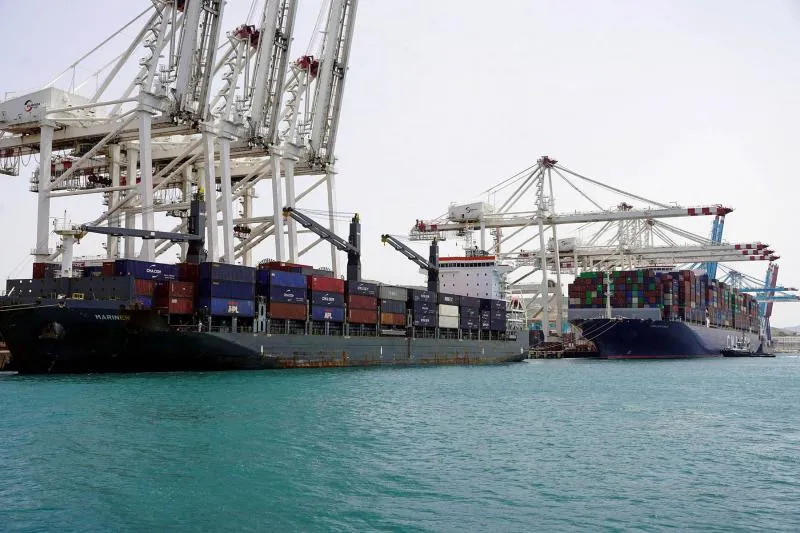
In an era characterized by escalating geopolitical tensions and disruptions in supply chains, Morocco has emerged as a 'trusted partner' that enhances economic resilience while upholding the principles of globalization. This transformation is significantly driven by Morocco's robust port infrastructure, highlighted by pivotal projects such as the Nador West Med Port. This initiative is portrayed in the report as a strategic response to increasing security challenges along established maritime routes.
As military tensions increasingly threaten critical chokepoints like the Strait of Hormuz and the Red Sea, Morocco's developing 'logistical arc,' which connects Tangier Med Port, Nador, and the upcoming Dakhla Atlantic Port, presents a secure alternative for international trade and energy transportation. This comprehensive network effectively bridges the Mediterranean and Atlantic, ensuring the continuity of supply chains during a period marked by unpredictability in traditional routes.
The report attributes Morocco's ascending influence to its 'multi-dimensional diplomacy,' which intricately weaves together a strong strategic partnership with the United States—where it enjoys the status of a major non-NATO ally—and deep-rooted ties with the European Union. Concurrently, Rabat has expanded its role in African integration through initiatives like the Atlantic corridor, while adeptly navigating relationships with global powers such as China and Russia. This delicate balancing act has established Morocco as a unique nexus amid competing geopolitical factions, enhancing its strategic importance in an increasingly polarized world.
Beyond its logistics and diplomatic engagements, Morocco's swift industrial advancement is noteworthy, exemplified by the recent inauguration of a state-of-the-art facility by Safran in the Nouaceur industrial zone near Casablanca. This plant, which specializes in the production of aircraft landing systems and boasts an investment exceeding €280 million, operates entirely on clean energy, thereby reinforcing Morocco's status as a pivotal player in global aerospace supply chains. The investment further emphasizes the country's capability to localize advanced industrial technologies while leveraging a highly-skilled domestic workforce, making it an attractive destination for international investors seeking stability and efficiency.
The Spanish report concludes by asserting that Morocco now embodies a 'strategic resilience arc' at the crossroads of Europe, Africa, and the Atlantic. By providing dependable logistical and industrial alternatives, the kingdom not only fortifies its national security but also plays a vital role in enhancing global economic stability. In this capacity, Morocco is actively reshaping the economic influence landscape across the Mediterranean and Atlantic regions, positioning itself as an essential ally in a world characterized by uncertainty and shifting power dynamics.
As reported by thearabweekly.com.