
Diplomatic Tensions Arise Over Migrant Repatriation
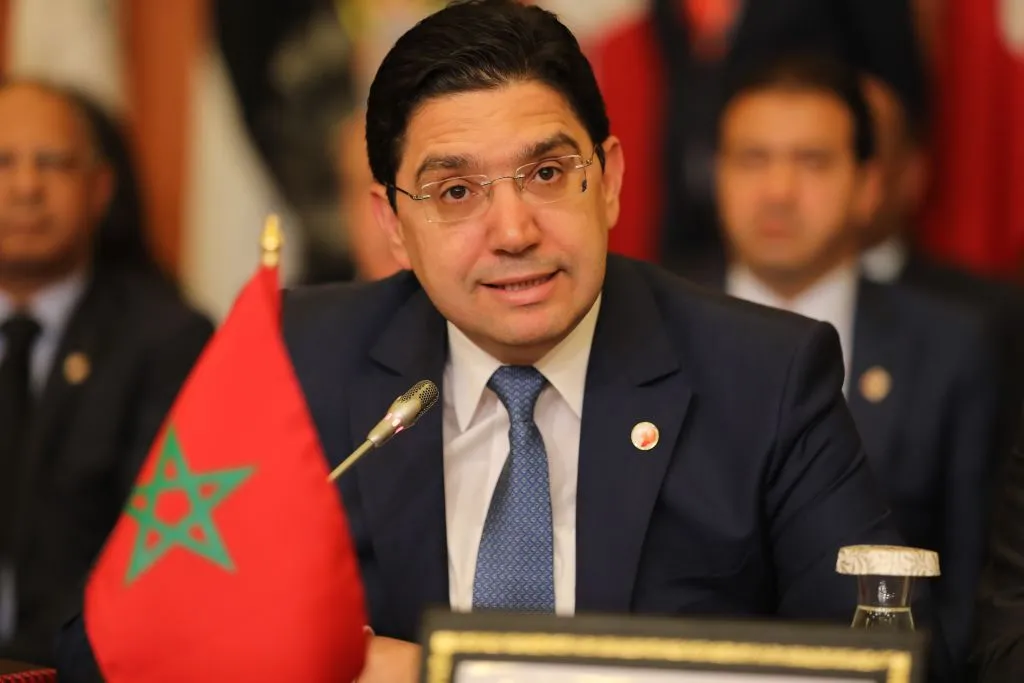
The Moroccan Foreign Minister, Nasser Bourita, has criticized Spain for its failure to repatriate the thousands of migrants still stranded in Ceuta following the massive influx that occurred last July. This situation has reignited tensions surrounding the enclave, nearly six weeks after an influx of 80,000 individuals led to over 100 fatalities, plunging Spain into one of its most severe migration crises to date.
José Manuel Albares, Spain's Foreign Minister, reiterated Morocco's commitment to collaborate in ensuring the return of these individuals as soon as possible, following their first in-person meeting on the sidelines of the United Nations General Assembly in New York. Albares emphasized Spain's determination to maintain amicable relations with Morocco amidst these challenges. However, Bourita responded to journalists after their meeting, asserting that, "If irregular migrants have not been repatriated and minors have not been returned, the question should not be directed at Morocco, but at Spain."
Current Status of Migrants in Ceuta
Despite a significant number of migrants having returned to Morocco in the wake of this surge, Ceuta authorities report that approximately 13,000 migrants remain in the enclave. Spanish Prime Minister Pedro Sánchez estimates this number to be around 5,000, while some ministers believe it could be as high as 10,000. Initially, Spain had informed EU authorities that all migrants arriving in Ceuta, primarily Moroccan nationals generally ineligible for asylum, would be returned. In practice, while migrant checks continue—over 100 daily—thousands are choosing to return voluntarily. According to Ángel Víctor Torres, the Minister of Territorial Policy, more than 7,500 have returned to Morocco since early August.
Nonetheless, national legislation allows for the over 2,300 registered minors still in Ceuta to remain in Spain, while migrants who may qualify for international protection, predominantly from Sub-Saharan Africa, could also be permitted to stay. Moroccan ministers have attributed the bureaucratic hurdles to Spain for hindering the return of undocumented migrants, particularly minors. Conversely, Spanish judges, prosecutors, and police unions have long accused Rabat of deliberately failing to provide the necessary cooperation to facilitate identification and expedite administrative and judicial processes.
In its recent annual report, the Spanish public prosecutor's office highlighted the "extremely restrictive" stance taken by Morocco regarding expulsions. The legal complexities surrounding minors further complicate the situation. During the Ceuta crisis in 2021, when nearly 10,000 irregular migrants entered, most unaccompanied minors remained in Spain and were later transferred to the mainland. To date, 54 minors have been transferred to mainland Spain to reunite with their families, as reported this week by the Minister for Children, Sira Rego, who noted that the majority are unlikely to be sent back. She stated, "Most of them want to stay in Spain, and they will stay, of course. There is a law that protects them."
As reported by euractiv.com.